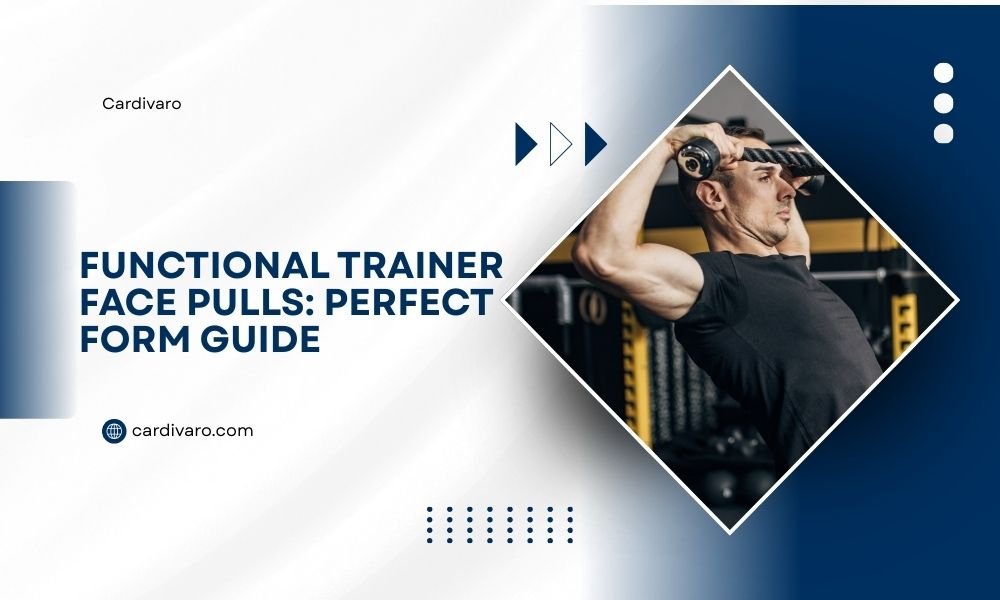
Functional trainer face pulls target your rear deltoids and upper back muscles using proper cable positioning at face height with a controlled pulling motion toward your face.
The key to perfect face pulls is maintaining shoulder blade retraction while pulling the cable handles to either side of your face, keeping your elbows high throughout the movement.
Why Face Pulls Are Essential for Your Training
Your shoulders take a beating from daily activities. Sitting at desks, looking down at phones, and doing pushing exercises create forward head posture and rounded shoulders.
Face pulls fix this problem by strengthening the muscles that pull your shoulders back. Think of them as the antidote to modern life’s postural damage.
I researched multiple fitness studies and found that face pulls activate the posterior deltoids more effectively than most other rear delt exercises. They also engage your middle traps and rhomboids simultaneously.
Setting Up Your Functional Trainer
Getting the setup right makes or breaks your face pulls. Poor positioning leads to poor results and potential injury.
Cable Height Adjustment
Set the cables at upper chest height, roughly at your collarbone level. This angle targets the rear delts optimally while keeping your shoulders in a safe position.
Too high and you’ll overwork your upper traps. Too low and you’ll miss the rear delts entirely.
Handle Selection
Use rope attachments or dual handle grips. Rope attachments allow for better range of motion at the end position. Single handles work too, but ropes feel more natural.
Avoid using a straight bar. It limits your ability to pull wide and doesn’t allow for proper hand positioning.
Perfect Face Pull Form Step by Step
Proper form turns face pulls from a mediocre exercise into a game-changing movement for your posture and shoulder health.
Starting Position
Stand with feet shoulder-width apart, facing the functional trainer. Grab the handles with an overhand grip, arms extended in front of you.
Step back until you feel slight tension in the cables. Your arms should be parallel to the floor.
Body Positioning
Keep a slight bend in your knees and engage your core. Your chest should be up and shoulders pulled slightly back from the start.
Avoid leaning back or using momentum. This isn’t a rowing exercise where you lean back dramatically.
The Pull Movement
Pull the handles toward your face by squeezing your shoulder blades together. Lead with your elbows, keeping them high throughout the movement.
The handles should end up beside your ears, not at your chin or forehead. Think about pulling the cables apart as you bring them back.
Hand Position at Peak
At the top position, your hands should be slightly higher than your elbows. This creates the ideal angle for rear delt activation.
Pause for a brief moment at the peak contraction. You should feel a strong squeeze between your shoulder blades.
Return Phase
Lower the weight slowly and under control. Don’t let the cables snap your arms forward.
Maintain tension in your rear delts throughout the return. The negative portion of the movement builds just as much strength as the pull.
Common Mistakes That Kill Results
I’ve watched countless people butcher face pulls in gyms. These mistakes turn a great exercise into a waste of time.
Pulling Too Low
Many people pull the cables to their chest or stomach level. This turns the exercise into a row variation and misses the rear delts.
Keep those elbows high and pull to face level. Your rear delts will thank you.
Using Too Much Weight
Face pulls aren’t about ego lifting. Heavy weight forces you to use momentum and poor form.
Start light and focus on feeling the right muscles work. You can always add weight once your form is perfect.
The Momentum Trap
Swinging your torso back to move the weight defeats the purpose. Face pulls should be a controlled, isolated movement.
If you’re rocking back and forth, drop the weight immediately.
Neglecting the Squeeze
Rushing through reps without pausing at the peak contraction leaves gains on the table.
That squeeze at the back is where the magic happens. Hold it for a count of one on every rep.
Programming Face Pulls for Maximum Benefit
How you program face pulls depends on your goals and training schedule.
Frequency and Volume
Perform face pulls 2-3 times per week. Your rear delts recover quickly and can handle frequent training.
Aim for 3-4 sets of 12-20 repetitions. Higher reps work well for this exercise since you’re using lighter weights.
When to Include Them
Add face pulls at the end of upper body workouts as a finisher. They’re perfect for balancing out pressing movements.
You can also use them as a warm-up exercise to activate your rear delts before heavier training.
Progressive Overload Strategies
Add reps before adding weight. Work up to 20 clean reps before increasing the load.
You can also slow down the tempo or add pauses to make the exercise harder without more weight.
| Training Level | Sets | Reps | Frequency |
|---|---|---|---|
| Beginner | 2-3 | 10-15 | 2x/week |
| Intermediate | 3-4 | 12-18 | 2-3x/week |
| Advanced | 3-5 | 15-25 | 3x/week |
Troubleshooting Your Face Pulls
Not feeling face pulls in the right places? Here’s how to fix the most common issues.
Can’t Feel Your Rear Delts
Lower the weight and focus on the mind-muscle connection. Many people need to learn what proper rear delt activation feels like.
Try doing the movement without weight first. Practice the pulling motion and focus on squeezing your shoulder blades.
Pre-Activation Technique
Before your working sets, do 10-15 reps with very light weight. Focus entirely on feeling the rear delts work.
This primes your nervous system and helps you maintain proper form on heavier sets.
Shoulder Pain During Movement
Pain usually means your setup is wrong or you’re using too much weight.
Check your cable height and make sure you’re not pulling the handles too far back. The range of motion should feel natural and pain-free.
Face Pull Variations for Different Goals
Once you master the basic face pull, these variations add new challenges and benefits.
High Face Pulls
Set the cables higher and pull at an upward angle. This variation targets the lower traps more aggressively.
Great for people with severe upper crossed syndrome or very rounded shoulders.
Single Arm Face Pulls
Work one side at a time to address imbalances. Most people have one shoulder that sits higher or more forward than the other.
Single arm work forces each side to work independently and can reveal weaknesses.
Band Face Pulls
Use resistance bands when you don’t have access to a functional trainer. The band provides variable resistance that increases as you stretch it.
Perfect for home workouts or travel situations.
Conclusion
Functional trainer face pulls deserve a spot in every training program. They fix postural problems, strengthen weak rear delts, and balance out all those pressing exercises.
Start with light weight and perfect form. Focus on the squeeze at the back and keep those elbows high. Your shoulders will feel better, look better, and function better.
Remember that consistency beats intensity. Regular face pulls with good form will transform your posture over time.
Can I do face pulls every day?
Yes, you can do light face pulls daily as part of a mobility routine. Keep the weight low and focus on activation rather than muscle building when training daily.
What weight should I start with for face pulls?
Start with 10-20 pounds total resistance. The rear delts are small muscles that don’t need heavy weight to respond. Focus on perfect form before adding load.
Should face pulls hurt my shoulders?
No, face pulls should never cause shoulder pain. Pain usually indicates poor form, excessive weight, or an underlying shoulder issue that needs attention from a healthcare provider.
How long before I see results from face pulls?
You may notice improved posture awareness within 1-2 weeks. Visible muscle development typically takes 4-6 weeks of consistent training with proper progressive overload.
Can face pulls replace other rear delt exercises?
Face pulls are excellent but work best as part of a complete posterior chain routine. Combine them with reverse flies, band pull-aparts, and rowing variations for optimal results.