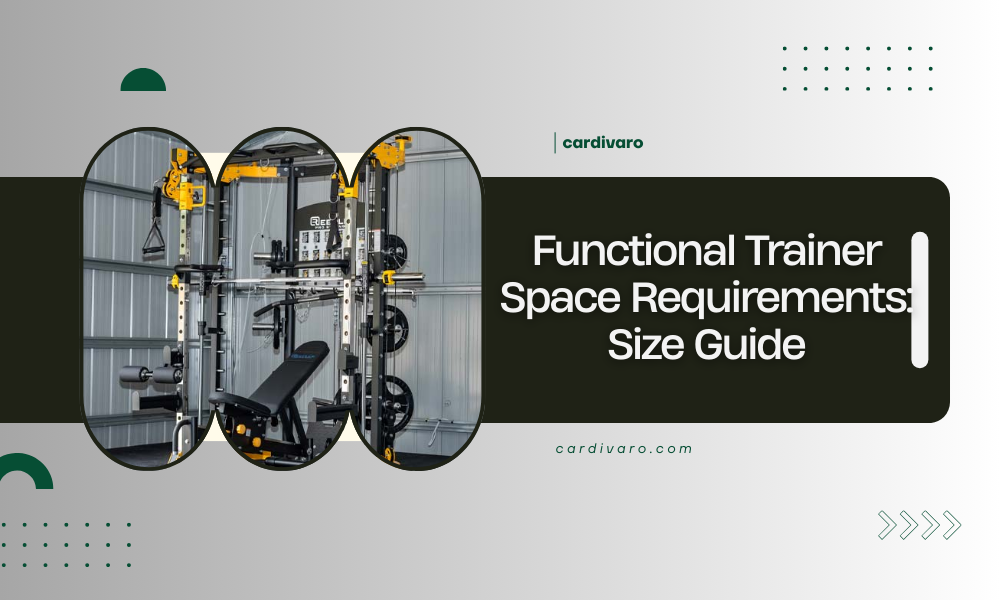
A functional trainer machine typically requires a space of 8 feet by 8 feet minimum, with 9 feet ceiling height for safe operation.
Your functional trainer space requirements depend on the machine size, cable range, and exercise movements you plan to perform.
Quick Space Planning Guide
Before you buy that functional trainer, let’s figure out exactly how much room you need. I found that most people underestimate space requirements and end up with cramped workouts.
The basic rule? Think bigger than the machine itself. You need clearance for cables, your body movement, and safety zones.
Minimum Space Requirements
Here’s what I researched from fitness equipment manufacturers:
- Floor space: 8×8 feet absolute minimum
- Recommended: 10×10 feet for comfortable use
- Ceiling height: 9 feet minimum
- Side clearance: 3 feet on each side
- Front clearance: 4-5 feet
Why These Numbers Matter
Your cable exercises extend beyond the machine frame. High pulls, lat pulldowns, and overhead movements need that extra ceiling height.
Side clearance prevents you from hitting walls during lateral exercises. Trust me, nothing kills motivation like constantly bumping into furniture.
Machine Size Categories
Not all functional trainers are created equal. I found three main size categories when researching equipment specs.
Compact Functional Trainers
These space-savers typically measure 4×4 feet at the base. Perfect for apartments or tight spaces.
Space needed: 8×8 feet total. These work well in bedrooms or converted spaces.
Popular Compact Features
- Dual adjustable pulleys
- 150-200 pound weight stacks
- Basic cable routing
- Often include lat pulldown bar
Mid-Size Functional Trainers
The sweet spot for home gyms. Usually 5×6 feet footprint with more exercise options.
Space needed: 10×10 feet minimum. Better if you can manage 12×10 feet.
Mid-Size Advantages
More weight capacity means better progression. Multiple cable angles give you exercise variety. Some include pull-up bars or dip stations.
Commercial-Size Units
These beasts can span 6×8 feet or larger. Built for serious training but need serious space.
Space needed: 12×12 feet or more. Only consider these if you have a dedicated gym room.
Room Layout Considerations
Where you place your functional trainer matters as much as the space itself. I found several layout principles that work best.
Corner Placement
Corners maximize your floor space efficiency. You only need clearance on two sides instead of four.
Make sure the cable angles still work. Some exercises require you to step away from the machine at different directions.
Corner Setup Tips
- Leave the front completely open
- Check cable clearance against walls
- Consider mirror placement for form checking
Center Room Placement
This gives you maximum exercise freedom but uses more total space. Great if you have a dedicated gym room.
You can move 360 degrees around the machine. Perfect for complex movement patterns and group training.
Center Placement Benefits
Better cable angles for unilateral training. You can add additional equipment around the perimeter. Creates a professional gym feel.
Ceiling Height Details
Don’t overlook vertical space. I came across many complaints from people who bought functional trainers for low-ceiling basements.
Why 9 Feet Matters
Your arms extend overhead during many exercises. Add the machine height (usually 7-8 feet) plus your reach, and you quickly approach ceiling limits.
Lat pulldowns require full arm extension above your head. High cable exercises work best with proper overhead clearance.
Low Ceiling Solutions
If you’re stuck with 8-foot ceilings, look for functional trainers with removable top sections. Some models offer ceiling-mount options.
You might need to modify certain exercises. High pulls become mid-level pulls. Not ideal, but workable.
Safety Zone Planning
Safety clearance isn’t optional. I found accident reports where insufficient clearance caused injuries.
Cable Sweep Areas
Cables move in arcs during exercises. These paths must stay clear of obstacles, people, and fragile items.
Map out your most common exercises. Mark where cables travel during full range of motion.
High-Risk Zones
- Overhead cable paths during lat pulls
- Wide arcs during chest flyes
- Low cable sweeps during leg exercises
- Forward extension during pressing movements
Emergency Space
You need quick exit routes if weights drop or cables snap. Don’t box yourself in completely.
Keep pathways to doors clear. Avoid placing the machine where falling weights could block exits.
Space-Saving Strategies
Working with limited space? I researched several clever solutions that maximize your functional trainer potential.
Multi-Use Zones
Your functional trainer space can serve double duty. Clear the area for cardio, stretching, or bodyweight exercises when not using cables.
Removable equipment works well. Roll away benches, fold-up accessories, and portable storage keep the space flexible.
Smart Storage Ideas
Wall-mounted accessory holders save floor space. Overhead storage for lighter items keeps them accessible but out of the way.
Consider equipment that stores inside or attaches to your functional trainer frame.
Adjustable Boundaries
Room dividers or curtains can create temporary gym zones. Fold them away when you need the space for other activities.
This works especially well in basements, garages, or spare bedrooms that serve multiple purposes.
Measuring Your Space
Ready to measure? Here’s the systematic approach I recommend based on equipment installation best practices.
Step-by-Step Measuring
Start with your available room dimensions. Length, width, and ceiling height at the lowest point.
Subtract space for other essential items. Don’t forget doors that need to open, windows that shouldn’t be blocked, and ventilation areas.
Common Measuring Mistakes
- Forgetting door swing clearances
- Not accounting for baseboards and trim
- Missing low-hanging lights or ceiling fans
- Overlooking heating vents or electrical outlets
Testing Your Layout
Use tape to mark your proposed machine footprint on the floor. Walk through common exercise movements in the marked area.
This reveals space problems before you buy. Much easier to adjust plans now than after delivery.
Conclusion
Planning your functional trainer space correctly makes the difference between a gym you love and one you avoid. Start with that 8×8 foot minimum, but aim for 10×10 feet if possible. Don’t forget the 9-foot ceiling requirement and safety clearances around cable paths.
Measure twice, buy once. Your future self will thank you for taking time to plan properly. A well-spaced functional trainer becomes the centerpiece of an amazing home gym experience.
How much space do I need behind a functional trainer?
You need 2-3 feet behind the machine for maintenance access and cable clearance. Some exercises like reverse flyes require you to step back from the machine, so 3 feet works better than the minimum.
Can I put a functional trainer in my garage?
Yes, garages work great if you have adequate ceiling height and climate control. Check for 9+ foot ceilings and consider temperature extremes that might affect the equipment and your comfort during workouts.
What’s the smallest room size for a functional trainer?
A 10×10 foot room with 9-foot ceilings is the smallest practical space for most functional trainers. Anything smaller severely limits your exercise options and creates safety concerns with cable clearances.
Do I need special flooring under a functional trainer?
Rubber gym flooring or interlocking foam tiles work best to protect your floors and reduce noise. The flooring should extend 2 feet beyond the machine footprint to cover your exercise area and provide cushioning.
How do I plan space for multiple people using the functional trainer?
Add 3-4 extra feet of clearance on all sides for multiple users. Consider 12×12 feet minimum for two-person workouts or training sessions. This prevents people from interfering with each other’s exercise paths.