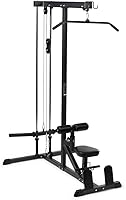
How Do Functional Trainer Trolleys Work?
Functional trainer trolleys move pulley points up and down vertical rails, then lock at a chosen height. A cable runs through the pulley to a handle, so changing the trolley position changes the direction and starting point of a pull.
On this page (10 sections)
- What is a functional trainer trolley?
- How does the trolley move along the rail?
- How does the cable route through the pulley?
- Why does trolley height change an exercise?
- How should you adjust a trolley safely?
- What should you look for in a smooth trolley?
- Which exercises use different trolley heights?
- Can a trolley be used on every cable machine?
- Do these home gym products have functional trainer trolleys?
- How do you choose the right trolley position?
Functional trainer trolleys slide pulley carriages along vertical rails and lock them at a chosen height. The cable passes through each pulley to a handle, letting you change where a pull begins and the direction it travels.
A trolley is also called a carriage or adjustable pulley mount. Its movement helps set the cable for different exercises, but the machine's rail, lock, and cable path determine which positions are available.
What is a functional trainer trolley?
A functional trainer trolley is the movable carriage that holds a pulley on the machine's upright rail. It lets you position the cable outlet higher or lower without moving the whole machine.
On a dual-cable trainer, each side may have its own trolley and cable. You can set them at matching heights for two-handed movements or use different heights when an exercise calls for it.
The frame supports the rail, while the carriage keeps the pulley aligned as it moves. The pulley wheel turns as cable passes over it, reducing friction from a direct change in cable direction.
If you're new to the machine, this overview of what a functional trainer is explains how its frame, cables, and attachments fit together.
How does the trolley move along the rail?
You release the carriage lock, slide the trolley to a usable height, and engage the lock again. The control may be a pull pin, handle, lever, or another mechanism, depending on the trainer.
Keep one hand on the carriage while releasing it. Move it along the rail without letting it drop or bang against the frame, then check that it sits squarely before locking it.
Use only the adjustment positions and method described in the machine's manual. A trolley that appears to be in place may still be unprotected, so check the control before you pull against the cable.
How do you know the trolley is locked?
The lock should engage fully at the selected position and hold the carriage in place during a gentle check. If it slips, sits crooked, or won't engage, stop and consult the manual before using that pulley.
Don't force a pin into a hole or pull hard on the cable to test the lock. A jammed or damaged control needs attention before the machine is used.
How does the cable route through the pulley?
The cable runs from the machine's weight or resistance system, around pulleys, and out through the trolley pulley to the handle. The trolley pulley redirects the cable so the handle can travel in a direction that suits the exercise.
The cable usually stays threaded through the machine as you move the trolley. You change the pulley height, not the cable's route through the frame.
A smooth cable path depends on the cable tracking properly over each wheel. If you see slack, fraying, a cable jumping its groove, or unusual resistance, stop and check the machine's instructions.
A sliding pulley and its cable path help set up movements at different angles. A cable machine exercise chart can help match a movement to its setup.
For background on the exercise options, see how to use a functional trainer.
Why does trolley height change an exercise?
Trolley height changes the cable's starting angle and the direction of resistance. A high position can direct a pull downward, a low position can direct it upward, and a middle position can support a more level pull.
The best height depends on the movement and your range of motion. Set the pulley so the cable clears the frame and your body throughout the exercise, without forcing your shoulder or wrist into an awkward position.
Start with light resistance while you learn the path. Move the trolley if the cable rubs against the frame or the movement feels constrained.
How should you adjust a trolley safely?
Take tension off the cable, support the handle, and move the carriage using its intended control. Lock it firmly before you begin pulling.
- Return the handle to a stable position and remove cable tension.
- Hold the carriage steady while releasing its lock.
- Slide it to the desired rail position without dropping it.
- Re-engage the lock and check that it holds.
- Begin with a light pull to confirm the cable moves freely.
Keep fingers clear of the rail and moving carriage. Don't adjust a trolley while someone else is pulling on the cable.
For the exact adjustment steps and common setup questions, use how to properly adjust functional trainer pulleys.
What should you look for in a smooth trolley?
A smooth trolley should move without binding, stay aligned on its rail, and lock securely at its selected height. The cable should also travel freely through the pulley without rubbing the frame.
Look for clear adjustment controls and enough pulley positions for the exercises you plan to do. If two pulleys matter for your routine, check whether both sides adjust independently and can be set at the heights you need.
Trolley design is one part of cable feel. Frame alignment, cable condition, pulley wheels, and the resistance system also affect how a machine moves.
Our guide to the best smooth cable functional trainer covers what to compare.
Does a cable machine with arms work the same way?
A cable machine with adjustable arms may position its cable outlets in a different way from a vertical trolley rail. Both designs can change cable direction, but their movement range and adjustment controls vary by machine.
Check how each arm or pulley locks, and whether its positions suit your planned movements. This guide to how to choose a cable machine with adjustable arms explains the differences to consider.
Which exercises use different trolley heights?
Use the height that lets the cable follow the intended path without hitting the frame or pulling you out of position. High, middle, and low settings offer different starting angles, but the machine's available positions set the limits.
A high pulley can suit a downward cable path, while a low pulley can suit an upward path. A middle setting may be useful when you want a cable to travel roughly level with your hands or torso.
These are setup cues, not a fixed exercise prescription. Follow a suitable movement guide, use a manageable load, and stop if the cable path or your position feels unsafe.
Can a trolley be used on every cable machine?
No, cable machines use different pulley designs. Some have sliding trolleys on upright rails; others have fixed pulleys, pivoting arms, or a different adjustment system.
Check the machine's instructions before trying to move a pulley. Don't assume a fixed pulley is designed to slide or that a trolley from another machine will fit its rail.
A pulley carriage is only one possible way to adjust cable direction. The machine's design determines which movements and settings it supports.
Do these home gym products have functional trainer trolleys?
These products illustrate why it's useful to check the machine type before shopping. A trolley is specific to certain cable trainers, and these products offer other kinds of resistance or training setups.
The Marcy Multifunction Home Gym Workout Station combines press arms, a leg station, and a selectorized weight stack. It is a multi-station home gym, so choose it for that setup rather than assuming it uses sliding functional trainer trolleys.
The TRX GO Suspension Trainer uses suspension straps, anchors, and bodyweight movement rather than a cable trolley. It suits readers looking for a portable training option.
The Sunny Health & Fitness Smart Row-N-Ride Glute uses resistance bands and a squat-assist motion. Its foldable design suits a different kind of home workout.
How do you choose the right trolley position?
Choose a position that matches the cable angle you need and locks securely. Check the full movement path with light resistance before raising the load.
Pick a trainer with enough adjustment points for your exercises, clear controls you can reach, and a cable path that clears the frame. If your main goal is adjustable cable training, compare the rail and pulley layout before choosing a machine.
A sliding trolley controls where the cable exits the rail. Its lock keeps that setting in place, while the pulley redirects the cable toward your handle.
For a deeper look at the equipment category, read what a functional trainer is. For age-specific shopping considerations, see top 7 best functional trainer for seniors.
Frequently asked questions
What does a functional trainer trolley do?
A functional trainer trolley carries a pulley along a vertical rail. You move it to a height that suits the exercise, then engage its lock before pulling the cable.
The pulley redirects cable force, while the cable connects to a handle or other attachment.
How does a functional trainer trolley lock?
Most trolleys use a pin, lever, or other locking control that holds the carriage at selected points on the rail. Follow the machine's instructions, confirm the lock is fully engaged, and give the handle a gentle check before starting a set.
Can you move a trolley while holding cable tension?
Release cable tension before adjusting a trolley. Return the handle or attachment to a stable position, support it so it cannot snap back, then open and move the carriage.
Lock it again before loading the cable.
Do all functional trainers have sliding trolleys?
No. Functional trainers vary in pulley design, adjustment range, and locking controls.
Some have sliding carriages on vertical rails, while other cable machines use fixed or differently positioned pulleys.
Check the machine's instructions to learn how its pulleys adjust.