Is It Safe to Do Heavy Lifts on a Functional Trainer?
On this page (9 sections)
- Using Your Functional Trainer for Serious Lifts
- Understanding the Mechanics of Functional Trainers
- Safety First: Form and Technique on Functional Trainers
- Exercises Suited for Heavy Lifting on Functional Trainers
- When a Functional Trainer Might Not Be Enough
- Integrating Functional Trainers into Your Heavy Lifting Routine
- Checklist: Heavy Lifting Safely on Your Functional Trainer
- Conclusion
- Frequently Asked Questions
Yes, you can safely do heavy lifts on a functional trainer, provided you use it correctly. Functional trainers offer versatility for strength building. Just be sure to maintain proper form to avoid injury. They are a great tool for a full-body workout when used thoughtfully.
Many people wonder about the effectiveness and safety of these machines for serious weightlifting. We found that while they might not fully replace barbells for maximal strength gains, functional trainers can still be used for heavy-duty functional trainer. They excel at providing constant tension and a wide range of motion, which can be beneficial for muscle development.
- Functional trainers are safe for heavy lifting with proper technique.
- They offer versatile strength training options.
- Focus on maintaining correct form during exercises.
- They can supplement barbell training effectively.
- Consider your fitness goals when choosing equipment.
So, can you really load up those functional trainers for your toughest workouts? Let’s walk through what you need to know about using them for heavy lifting.
“`htmlUsing Your Functional Trainer for Serious Lifts
You’re probably wondering if your functional trainer can handle the heavy stuff. The short answer is yes, but with a few important considerations. Functional trainers are designed for versatility. They can be great tools for building strength, even when you’re lifting heavier weights. We found that with the right approach, they can absolutely be part of a heavy lifting regimen.
The key is understanding how these machines work and how they differ from traditional weightlifting equipment like barbells. Your safety and results depend on knowing these differences. Let’s break down what makes them suitable and what you need to watch out for.
Understanding the Mechanics of Functional Trainers
Functional trainers use a system of pulleys, cables, and weight stacks. This setup allows for a wide range of motion. You can perform exercises from many different angles. This constant tension can be a big advantage for muscle engagement. It helps work muscles through the entire movement. Research suggests that constant tension can lead to greater muscle hypertrophy over time (J Strength Cond Res).
The Role of Pulleys and Cables
Unlike free weights, where gravity is the primary resistance, functional trainers rely on the pulley system. This means the resistance doesn’t always feel the same throughout the entire range of motion. Near the top of a movement, the angle might change, making it feel easier or harder. This is a key difference from barbells. With barbells, the weight stays the same from start to finish.
Weight Stack Limitations and Progression
Functional trainers typically have weight stacks. These stacks come in fixed increments. This can sometimes make it tricky to make small, gradual weight increases. If you’re used to adding 2.5-pound plates to a barbell, jumping from one stack setting to the next might feel like a big leap. This is something to be mindful of when you’re aiming for very specific strength gains.
Constant Tension: A Double-Edged Sword?
The cables provide tension throughout the exercise. This can be great for keeping your muscles activated. It also helps teach you control. However, it can also mean that the most difficult part of the lift isn’t always at the point where you’d typically struggle most with free weights. Many experts say this is why they’re excellent for building muscle endurance and size, but perhaps less ideal for pure maximal strength development (ACSM).
Safety First: Form and Technique on Functional Trainers
This is where the real magic happens for safe heavy lifting. Your form is your best friend when using any equipment, especially when lifting heavy. On a functional trainer, perfect technique prevents strain. It ensures you’re working the target muscles effectively and safely.
Maintaining Proper Posture and Alignment
Always start by setting up the pulleys at the correct height for your exercise. Stand with your feet firmly planted. Keep your core engaged throughout the movement. Imagine a straight line from your head to your tailbone. This stability is crucial. It protects your spine and joints.
Core Engagement: Your Internal Spotter
Think of your core as your body’s natural stabilizer. When you’re lifting heavy, a strong, engaged core is non-negotiable. It prevents your lower back from arching or rounding. We found that consciously bracing your abdominal muscles before and during each rep makes a huge difference in stability.
Controlled Movements, Not Momentum
This is a common pitfall. It’s easy to let the momentum of the pulleys pull you into a sloppy lift. Resist the urge to swing the weight. Focus on a smooth, controlled ascent and an equally controlled descent. A good rule of thumb is to aim for a 1-2 second lifting phase and a 2-3 second lowering phase.
The Eccentric Phase Matters
The lowering part of the lift, called the eccentric phase, is incredibly important. This is where muscles often lengthen under tension. Many people rush through this. However, controlling the eccentric phase can build strength and reduce injury risk. It also helps you feel the muscle working more.
Exercises Suited for Heavy Lifting on Functional Trainers
Not all exercises are created equal on a functional trainer, especially when going heavy. Some movements naturally lend themselves better to higher resistance. Focusing on these can give you the best results and safety.
Compound Movements with Cable Support
Exercises like cable rows, chest presses, and overhead presses can be done effectively. You can use a heavier weight on these. The pulley system offers support and stability. This makes them feel more manageable than free weights for some people. For example, a seated cable row can allow you to focus on squeezing your back muscles without worrying about losing balance.
Targeted Isolation Exercises
Functional trainers are also fantastic for isolating specific muscle groups. Think bicep curls, triceps pushdowns, and lateral raises. You can often lift quite heavy on these. The controlled resistance helps you focus on the mind-muscle connection. This can be very effective for muscle growth. Functional trainers are also fantastic for isolating specific muscle groups, and you can find the best functional trainer workout for muscle gain.
Assistance and Overload Techniques
You can even use functional trainers for techniques like assisted pull-ups or dips. You can also use them to add accommodating resistance. This means adding resistance as you get stronger in the movement. For instance, a band can be added to a squat to increase resistance at the top. While not always a direct “heavy lift” in the barbell sense, these methods build strength effectively.
When a Functional Trainer Might Not Be Enough
While functional trainers are versatile, they have limits. It’s important to be realistic about them. For certain goals, they might not be the primary tool.
Maximal Strength and Powerlifting
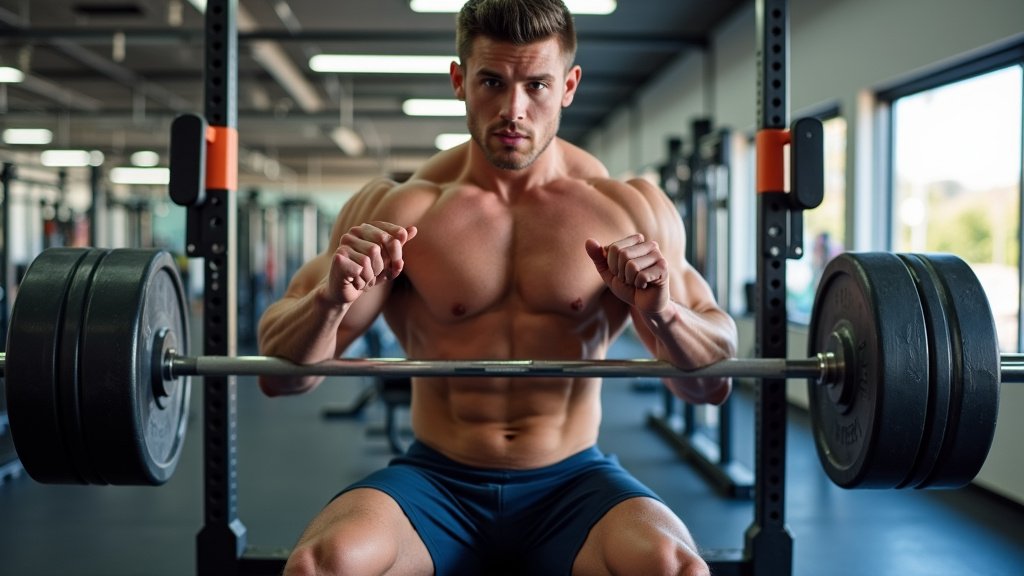
If your goal is to compete in powerlifting or achieve absolute maximal strength (like a 1-rep max squat or deadlift), barbells are usually the best choice. The type of resistance and how it loads the body is different. Many strength coaches suggest barbells are king for these specific goals (NSCA). If your goal is to compete in powerlifting or achieve absolute maximal strength, barbells are usually the best choice, but functional trainers are also great for strength training.
Olympic Lifts
Olympic lifts on a trainer, with its explosive movements like the snatch and clean & jerk, requires specific equipment and training. Functional trainers don’t replicate the demands of these dynamic lifts. They require a different kind of stability and power generation.
Weight Increments for Advanced Lifters
As you get very strong, the small increments on weight stacks can become a bottleneck. You might find yourself plateauing simply because the next step up in weight is too big a jump. This is less common for most gym-goers but a consideration for serious strength athletes.
Integrating Functional Trainers into Your Heavy Lifting Routine
So, how do you make them work best for you? Think of your functional trainer as a powerful addition, not necessarily a complete replacement, for other training methods. Here’s how to integrate it.
Use Them as a Supplement to Free Weights
This is often the sweet spot. You can use barbells for your main heavy compound lifts. Then, use the functional trainer for accessory work, higher rep sets, or exercises that target weak points. For instance, you might deadlift with a barbell and then do cable pull-throughs for glute development.
Focus on Volume and Time Under Tension
Functional trainers excel at providing consistent tension. This makes them great for higher-volume training. You can achieve a significant training stimulus with moderate weights. This can be just as effective for muscle growth as very heavy, low-rep lifting. We found that focusing on the 8-15 rep range often yields great results with cable machines.
Rehabilitation and Pre-habilitation
Functional trainers are also excellent for injury prevention and recovery. The controlled movements can help you strengthen supporting muscles. This can make your body more resilient for heavier lifts. They are often used in physical therapy settings for good reason. They allow for safe, progressive overload.
Checklist: Heavy Lifting Safely on Your Functional Trainer
- Always start with a lighter weight to check your form.
- Ensure your body is stable before starting any rep.
- Maintain slow, controlled movements throughout the exercise.
- Keep your core tight to protect your spine.
- Focus on completing the full range of motion with good technique.
- Listen to your body; don’t push through sharp pain.
Conclusion
You absolutely can use your functional trainer for heavy lifts, but it requires smart application. Remember that proper form and controlled movements are your top priorities. Functional trainers excel at providing consistent tension and versatility, making them great for muscle development and supplementing your existing routine. While they may not replace barbells for maximal strength goals, they offer a safe and effective way to challenge yourself. Your next step is to assess your current routine and identify where your functional trainer can best enhance your heavy lifting workouts.
Frequently Asked Questions
Can a functional trainer build true strength?
Yes, functional trainers can build significant strength. They provide constant tension, which is excellent for muscle hypertrophy and endurance. While they might differ from barbells for one-rep maxes, they effectively increase your overall muscular strength through various exercises and rep ranges.
What’s the biggest difference between barbell and functional trainer heavy lifting?
The main difference lies in resistance. Barbells offer consistent resistance throughout the lift, dictated purely by gravity. Functional trainers use pulleys, meaning the resistance can vary based on the angle and position of the cable, offering a different type of challenge and support.
How do I progress if the weight stack jumps are too big?
You can still progress by focusing on increasing reps, slowing down your tempo to increase time under tension, or performing more sets. You can also use techniques like adding resistance bands or focusing on exercises where the smaller increments are less of a hindrance.
Are functional trainers good for powerlifting or Olympic lifting?
Generally, no. Functional trainers are not ideal for maximal strength competitions like powerlifting or for the explosive, dynamic movements of Olympic lifting. Barbell training is typically preferred for these specific disciplines due to the nature of the resistance and movement patterns.
How can I ensure I’m lifting heavy safely on a functional trainer?
Always start with a lighter weight to nail your form. Keep your core braced, maintain controlled movements without swinging, and focus on a full range of motion. Never push through sharp pain, and ensure your body is stable before initiating each rep.