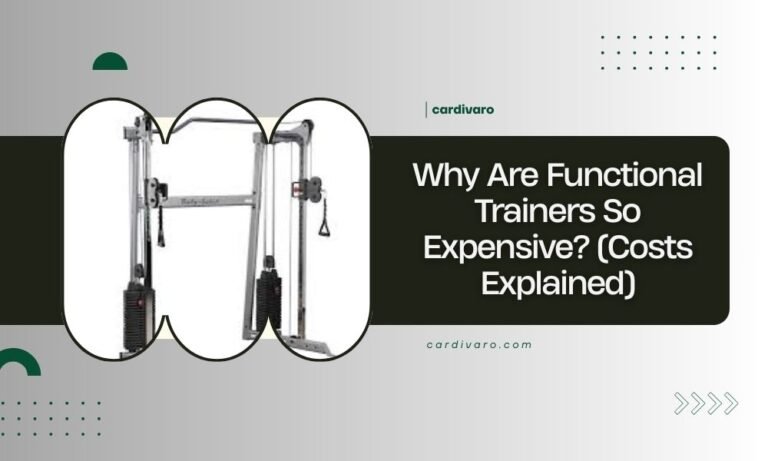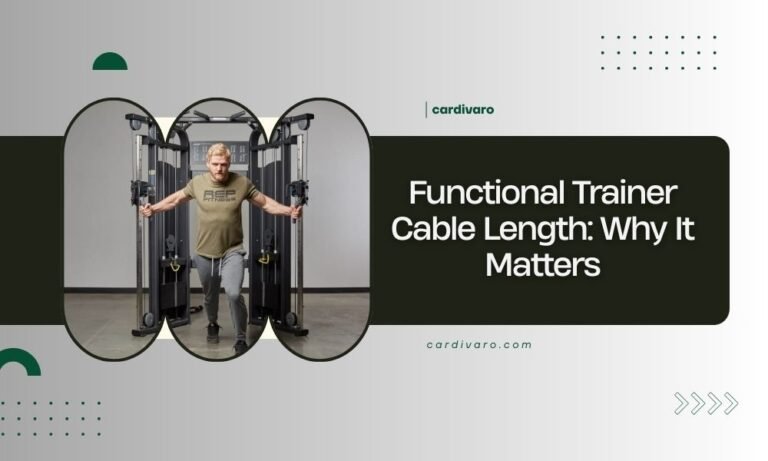
You can do many exercises on a functional trainer, making it a highly versatile piece of equipment for a full-body workout. With adjustable cables and handles, you can target nearly every muscle group, from your legs to your core to your arms.
Functional trainers are cable machines that use pulleys. This allows you to perform compound movements that mimic everyday activities. We found that they are great for building strength, improving stability, and increasing your range of motion.
- Functional trainers are super versatile.
- They can work your whole body.
- You can do many different exercises.
- Great for strength and stability.
Ready to get started? Let’s walk through some of the best exercises you can do on your functional trainer.
Full-Body Functional Trainer Workouts
You can work your entire body with a functional trainer. It’s like having a gym packed into one compact machine. We found that the adjustable cables let you hit muscles from every angle, giving you a comprehensive workout.
Whether you want to build strength, improve endurance, or boost your balance, a functional trainer can help. It’s user-friendly and incredibly effective for all fitness levels.
Building Upper Body Strength
The functional trainer is fantastic for upper body exercises. You can easily adjust the pulleys to target different muscle groups. This versatility means fewer trips to change weights or machines, keeping your workout flowing.
Chest Exercises
For your chest, think about movements that mimic pushing. The cables provide consistent tension, unlike dumbbells. This constant resistance can lead to better muscle engagement and growth.
- Standing Cable Chest Press: Stand between the pulleys, grab the handles, and press forward like a push-up. This exercise targets your chest muscles effectively.
- Incline Cable Press: Adjust the pulleys lower. Press upwards and forwards, engaging your upper chest. It’s a great way to sculpt those hard-to-reach areas.
- Cable Flyes: With pulleys set wide, bring your hands together in front of you. This movement really stretches and contracts your chest muscles.
Back Exercises
Your back muscles are crucial for posture and strength. Functional trainers allow for a wide range of pulling motions. We found that these movements can significantly improve your back strength. Many experts recommend these for spinal health (Harvard Health Publishing).
- Cable Rows: Sit on a bench or stand, pulling the handles towards your abdomen. This works your middle back.
- Cable Pulldowns: Adjust the pulleys high. Pull the handles down towards your chest, engaging your lats. It’s similar to a traditional lat pulldown machine.
- Standing Cable Pullovers: Hold a straight bar attachment with high pulleys. Pull the bar down in an arc. This targets your lats and serratus muscles.
Shoulder Exercises
Strong shoulders are vital for many daily activities. The fluid motion of cables is gentle on your joints. This makes it a great option for shoulder workouts, reducing strain compared to free weights.
- Cable Lateral Raises: Stand with a low pulley to your side. Lift the handle outwards to shoulder height. This builds broad, strong shoulders.
- Cable Front Raises: Face the machine with a low pulley. Lift the handle straight out in front of you. This targets the front of your shoulders.
- Cable Face Pulls: Set pulleys high. Pull the rope attachment towards your face, externally rotating your shoulders. This movement is excellent for shoulder health and posture.
Arm Exercises
Want strong, defined arms? The functional trainer is perfect for biceps and triceps. The constant tension challenges your muscles throughout the entire movement. You’ll feel the burn!
- Cable Bicep Curls: Stand facing the machine with low pulleys. Curl the handles up towards your shoulders. Focus on squeezing your biceps.
- Cable Tricep Pushdowns: Set pulleys high. Push the bar or rope attachment down, extending your arms. This works the back of your upper arms.
- Overhead Cable Tricep Extensions: With a high pulley, face away from the machine. Extend the handle over your head. This isolates your triceps even more.
Strengthening Your Lower Body
Don’t forget your legs and glutes! Functional trainers offer unique ways to work your lower body. The resistance helps improve balance and stability, which is essential for functional movement.
Leg Exercises
Cables allow for controlled leg movements. This helps you focus on muscle activation, rather than just lifting heavy weights. We found that this can reduce injury risk while still building strength.
- Cable Lunges: Attach an ankle cuff to a low pulley. Step forward into a lunge, feeling the resistance. This targets your quads, hamstrings, and glutes.
- Cable Squats: Hold handles at shoulder height, facing the machine. Perform a squat, letting the cables guide your movement. It helps maintain proper form.
- Cable Leg Extension: Similar to a lunge setup, but extend your leg straight out. This isolates your quadriceps.
Glute Exercises
Build strong, powerful glutes with targeted cable movements. The constant tension helps activate these important muscles. Strong glutes are crucial for overall lower body function (National Institutes of Health).
- Cable Kickbacks: Attach an ankle cuff to a low pulley. Kick your leg straight back, squeezing your glutes. This is great for glute isolation.
- Cable Hip Abduction: Stand sideways to the machine with an ankle cuff. Move your leg out to the side. This targets your outer thigh and glute medius.
- Cable Hip Adduction: Stand sideways to the machine with an ankle cuff. Move your leg across your body. This works your inner thighs.
Engaging Your Core Muscles
A strong core is the foundation of all movement. Functional trainers excel at core workouts, offering rotational and anti-rotational exercises. This means you’re not just building abs, but a truly functional core.
Abdominal and Oblique Exercises
Think about movements that twist or resist twisting. The cables challenge your core in ways that traditional crunches can’t. We found that these exercises are excellent for improving rotational power and stability.
- Cable Crunches: Kneel facing the machine with a high pulley and rope attachment. Pull the rope down, curling your torso. This directly hits your abs.
- Pallof Press: Stand sideways to the machine with a mid-height pulley. Press the handle straight out, resisting the pull of the cable. This is fantastic for anti-rotation.
- Cable Wood Chops: Set the pulley high for a downward chop, or low for an upward chop. Twist your torso while pulling the handle. This works your obliques and core rotation.
Benefits Beyond Muscle Building
The functional trainer offers more than just strength gains. Its unique design promotes functional fitness. This means your workouts translate to better performance in everyday life and sports.
It’s about training your body to move smarter, not just stronger. We often hear from users how it improves their balance and coordination.
Table: Functional Trainer vs. Free Weights
Let’s quickly look at how functional trainers stack up against free weights for certain aspects. Both have their place in a well-rounded fitness plan.
| Feature | Functional Trainer | Free Weights (Dumbbells/Barbells) |
|---|---|---|
| Constant Tension | Yes, throughout movement | Gravity-dependent, variable tension |
| Range of Motion | Highly adjustable, natural paths | More fixed, can be limited by equipment |
| Safety for Beginners | Higher – guided movement, less dropping risk | Lower – balance and form are critical |
| Versatility | Excellent – full body from one station | Good – but often requires multiple pieces |
| Functional Movement | Excellent – mimics daily actions | Good – builds raw strength |
Maximizing Your Functional Trainer Workout
To get the most out of your functional trainer, consider a few key points. Proper form is always king, and using the right attachments can unlock new exercises. Don’t be afraid to experiment a little!
Tips for Effective Training
Think about your goals when planning your workout. Are you aiming for strength, endurance, or flexibility? The functional trainer can help with all of these.
- Focus on Form: Always prioritize correct technique over heavy weight. Watch yourself in a mirror if possible.
- Control the Movement: Don’t let the cables snap back. Control both the pushing and returning phases of each exercise.
- Experiment with Attachments: Try different handles, ropes, or bars. Each one changes the feel and muscle engagement.
- Adjust Pulley Height: Small changes in pulley height can target muscles differently. Play around with it!
Sample Workout Checklist
Here’s a quick checklist to help you plan a full-body session. You can pick 1-2 exercises from each category for a balanced routine.
Remember to warm up before and cool down after your workout. Listening to your body is key to a sustainable fitness journey.
Conclusion
You’ve seen just how much a functional trainer offers. It’s a powerhouse for building strength, improving stability, and boosting your functional fitness across your whole body. From targeted upper body presses to dynamic lower body movements and core-sculpting twists, this machine provides constant tension and incredible versatility.
Remember to prioritize proper form and experiment with different attachments and pulley heights to truly maximize your results. Embrace the adaptability of this equipment. Start incorporating these exercises into your routine, and you’ll quickly discover a more capable and resilient you.
Frequently Asked Questions
Is a functional trainer good for beginners?
Absolutely! Functional trainers are excellent for beginners because they guide your movements and reduce the risk of injury often associated with free weights. You can easily adjust the resistance to match your strength level and focus on learning proper form without heavy loads.
Can I build muscle effectively with a functional trainer?
Yes, you can build significant muscle with a functional trainer. The constant tension provided by the cables challenges your muscles throughout the entire range of motion, leading to effective muscle growth. You can even combine different exercises to increase the intensity.
How often should I use a functional trainer?
The frequency depends on your fitness goals and current routine. Many people find success using a functional trainer 3-4 times per week, hitting different muscle groups each session. Listen to your body and allow for adequate rest and recovery.
What’s the main difference between a functional trainer and a Smith machine?
A functional trainer offers free-moving cables that allow for natural, multi-directional movements, mimicking real-life activities. A Smith machine, however, has a barbell fixed on a vertical track, which limits your range of motion to only up and down movements.
Do functional trainers improve balance and coordination?
Yes, they do! Many functional trainer exercises, especially those performed unilaterally (one side at a time) or with a stability challenge, require you to engage your core and stabilizing muscles. This directly translates to improved balance, coordination, and overall body control.