What Is a Cable Pulley System?
On this page (3 sections)
A cable pulley system is a simple yet powerful mechanical setup. It uses a rope or cable and one or more pulleys. This system helps you lift or move heavy objects with less effort. It’s like having a superpower for lifting!
You’ll find these systems everywhere, from construction sites to home gyms. They are fantastic for changing the direction of force. They can also greatly reduce the amount of force needed. Imagine making a heavy lift feel much lighter – that’s the magic of a cable pulley system!
- A cable pulley system uses pulleys and a cable.
- It helps you lift heavy things more easily.
- These systems can change the direction of force.
- They reduce the effort needed for lifting.
Ready to understand how these clever devices work and why they’re so useful? Let’s dive into all the details.
Understanding Cable Pulley Systems
A cable pulley system is a clever arrangement. It uses a rope or cable and one or more grooved wheels called pulleys. Their main job is to make lifting and moving things easier or to change the direction of a pulling force. Think of it as a simple machine that gives you a mechanical advantage.
You’re probably more familiar with them than you think! From flagpole ropes to gym equipment, these systems are everywhere in our daily lives. They harness basic physics to help us accomplish tasks that would be very difficult otherwise.
The Core Components: What You’ll Find
Every cable pulley system, whether simple or complex, relies on a few key parts. Understanding these components helps you see how the system works as a whole. It’s like knowing the ingredients before you bake a cake.
Pulleys: The Rotating Wonders
A pulley is essentially a pulley wheel with a groove around its edge. This groove is where the cable or rope sits. The wheel then rotates around an axle. Pulleys come in different forms, each with a specific purpose.
- Fixed Pulley: This type of pulley is anchored in place. It doesn’t move with the load. Its primary role is to change the direction of the force. For example, pulling down on a rope to lift something up. It doesn’t reduce the force needed, but it makes the task more convenient.
- Movable Pulley: Unlike a fixed pulley, a movable pulley moves along with the load. It’s attached directly to the object you’re lifting. This type of pulley reduces the amount of force you need to apply, effectively halving it in a simple setup.
- Block and Tackle: This is a combination of multiple fixed and movable pulleys. They are often rigged together in a frame called a block. This system provides a significant mechanical advantage, meaning you need even less force to lift very heavy objects. You’ll see these on cranes and sailboats.
The Cable or Rope: Your Lifeline
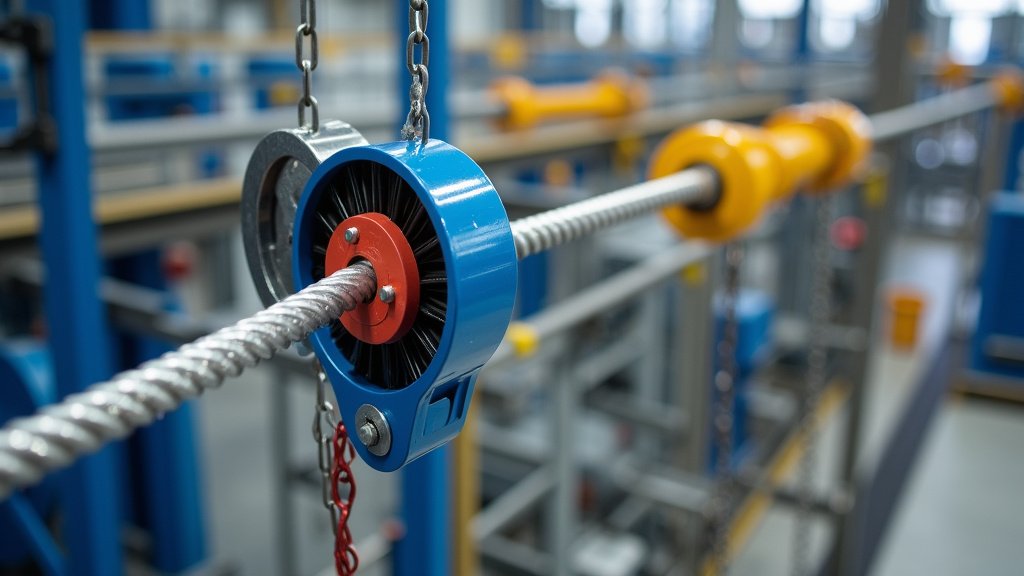
The cable or rope is the connecting element in the system. It runs over the pulleys and transmits the force. The material and thickness of the rope are important, as they must be strong enough to handle the load without breaking. For lifting heavy weights, you’ll often see sturdy steel cables.
How They Work: The Magic of Mechanical Advantage
The real power of a cable pulley system lies in its ability to provide mechanical advantage. This term simply means that you can achieve a greater output force (lifting a heavy object) with a smaller input force (your pull). It’s like getting a helping hand from physics!
Imagine trying to lift a 200-pound box directly. That’s a lot of effort! But with a pulley system, you might only need to pull with 100 pounds of force, or even less, depending on the setup. This makes tasks far more manageable and safer.
Force vs. Distance: The Trade-off
There’s a simple rule in physics: what you gain in force, you lose in distance. If a pulley system helps you lift a 200-pound object with only 100 pounds of force, you’ll need to pull the rope twice as far as the object moves up. So, if you want to lift the box one foot, you’ll pull the rope two feet. It’s a fair trade!
This principle is key to understanding why these systems are so useful. They allow you to apply less effort over a longer path, achieving the same work. Many experts say this balance is fundamental to all simple machines (National Science Foundation).
Types of Cable Pulley Systems
While the basic components are similar, cable pulley systems come in various configurations. Each setup offers different benefits in terms of force reduction and direction change. Let’s look at some common ones.
Single Fixed Pulley
This is the simplest setup. You have one pulley attached to a fixed point. The rope goes over it, and you pull down to lift a weight. Does it reduce the force needed? No. But it does change the direction of your pull. This can be much more comfortable, like hoisting a flag.
Single Movable Pulley
Here, the pulley is attached to the object you’re lifting. One end of the rope is fixed, and you pull the other end. This setup reduces the force by half. So, if you’re lifting 100 pounds, you only need to pull with 50 pounds of force. However, you’ll pull the rope twice the distance.
Block and Tackle Systems
These systems combine multiple fixed and movable pulleys. They are designed for maximum mechanical advantage. The more pulleys you add, the less force you need to apply. We found that the number of rope segments supporting the movable block often determines the mechanical advantage.
For example, a system with two movable pulleys and two fixed pulleys might allow you to lift a load with only one-quarter of the force. This is incredibly powerful for very heavy lifting jobs.
Everyday Applications and Uses
You might be surprised at how often cable pulley systems pop up in your daily life. They are truly versatile and essential tools across many industries and in your home.
Here’s a quick look at where you might encounter them:
- Construction: Cranes use elaborate block and tackle systems to lift massive beams and materials. Imagine building a skyscraper without them!
- Fitness: Cable machines in gyms use pulleys to provide resistance for strength training. They allow for smooth, controlled movements.
- Boating: Sailboats rely on pulleys (called blocks) to raise and trim sails. They make handling large sails much easier.
- Window Blinds: Many blinds and shades use small pulley systems to raise and lower them smoothly.
- Flagpoles: A classic example! A single fixed pulley lets you pull down to raise a flag up.
- Garages: Some garage door openers use pulley systems to help lift the heavy door with less effort.
Benefits of Using a Cable Pulley System
Why are these simple machines so popular? They offer several significant advantages that make difficult tasks much easier and safer. You get to feel like a superhero without all the extra work.
| Benefit | Explanation |
|---|---|
| Reduced Effort | You need to apply less force to lift or move heavy objects. This saves your back and energy! |
| Directional Change | They allow you to pull in a more convenient direction, often downwards, to lift something upwards. |
| Increased Safety | By reducing the required force, the risk of injury from straining or dropping heavy loads decreases. |
| Precision Control | Pulleys can offer smooth and controlled movement of the load, which is helpful for delicate tasks. |
| Versatility | They can be adapted to many different situations and types of loads, from small to very large. |
Choosing the Right System for You
Thinking about using a cable pulley system yourself? The right choice depends on your needs. Consider the weight of the object, the distance it needs to move, and the available space. Don’t just grab the first one you see!
Here’s a quick checklist to guide your decision:
- What’s the weight of the load? This determines the required strength and number of pulleys.
- How much effort can you apply? This helps choose the needed mechanical advantage.
- Do you need to change the direction of pull? A single fixed pulley might be enough.
- What kind of rope or cable is best? Steel cables for heavy loads, synthetic ropes for lighter ones.
- Where will you anchor the pulleys? Ensure your attachment points are very strong.
Always prioritize safety. Ensure all components are rated for the load you intend to lift. A small investment in the right system can prevent big headaches (and backaches!).
Conclusion
You’ve seen how cable pulley systems are much more than just ropes and wheels. They are incredibly versatile tools. They simplify tough tasks by offering mechanical advantage. You can reduce effort and change the direction of your pull. From a simple flagpole to complex cranes, their ability to make work easier is clear.
Understanding the types and components helps you make smart choices. When you need to lift or move something heavy, consider a pulley system. Choose the right setup for your specific needs. This will help you work smarter, not harder, and stay safe. Go ahead and put this knowledge to good use!
Frequently Asked Questions
What is the main benefit of using a cable pulley system?
The primary benefit is reducing the force needed to lift or move heavy objects. This mechanical advantage makes tasks much easier for you. It helps prevent strain and injury, especially when dealing with significant weight.
Can I build a simple pulley system at home?
Yes, you absolutely can build a simple system for light tasks. You’ll need sturdy pulleys, a strong rope, and secure anchor points. Always ensure your components can handle the weight you intend to lift for safety.
Do cable pulley systems ever increase the force needed?
No, they never increase the force needed. At worst, a single fixed pulley will require the same amount of force. Its benefit is changing the direction of the pull, making the task more convenient for you.
What’s the difference between a cable and a rope in these systems?
Cables are typically made of metal strands, like steel, and are used for very heavy loads. Ropes are usually made from natural or synthetic fibers and are suitable for lighter or medium-duty applications. The choice depends on the strength required. If you need to replace a worn cable, learn how to change a cable machine cable safely and effectively.
How can I make a pulley system more efficient?
To make a system more efficient, you can add more movable pulleys. This increases the mechanical advantage. Each additional movable pulley reduces the force you need to apply, though you will pull the rope a greater distance.