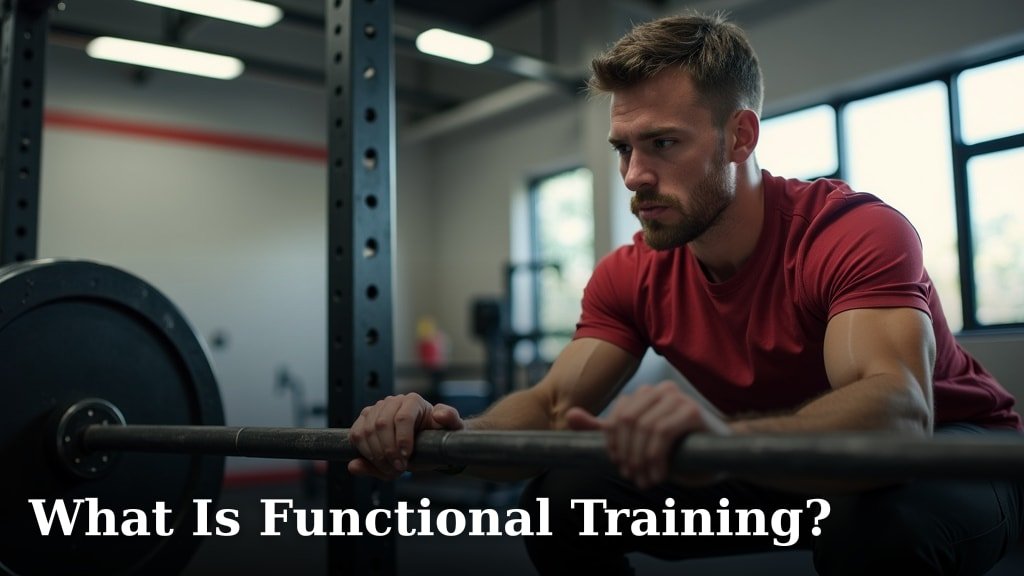
Functional training is a type of exercise that helps you perform daily activities more easily. It focuses on movements you do in everyday life, not just isolated muscles. Think about lifting groceries or playing with your kids – functional training prepares your body for these actions.
This approach uses exercises that mimic real-world movements. We found that it improves your overall strength, balance, and flexibility. Many experts say it makes your body work better as a coordinated unit.
- What functional training is.
- How it helps your daily life.
- Benefits like strength and balance.
- Why it’s different from other workouts.
Let’s dive into all things functional training, and discover how it can change your movement for the better.
Understanding What Functional Training Really Is
You’re curious about functional training, and we found that it’s all about making your body work better in everyday life. It prepares you for real-world activities, not just lifting heavy weights in a static position. Think of it as training for life itself.
Instead of isolating one muscle group, functional training uses exercises that involve multiple joints and muscles at once. This mimics how your body moves naturally. This approach builds practical strength.
Distinguishing Functional Training from Traditional Workouts
You might be wondering, “How is this different from my usual gym routine?” That’s a great question! The core difference lies in the purpose and movement patterns. Traditional strength training often focuses on building muscle mass or strength in individual muscles, typically using machines.
Functional training, on the other hand, prioritizes movements that replicate activities you perform outside the gym. It’s about training your body to move efficiently and safely in various situations. It helps you become truly capable.
Machines vs. Free Weights and Bodyweight
In many traditional gyms, you’ll find rows of machines. These machines often guide your movement, isolating specific muscles. We found that this can be great for building muscle in a targeted way.
Functional training often uses free weights, resistance bands, kettlebells, and your own body weight. These tools force your body to stabilize itself, engaging more muscles. This builds comprehensive strength and balance (National Institutes of Health).
Isolation vs. Compound Movements
Traditional training might have you doing bicep curls or leg extensions. These are “isolation” exercises because they focus on just one muscle group. While useful, they don’t always translate directly to daily tasks.
Functional training favors “compound” movements. These are exercises like squats, lunges, pushes, and pulls. They involve multiple joints and muscle groups working together, just like when you lift a heavy box or reach for something on a high shelf. This integrated movement is key.
The Everyday Benefits You’ll Notice
So, why should you care about functional training? We found that the biggest reason is its direct impact on your quality of life. It makes simple tasks feel easier and helps you navigate your world with more confidence. You’ll move better and feel stronger.
Beyond the gym, these exercises prepare your body for the unexpected. Things like catching yourself from a stumble or carrying heavy bags become less daunting. You gain real practical resilience.
Improved Strength for Daily Tasks
Imagine effortlessly lifting your toddler, carrying groceries up the stairs, or moving furniture. Functional training directly builds the kind of strength you use for these activities. It’s about usable strength, not just how much you can lift in the gym.
We found that regular functional training can make mundane tasks feel like less of a chore. Your body becomes more efficient at handling physical demands. This means less strain and more energy for the fun stuff.
Better Balance and Stability
Do you ever feel a bit wobbly? Or worry about falling? Functional training places a strong emphasis on balance and core stability. Exercises like single-leg squats or unstable surface training challenge your proprioception – your body’s sense of its position in space.
Many experts say that improving your balance can prevent falls, especially as you get older (Centers for Disease Control and Prevention). It also helps with sports and recreational activities, making you feel more grounded and secure.
Enhanced Flexibility and Mobility
Functional training often incorporates a full range of motion. This can lead to increased flexibility over time. You’ll find yourself able to reach, bend, and twist with greater ease and less stiffness.
Mobility refers to your joints’ ability to move through their full range of motion without pain. Functional exercises promote healthy joint movement, which can reduce discomfort and improve overall movement quality. This helps keep your body feeling young.
Who Can Benefit from Functional Training?
The beauty of functional training is its universal applicability. It’s not just for athletes or gym fanatics. We found that almost anyone, regardless of age or fitness level, can gain something from this type of exercise. It meets you where you are.
Because it focuses on movements we all perform, it’s easily adaptable. You can modify exercises to match your current ability. It’s truly a workout for every body.
A Table Comparing Training Styles
Let’s look at how functional training stacks up against traditional strength training to give you a clearer picture:
| Feature | Functional Training | Traditional Strength Training |
|---|---|---|
| Primary Goal | Improve daily movement, prevent injury | Build muscle mass, increase strength (specific muscles) |
| Movement Type | Compound, multi-joint, real-world actions | Isolation, single-joint, guided paths |
| Equipment Used | Bodyweight, free weights, bands, kettlebells | Weight machines, barbells, dumbbells |
| Focus Area | Overall body coordination, core stability | Targeted muscle growth, maximum lift potential |
| Daily Life Impact | Directly improves tasks like lifting, bending | Indirectly improves strength, may not translate directly |
Checklist: Is Functional Training Right for You?
Still wondering if this is the right path for your fitness journey? Consider this quick checklist. If you answered “yes” to most of these, functional training might be a perfect fit!
- Do you want to move more easily in your daily life?
- Are you looking to reduce aches and pains from everyday activities?
- Do you play sports or enjoy active hobbies that require good coordination?
- Are you interested in improving your balance and stability?
- Do you prefer workouts that feel engaging and dynamic, rather than repetitive?
- Are you keen on exercising in a way that helps prevent future injuries?
Conclusion
You’ve now seen how functional training goes beyond traditional workouts. It’s about training for the actual demands of your life, whether that’s lifting grandkids or improving your golf swing. We found that it makes you stronger, more balanced, and incredibly adaptable.
By focusing on movements you use every day, functional training builds practical resilience. You’ll move with greater ease and confidence, reducing your risk of injury. Ready to transform how you interact with the world?
Consider integrating functional exercises into your routine. Start small, focus on proper form, and you’ll quickly notice the difference in your daily capabilities.
Frequently Asked Questions
Is functional training suitable for beginners?
Absolutely! Functional training is highly adaptable for any fitness level. You can start with basic bodyweight exercises and gradually increase complexity as your strength and coordination improve. It’s a great way for beginners to build a strong foundation.
How often should I do functional training?
For most people, incorporating functional training 2-3 times a week is a good starting point. This allows your body sufficient time to recover and adapt. You can also mix it with other forms of exercise for a well-rounded fitness plan.
Do I need special equipment for functional training?
Not necessarily. Many effective functional exercises use just your body weight. As you progress, you might find resistance bands, dumbbells, kettlebells, or medicine balls helpful. However, you can achieve a lot with minimal equipment.
Can functional training help with weight loss?
Yes, functional training can contribute to weight loss. These multi-joint, compound movements burn more calories than isolation exercises. When combined with a balanced diet, it’s an efficient way to build muscle, boost metabolism, and reduce body fat.
What’s the main difference between functional and strength training?
The core difference lies in their purpose. Strength training often focuses on building muscle mass and lifting heavy weights in specific movements. Functional training prioritizes improving everyday movements and overall body coordination. It helps you move better for life’s real-world demands.