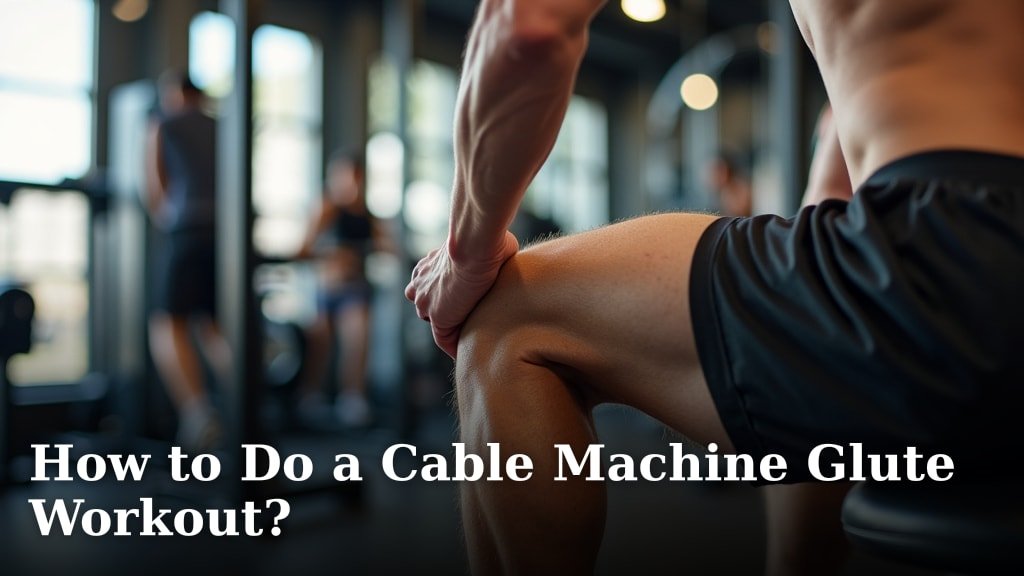
To do a cable machine glute workout, you’ll primarily use the cable ankle strap attachment for exercises like kickbacks, pull-throughs, and single-leg deadlifts. These movements help target your glute muscles effectively by providing constant tension throughout the exercise, which is great for muscle growth.
The cable machine is incredibly versatile for glutes, offering a fantastic way to add resistance that free weights sometimes can’t. You can isolate your glutes from various angles, helping you build strength and shape. Plus, it’s often less intimidating than the squat rack, making it a beginner-friendly option for glute training.
- Cable machines offer constant tension for glute growth.
- Use the ankle strap for kickbacks, pull-throughs, and deadlifts.
- They allow for excellent glute isolation.
- Cable workouts are versatile and beginner-friendly.
Ready to sculpt those glutes? Let’s walk through exactly how to set up and perform the best cable machine glute exercises step by step.
Crafting Your Cable Glute Routine
You’re ready to build those glutes! Getting started with a cable machine is simpler than you think. We’ll show you how to set up, pick your exercises, and make each rep count.
Prepping for Your Glute Workout
Before you even touch the cable machine, a little prep goes a long way. Think about what you need and how to approach your session.
Essential Equipment for Cable Glutes
The star of the show for glute work on a cable machine is almost always the ankle strap. This attachment loops around your ankle and connects to the cable.
- Ankle Strap: This is non-negotiable. It allows you to perform kickbacks and other leg movements. Most gyms have these readily available.
- Handles (optional): For some exercises like pull-throughs, a rope or D-handle might be useful, but often the ankle strap is enough.
- Small mat or towel: You might want this for exercises that involve kneeling or ground contact.
Always check that your equipment is in good condition. A worn strap could cause a setback, and we don’t want that!
Setting Up Your Cable Machine
Proper setup ensures safety and effectiveness. You’ll primarily adjust the pulley height.
First, find a cable machine that’s free. Attach your ankle strap to the D-ring. Now, for the pulley height:
- Low Pulley: This is for exercises like kickbacks, abductions, and single-leg Romanian deadlifts. The cable should be pulling from near the floor.
- Mid-level Pulley: Less common for glutes, but can be used for some variations or specific isolation work.
- High Pulley: This is perfect for cable pull-throughs. The cable will pull from above your head or chest height.
Always start with a lighter weight to get the form right. You can always increase it later. Don’t be afraid to experiment a little to find what feels best for your body type.
Top Cable Exercises for Glute Activation
The cable machine allows for unique tension patterns that free weights can’t always provide. Let’s dive into the best exercises.
Cable Kickbacks
This is probably the most iconic cable glute exercise. It directly targets your gluteus maximus.
How to Perform:
- Attach the ankle strap to one ankle and set the pulley to the lowest position.
- Face the machine, grab the frame for support, and take a small step back.
- Slightly bend your standing knee and keep your core tight.
- Slowly kick the working leg straight back, squeezing your glute at the top. Imagine pushing your heel towards the wall behind you.
- Avoid arching your lower back. The movement should come from your hip.
- Control the return, letting the cable gently pull your leg forward without resting.
- Aim for 10-15 repetitions per leg for 3 sets.
Remember to keep the movement controlled. Think about muscle contraction, not just kicking your leg. Many people find a slight lean forward helps with stability.
Cable Pull-Throughs
This exercise mimics the hip hinge movement of a deadlift, but with constant tension. It’s excellent for the entire glute complex and hamstrings.
How to Perform:
- Set the pulley to a low position. Attach a rope handle or D-handle.
- Stand facing away from the machine, feet shoulder-width apart, holding the rope between your legs.
- Take a few steps forward to create tension in the cable.
- Hinge at your hips, pushing your glutes back as if you’re trying to touch a wall behind you. Keep a slight bend in your knees.
- Allow the weight to pull your hands back between your legs. Feel the stretch in your hamstrings and glutes.
- Drive your hips forward powerfully, squeezing your glutes as you stand tall. Do not hyperextend your back.
- Focus on the glute squeeze at the top of the movement.
- Complete 10-15 reps for 3 sets.
The key here is the hip hinge. It’s not a squat. Think of it as a standing glute bridge with added resistance.
Cable Glute Abductions
This movement targets your gluteus medius and minimus, often called the “side glutes.” Strong side glutes are important for hip stability and injury prevention.
How to Perform:
- Attach the ankle strap to your outside ankle (the leg furthest from the machine).
- Set the pulley to the lowest position.
- Stand sideways to the machine, holding onto the frame for balance.
- Keep your standing leg slightly bent and your core engaged.
- Slowly lift your strapped leg out to the side, away from the machine.
- Focus on squeezing the side of your glute. Avoid leaning your body too much.
- Control the return of your leg, resisting the cable’s pull.
- Aim for 12-18 reps per leg for 3 sets.
For this exercise, many find that a lighter weight and higher repetitions lead to a better muscle connection. You’re aiming for a burn in those side glutes!
Cable Single-Leg Romanian Deadlifts (RDLs)
This is a fantastic exercise for your glutes, hamstrings, and core stability. It requires focus and balance.
How to Perform:
- Attach the ankle strap to one ankle and set the pulley to the lowest position.
- Face the machine and hold the frame for balance.
- Shift your weight onto the standing leg, keeping a slight bend in the knee.
- Hinge at your hips, extending your strapped leg straight back behind you for counterbalance.
- Allow the weight to pull your torso forward, maintaining a straight back and engaged core.
- Go down until you feel a good stretch in your hamstring and glute of the standing leg. Your torso should be roughly parallel to the floor.
- Squeeze your standing glute to pull yourself back to the starting position, keeping your back straight.
- Perform 8-12 reps per leg for 3 sets.
This exercise is more challenging for balance. Don’t worry if you wobble a bit at first. Prioritize your form over heavy weight. Some research suggests that single-leg training can enhance stability and strength asymmetries (NCBI).
Integrating Cable Work into Your Routine
Now that you know the exercises, how do you fit them into your existing workout plan?
When to Use Cable Glute Exercises
Cable exercises are incredibly versatile. You can use them in a few ways:
- Warm-up/Activation: Do a few sets of lighter cable kickbacks or abductions before a heavy squat or deadlift session. This “wakes up” your glutes.
- Main Workout: Cable exercises can be the core of your glute-focused day, especially if you’re looking for isolation.
- Finisher: At the end of a leg day, use cables for a high-rep “burnout” set to completely fatigue your glutes.
- Accessory Work: Add them in to complement compound movements like squats and lunges.
Think about your goals. Do you want to build mass? Focus on moderate reps and challenging weight. More for endurance or activation? Lighter weight, higher reps.
Sample Cable Glute Workout Plan
Here’s a simple template you can follow. Adjust the sets and reps based on your fitness level. If you’re just starting, a good beginner cable machine workout routine can help you build foundational strength.
| Exercise | Sets | Reps | Rest Between Sets |
|---|---|---|---|
| Cable Kickbacks (per leg) | 3 | 12-15 | 60-90 seconds |
| Cable Pull-Throughs | 3 | 10-15 | 60-90 seconds |
| Cable Glute Abductions (per leg) | 3 | 15-18 | 45-60 seconds |
| Cable Single-Leg RDLs (per leg) | 3 | 8-12 | 90-120 seconds |
This workout could be done 1-2 times per week, depending on your overall training split. Listen to your body and ensure you’re getting enough recovery.
Tips for Maximizing Your Glute Engagement
Getting the most out of your cable glute workout isn’t just about going through the motions. It’s about feeling the muscle work.
- Mind-Muscle Connection: Really focus on squeezing your glutes during each repetition. Imagine them doing all the work.
- Controlled Movement: Avoid swinging the weight. Slow and controlled movements prevent momentum from taking over.
- Full Range of Motion: Ensure you’re going through the entire movement your body allows, safely.
- Core Engagement: A strong core protects your lower back and helps stabilize your body, allowing your glutes to work harder.
- Progressive Overload: As you get stronger, gradually increase the weight, reps, or sets. This is crucial for continued muscle growth (American College of Sports Medicine).
- Vary Your Exercises: Don’t always do the exact same routine. Mix up your exercises to challenge your glutes in new ways.
You’re essentially trying to trick your glutes into doing more work. Focus, breathe, and feel the burn!

Conclusion
You now have all the tools to build a powerful cable machine glute workout. Remember, consistency and proper form are key to seeing results. By focusing on that mind-muscle connection and progressively increasing your challenge, you’ll sculpt strong, functional glutes. Don’t be afraid to experiment with different exercises and integrate them into your routine. Start with your next leg day and feel the difference!
Frequently Asked Questions
How often should I do cable glute workouts?
You can incorporate cable glute exercises into your routine 1-3 times per week. This depends on your overall training split and recovery capacity. Make sure to give your muscles enough time to rest and rebuild.
Can cable machines build glute size effectively?
Yes, cable machines are excellent for building glute size. They provide constant tension throughout the movement, which is a major factor in muscle hypertrophy. Combine them with progressive overload for best results.
What weight should I start with for cable glute exercises?
Always start with a light weight that allows you to maintain perfect form. Focus on feeling your glutes work. Once your form is solid, you can gradually increase the weight. It’s better to do more reps with good form than fewer reps with bad form.
Are cable glute exercises better than free weights?
Neither is “better”; they offer different benefits. Cable exercises excel at isolation and constant tension, while free weights (like squats and deadlifts) are great for compound strength and overall power. A balanced routine often includes both for comprehensive glute development.
Why do I feel cable glute exercises more in my lower back or hamstrings?
This often indicates that your glutes aren’t fully engaging. Focus on driving the movement from your hips and squeezing your glutes consciously. Ensure your core is tight and avoid overarching your lower back. Sometimes, lowering the weight can help you establish that mind-muscle connection.