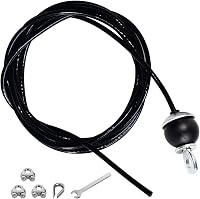
How to Choose Functional Trainer Cable Diameter
Match the cable diameter on a functional trainer to the exact model’s specifications and end fittings. Measure an intact section as a cross-check, then confirm the required size, cable type, length and routing in the manual or with the manufacturer.
On this page (10 sections)
- What cable diameter should you use on a functional trainer?
- How does cable diameter affect fit and operation?
- What should you check before choosing a replacement?
- Can a 5 mm or 6 mm cable stopper fit your trainer?
- Is a winch cable stopper suitable for a functional trainer?
- Does marine vinyl help repair a trainer cable?
- When should you replace a cable instead of measuring it?
- How should you set up and care for a replacement cable?
- What common cable diameter mistakes should you avoid?
- How do you choose the right diameter on a functional trainer?
The cable diameter on a functional trainer must match the machine’s specifications and end fittings. Measure an intact section of the old cable, then confirm the replacement size with the manual or manufacturer before buying.
A cable that looks close may not fit the pulley groove or stopper. Diameter is one part of compatibility; cable construction, length, terminals and routing also need to suit the machine.
This guide explains how to identify the right size, what to check before ordering, and when a cable accessory may help. It also clarifies why a stopper made for a different kind of equipment may not belong on a functional trainer.
What cable diameter should you use on a functional trainer?
Use the diameter specified for your exact trainer model. There is no universal size that fits every functional trainer.
Check the owner’s manual, parts diagram or manufacturer support information for the cable specification. If you can’t find it, contact the manufacturer with the model name and serial number before ordering.
The cable’s end fittings matter too. A replacement may have the right thickness but the wrong terminal, ball stop or threaded end for your machine.
A cable has to travel through pulleys and connect to the machine’s moving parts as designed. A small size difference can change how it sits in a pulley groove or whether a fitting holds securely.
How do you measure functional trainer cable diameter?
Measure a straight, undamaged section with calipers if possible. Take the reading away from a crimp, terminal, coating damage or flattened spot.
If you only have a ruler, your reading may not distinguish between close sizes. Don’t estimate from frayed or compressed cable.
A caliper reading tells you what is installed, but doesn’t prove it is the factory specification. Compare the result with the manual or ask the manufacturer to confirm it.
Measure more than once in separate intact places. If the readings differ, the cable may be worn, flattened or coated in a way that complicates measurement, so use the model’s parts information to resolve the uncertainty.
How does cable diameter affect fit and operation?
The cable must sit and travel correctly through the trainer’s pulleys. A diameter mismatch can cause poor fit, so don’t assume a cable will work just because the ends look similar.
Check the full system:
| Compatibility check | What to confirm |
|---|---|
| Diameter | The measurement matches the machine specification |
| Cable construction | The machine’s required type and build |
| End fittings | Terminals and stops match the original arrangement |
| Length | The replacement follows the intended route without excess or tension |
| Routing | The cable path through every pulley matches the diagram |
Cable diameter does not tell you whether the replacement has the correct construction, length or strength for the machine. Review cable machine replacement parts and verify the match for your model.
Those details should come from the trainer manufacturer or an approved parts source.
For a model-specific cable-length example, see what cable length a HOIST V6 functional trainer uses. Length and diameter are separate measurements, and both need to match the equipment.
If any detail is uncertain, pause and confirm it with the manufacturer. Follow the trainer’s service instructions, and don’t use the machine with a damaged or incorrectly routed cable.
What should you check before choosing a replacement?
Confirm full compatibility, not just diameter. Compare the new cable’s length, construction, end fittings and routing with the trainer’s requirements.
Use the manual’s parts diagram to identify the cable path and terminal style. If it lacks enough detail, contact the brand with the model information and clear photos of the existing cable ends.
The functional trainer cable replacement DIY guide covers the broader replacement process. If you’re still comparing cable options, read how to choose the best replacement cable for a functional trainer.
Before ordering a cable accessory, make a short checklist: model, specified diameter, cable length, end type and intended routing. That makes it easier to spot a mismatch before parts arrive.
Can a 5 mm or 6 mm cable stopper fit your trainer?
A stopper specified for 5 mm or 6 mm cable fits only that stated range. Your trainer must also use a compatible cable end and stopper design.
ULXIOM Gym Fitness Cable Ball Stopper Ends are specified for 5 mm and 6 mm fitness equipment cables. The set includes 2 assemblies, 6 screws and a tool, and the maker gives a maximum load of 200 kg (440 lb).
This option suits someone replacing a compatible stopper on a fitness cable of the stated diameter. Skip it if your trainer uses another diameter, a different terminal arrangement or a manufacturer-specific fitting.
The size range alone doesn’t confirm that the part is suitable for every trainer. Follow the equipment maker’s guidance for replacement parts and installation, and don’t treat a stated load as proof of compatibility with your machine.
Is a winch cable stopper suitable for a functional trainer?
A winch stopper is intended for winch cable or synthetic rope, so it’s not a general replacement for a functional trainer cable stop. Match the accessory to the equipment it was designed to fit.
AUTMATCH Winch Hook Stopper comes as a 2-pack and is specified for steel cable or synthetic rope up to 1/2 in (12 mm) in diameter. Its split silicone rubber body uses an embedded steel plate and bolts, with the stated purpose of keeping a winch line from pulling too far through its rollers.
That use case is different from a functional trainer’s cable path and fittings. Skip this option for a trainer unless its manufacturer specifically confirms that the part is compatible.
A larger diameter range does not make a part more versatile for every machine. The fit, attachment method and intended job all have to line up.
Does marine vinyl help repair a trainer cable?
Marine vinyl doesn’t replace a cable, sleeve or cable stopper. It is upholstery fabric for projects such as seats, accessories and indoor or outdoor upholstery.
SARANDAVE Marine Vinyl Fabric is a black faux leather vinyl sold as a 36 x 54 in cut. It is described as water, sunlight, UV and abrasion resistant, and can be cut, sewn, glued or stapled.
It may suit an upholstery project near a home gym, such as repairing a separate padded surface. Skip it for cable repair or any part that carries load, passes through a pulley or secures a cable.
The product’s fabric properties don’t make it a cable repair material. Keep the trainer’s cable system intact and use parts approved for the equipment.
When should you replace a cable instead of measuring it?
Replace a cable with broken strands, kinks, crushing, severe wear or visible damage. Don’t keep training while trying to identify a size from an unsafe cable.
If damage makes measurement unreliable, use the model’s parts information or ask the manufacturer for the right part. The average lifespan of a functional trainer cable explains common wear factors, but inspection and service guidance should drive your decision.
After identifying the correct part, follow the machine’s service procedure. See how to lubricate functional trainer cables for routine care and how to tighten functional trainer cables if slack is the issue rather than cable damage.
A replacement cable should follow the original path and move smoothly through each pulley. If it binds, rubs, twists or pulls unevenly after installation, stop using the machine and recheck the routing and compatibility.
How should you set up and care for a replacement cable?
Set up a replacement according to the trainer’s service instructions and routing diagram. A cable routed over or under the wrong pulley can change how the machine moves and may create extra wear.
Before work begins, make the machine safe to service by following its manual. Keep the weight stack or plates from moving unexpectedly, and don’t improvise a repair where the manufacturer calls for a qualified technician.
Compare the new cable with the original arrangement before removing anything. Note each pulley turn and anchor point, and take reference photos if the manual allows the repair.
After installation, check that the cable sits in every pulley groove and that fittings are fully secured. Move the system slowly through its range without a training load, then follow the manual for any further checks before normal use.
For routine care, inspect exposed cable sections and terminals regularly. Wipe away dirt, keep the cable from rubbing against sharp edges, and use only the lubricant and method the manufacturer recommends.
For general pulley care, see universal gym cable pulley lubrication.
Don’t apply grease or spray by habit. Some products can attract dirt or affect cable coverings, so follow the trainer’s care instructions; functional trainer cable lubrication guidance covers the topic in more detail.
What common cable diameter mistakes should you avoid?
The most common mistake is choosing by diameter alone. A cable that measures correctly can still be the wrong length, construction or end style.
Avoid these errors:
- Measuring a crushed, frayed or coated section and treating it as exact.
- Assuming a stopper’s stated cable range proves it fits your machine.
- Ordering by a photo or a similar model name without checking the exact model.
- Reusing a cable with visible strand damage while waiting for a replacement.
- Changing the cable path from the manual because a route appears easier.
- Using an accessory intended for a winch or upholstery project in a trainer’s cable system.
If the parts diagram and your measurement disagree, don’t pick whichever number seems more plausible. Confirm the specification with the manufacturer or a service professional familiar with the model.
How do you choose the right diameter on a functional trainer?
Choose the diameter confirmed for your exact trainer model, then verify cable length, construction, routing and end fittings. If any of those details remain uncertain, ask the manufacturer before ordering or installing a part.
Use calipers on intact cable as a cross-check, not as a substitute for the machine specification. For a compatible 5 mm or 6 mm fitness cable stopper, the ULXIOM option may fit; for a winch line or upholstery project, the other products serve separate purposes and should not be used as trainer cable repairs.
Pick a replacement cable only when its full specification matches the equipment. If the cable is damaged, take the trainer out of use until the correct part is installed and checked; for more repair context, continue with the functional trainer cable replacement guide.