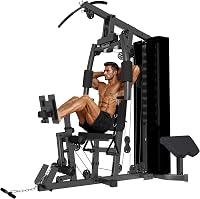
How to Measure Ceiling Height for a Functional Trainer?
On this page (3 sections)
To measure your ceiling height for a functional trainer, simply use a tape measure from the floor to the absolute highest point of your ceiling. Ensure you account for any obstructions like light fixtures or ceiling fans. Knowing this exact measurement is key for safe and effective training.
When setting up a functional trainer, your ceiling height dictates the range of motion for exercises. Too low, and you might be limited in overhead movements. Too high, and you might need to adjust cable lengths. We found that proper clearance is vital for preventing equipment damage and ensuring you can perform a full workout. It’s also important for exercises like pull-ups or presses.
- Measure from the floor to the highest ceiling point.
- Subtract space for light fixtures or fans.
- Aim for at least 1-2 feet of clearance above the tallest exercise.
- Check your functional trainer’s manual for specific height recommendations.
Let’s walk through exactly how to get this measurement and what to do with it to make sure your functional trainer fits perfectly in your space.
“`htmlGetting the Right Ceiling Height for Your Functional Trainer
So, you’re ready to bring a functional trainer into your home gym. That’s fantastic! Before you get too excited about all the exercises you’ll be doing, let’s talk about a really important measurement: your ceiling height. This isn’t just about fitting the machine in; it’s about making sure you can train safely and effectively. We found that getting this right from the start saves a lot of headaches down the line.
Why Ceiling Height Matters More Than You Think
Your functional trainer, often called a cable machine or multi-gym, works by using pulleys and cables to let you perform a wide range of movements. Many of these movements involve lifting weights overhead. If your ceiling is too low, you might not be able to complete exercises like overhead presses, shoulder raises, or even certain upright rows at full extension. This can really limit what you can do with your trainer. If you’re new to this type of equipment, understanding if a functional trainer is safe for beginners is a great first step.
Think of it like trying to do a standing overhead press in a tiny closet. You’d hit the ceiling, right? The same principle applies, though hopefully, your workout space is a bit bigger! We found that even a few inches can make a difference for taller individuals or those performing exercises with a large range of motion.
How to Measure Your Ceiling Accurately
Measuring your ceiling height is pretty straightforward. You’ll need a standard tape measure. This is one of those times when precision really pays off. Let’s break down the steps to ensure you get the most accurate reading for your home gym setup.
Gather Your Tools
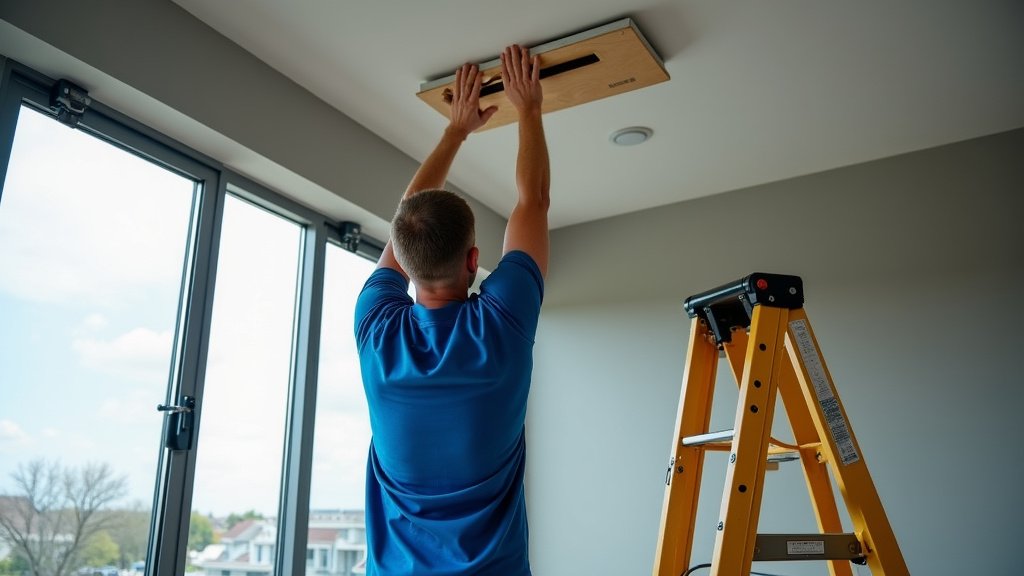
First things first, grab your tape measure. A retractable one is usually easiest to handle. You might also want a sturdy stepladder if your ceilings are high. Having a second person can make this task much easier and safer, especially when dealing with taller heights or navigating around furniture.
The Basic Measurement
Place one end of the tape measure firmly on the floor. Extend the tape measure straight up to the ceiling. Make sure the tape is perfectly vertical. Read the measurement at the point where the tape meets the ceiling. This gives you your total ceiling height.
Accounting for Obstructions: The Critical Step
Now, this is where many people can get tripped up. You can’t just measure to the lowest point of your ceiling. You need to look up and see if there are any fixtures or obstructions hanging down. This commonly includes light fixtures, ceiling fans, smoke detectors, or even decorative elements. You need to measure from the floor to the absolute highest point of the ceiling itself, not to the bottom of these fixtures.
For example, if you have a ceiling fan that hangs down 18 inches from the ceiling, and your ceiling height is 10 feet, the actual usable clearance for overhead movements might be significantly less than 10 feet. You’ll need to subtract the lowest hanging point of the fixture from your total ceiling height measurement to understand your true workable space.
We found that people often forget to measure down from the fixture to the bottom. Simply note the distance from the floor to the bottom of the fan blades or light fixture. This is the critical number for your functional trainer clearance.
Finding the Lowest Point
Walk around the area where you plan to place your functional trainer. Identify the lowest point created by any of these fixtures. Measure from the floor to this lowest point. This measurement is your usable vertical space. Let’s say you measured 9 feet 6 inches from the floor to the bottom of your ceiling fan. That’s your limiting factor for overhead exercises.
What’s the Ideal Clearance?
Okay, so you’ve got your measurements. For more on typical functional trainer height, see this guide. What’s considered “good” clearance for a functional trainer? It’s not a one-size-fits-all answer, but we can give you some solid guidelines. It generally depends on the specific exercises you plan to do and your own height.
General Recommendations
Many fitness experts recommend having at least 1 to 2 feet of clearance above the highest point of any exercise you plan to perform. This buffer is essential for safety and allows for natural movement. For example, if you’re 6 feet tall and plan to do standing overhead presses, your arms might extend 7.5 to 8 feet high.
If your total usable ceiling height is 9 feet 6 inches, you have 1.5 to 2 feet of clearance for overhead movements. This is usually a good amount. However, if you only have 9 feet of usable space, that’s only 6 inches of clearance, which might be too tight.
Considering Your Height and Exercises
Your personal height plays a big role. A 5-foot individual will have different overhead clearance needs than a 6-foot-5 individual. We found that it’s crucial to think about the specific exercises that require the most vertical space. Are you planning on doing Olympic lifts with overhead components? Or primarily resistance exercises like chest presses and rows?
If you’re doing pull-ups or assisted pull-ups on your functional trainer, you’ll need even more space. You don’t want your head hitting the ceiling during the upward part of the movement. Many functional trainers come with attachment points for pull-up bars; factor this into your calculation.
Checking Your Functional Trainer’s Manual
This is a step that can’t be stressed enough. For more on ideal trainer ceiling height, see this guide. Every functional trainer is different. The manufacturer will provide specific dimensions and clearance requirements. We strongly advise you to consult your functional trainer’s manual or the manufacturer’s website. They often list a minimum recommended ceiling height for safe operation.
This information is usually found in the installation or specifications section. It might state something like, “Requires a minimum ceiling height of 8 feet with 18 inches of overhead clearance.” Always prioritize the manufacturer’s recommendations. They have the most accurate data for their specific equipment.
Calculating Usable Space: A Quick Example
Let’s put it all together with a quick example to make sure you’re crystal clear. Imagine you measure your room and find the following:
- Total ceiling height: 10 feet
- Your ceiling fan hangs down 2 feet from the ceiling.
- The bottom of the fan blades is 8 feet from the floor.
In this scenario, your usable ceiling height for overhead exercises is 8 feet. This is because the fan is the lowest obstruction. Now, compare this 8 feet to the maximum height your body and the weights will reach during your most demanding overhead exercises.
If your maximum reach during an exercise is 7.5 feet, you have 6 inches of clearance. This is probably enough, but it’s tight. If you want to do exercises where your hands might go up to 8 feet, you have zero clearance, which is a problem. Always aim for that 1-2 foot buffer.
When Your Ceiling Height is a Problem
What if your measurements reveal that your ceiling height is just too low for your dream functional trainer? Don’t despair! We found that there are often solutions you can explore.
Consider a Different Model
Some functional trainers are designed with lower ceilings in mind. For more on low ceiling functional trainers, see this guide. They might have a more compact design or specific features that allow for less vertical clearance. Research models that explicitly state they are suitable for spaces with lower ceilings. This is often a better long-term solution than trying to force a tall machine into a short space.
Adjusting Your Workouts
If you’re committed to your current trainer, you might need to adjust certain exercises. For example, you may not be able to perform full overhead presses. You could focus more on chest presses, rows, and lateral movements. You can still get a fantastic workout with a limited range of motion for some exercises. We found that many people adapt their training routines successfully.
Creative Solutions for Fixtures
In some cases, you might be able to modify or temporarily remove ceiling fixtures. If a ceiling fan is the only issue, could you switch to a lower-profile light fixture? Or perhaps remove the fan during your workout sessions? This is a decision that involves safety and comfort, so weigh your options carefully. Ensure any electrical work is done by a qualified professional.
Your Functional Trainer Setup Checklist
To make sure you’re all set for a successful installation, here’s a quick checklist to run through:
- Measure your ceiling height from floor to the highest point.
- Identify and measure the lowest point of any ceiling obstructions (lights, fans).
- Calculate your usable vertical space by subtracting obstruction height from ceiling height.
- Check your functional trainer’s manual for minimum height requirements.
- Determine your maximum reach for overhead exercises, including extra space for movement.
- Ensure you have at least 1-2 feet of clearance above your maximum reach.
Getting these measurements right is a foundational step for building your ideal home gym. It ensures your functional trainer will be a safe, effective, and long-lasting addition to your fitness journey.
“`
Conclusion
You’ve got the know-how to accurately measure your ceiling height for your functional trainer. Remember, it’s about more than just fitting the machine; it’s about creating a safe and effective training space. By carefully measuring from the floor to the highest point and subtracting any obstructions, you ensure ample clearance for all your exercises. This attention to detail will pay off with every workout. Your next step is to take that tape measure and get those exact numbers for your home gym!
Frequently Asked Questions
Do I need a special tool to measure ceiling height?
No, a standard retractable tape measure is all you need. If your ceilings are high, a stepladder will help you reach safely. Having a second person can also make the measurement process much easier and more accurate.
What if I have a sloped ceiling?
If you have a sloped ceiling, measure the height at the lowest point where you plan to place your functional trainer. Then, measure up to the peak of the ceiling in that area. You’ll need to consider the lowest usable height for your overhead exercises.
How much clearance is absolutely necessary for a functional trainer?
Generally, aim for at least 1 to 2 feet of clearance above the highest point of your typical overhead exercises. This buffer allows for natural movement and prevents accidental contact with the ceiling.
Can I still use a functional trainer if my ceiling is low?
Yes, you often can! You might need to choose a functional trainer model designed for lower ceilings or adjust the range of motion on certain exercises. Focus on movements that don’t require full overhead extension.
Should I measure to the ceiling or the light fixture?
You need to measure to the absolute highest point of the ceiling itself. Then, note the distance from the floor to the lowest part of any fixture, like a light or fan. This lowest point will be your limiting factor for usable vertical space.