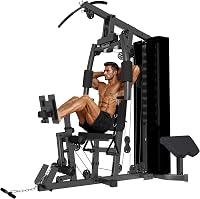
What Is the Ideal Ceiling Height for a Functional Trainer?
On this page (9 sections)
- Determining Your Space’s Ceiling Height Needs
- The Impact of Ceiling Height on Exercise Variety
- Minimum Recommended Ceiling Heights
- Ideal Ceiling Heights for Optimal Training
- Factors Beyond Just Height
- Quick Checklist for Your Training Space
- A Table Comparing Ceiling Height Scenarios
- Conclusion
- Frequently Asked Questions
The ideal ceiling height for a functional trainer is at least 8 feet. Compare low ceiling trainer options if your room has less clearance. This ensures you have enough clearance for most exercises. For taller individuals or those performing overhead movements, 9 or 10 feet is even better.
Choosing the right ceiling height is more than just avoiding a bump. It impacts the variety of exercises you can perform. A lower ceiling can limit your ability to do certain power cleans or overhead presses. We found that many home gym setups need careful planning around this one factor.
- Minimum recommended height: 8 feet.
- Ideal for taller users: 9-10 feet.
- Clearance needed for overhead movements.
- Affects exercise variety.
Let’s get into the details and figure out what ceiling height works best for your functional training space.
You’re serious about your home gym. You’ve picked out your gear, maybe even mapped out the flooring. But wait, have you looked up? The ceiling height in your training space plays a bigger role than you might think. Our guide on how much space you need for a functional trainer explains the importance of ceiling height.
Determining Your Space’s Ceiling Height Needs
The right ceiling height is key for a functional and safe training environment. It directly affects the exercises you can perform. We found that most home gym setups benefit from a ceiling that’s at least 8 feet high. This gives you enough headroom for many common movements.
But what if you’re on the taller side? Or what if your training involves dynamic, overhead movements? For these situations, 9 or even 10 feet can make a huge difference. It’s all about ensuring you have ample clearance and can move freely without worry. Let’s break down why this matters so much.
The Impact of Ceiling Height on Exercise Variety
Think about the exercises you love. Are any of them done overhead? Many popular functional training moves require you to reach or move upwards. If your ceiling is too low, you might have to skip certain exercises or modify them awkwardly. This can really limit your training progress.
Overhead Movements and Clearance
Exercises like overhead presses, jerks, and even some forms of jumping or plyometrics demand vertical space. For instance, a standard overhead press with a barbell requires you to lift the weight above your head. Your hands and the barbell need clearance. We found that a person 6 feet tall needs at least 7.5 feet of clearance for a basic overhead press (ACSM Guidelines).
If you’re doing power cleans or snatches, the barbell travels upwards. It starts low, moves to shoulder height, and then can go even higher. A low ceiling could mean you can’t complete the full range of motion. This isn’t just about comfort; it’s about effective training. You want to perform exercises as intended for the best results.
Dynamic and Explosive Training
What about exercises that involve a jump or a quick upward movement? Think about box jumps with an overhead reach, or kettlebell swings that go higher. Even some medicine ball throws could be affected. A low ceiling might make you feel cramped or even create a safety hazard.
We found that many people underestimate the amount of vertical space needed for dynamic movements. It’s not just your static height. It’s your reach plus the movement path of the weight or your body. Ensuring you have plenty of buffer space is a smart move for safety and performance.
Minimum Recommended Ceiling Heights
So, what’s the absolute minimum you should aim for? For most general functional training, 8 feet is our baseline recommendation. This height works for many standard exercises like squats, lunges, and deadlifts. It also allows for a reasonable range of motion in most pressing and pulling exercises.
The 8-Foot Standard
An 8-foot ceiling is common in many homes. It’s a good starting point. If you’re on the shorter side and your exercises are primarily ground-based or don’t involve a massive overhead reach, 8 feet might be sufficient. You can likely perform a good variety of movements without issue.
However, we’ve seen that even with an 8-foot ceiling, taller individuals might feel restricted during overhead lifts. It’s always better to have a little extra room than not enough. Think of it like driving: you want a car that fits you comfortably, not one you have to duck into.
When 8 Feet Isn’t Enough
If you plan on doing serious Olympic lifts, like snatches, or if you’re over 6 feet tall, an 8-foot ceiling could feel quite limiting. We found that for these types of activities, you’ll want to aim higher. It’s about allowing your body and the equipment the space they need to move.
Consider a standard 7-foot person performing a snatch. The barbell can easily go over 8 feet high during the lift. This means an 8-foot ceiling might leave you with only a foot of clearance. That’s cutting it very close for a dynamic, high-speed movement.
Ideal Ceiling Heights for Optimal Training
Now, let’s talk about what’s truly ideal. If you have the option to choose or modify your space, aiming higher is usually the better bet. This gives you the most flexibility. We found that 9 or 10 feet offers a significant advantage.
The 9-Foot Sweet Spot
A 9-foot ceiling provides a much more comfortable experience for many people. It gives that extra vertical clearance needed for taller individuals and more ambitious overhead movements. This height is often found in basements with finished ceilings or in some newer construction.
With 9 feet, you can perform most overhead lifts with confidence. It reduces the risk of accidental bumps. Many people report feeling less claustrophobic in a space with higher ceilings. It simply allows for a broader range of exercises.
10 Feet and Above: The Ultimate Freedom
If you can achieve 10 feet or more, you’ve essentially eliminated ceiling height as a major constraint for most functional training. This is often seen in gyms designed for CrossFit or weightlifting. It provides ample room for everything from high cleans to jumping plyometrics.
We found that a 10-foot ceiling truly allows you to train without reservation. You don’t have to constantly think about how high you’re reaching or lifting. This freedom can lead to more aggressive training and better performance gains. It’s the gold standard for those serious about their functional fitness.
Factors Beyond Just Height
While height is paramount, a few other ceiling-related factors are worth considering. You don’t want to just clear the height; you want the space to feel right.
Room Dimensions
The length and width of your space are also important. Even with a high ceiling, a cramped room can feel restrictive. You need enough horizontal space for movements like lunges or sprints. We found that a well-proportioned room, regardless of ceiling height, feels more functional.
Obstructions
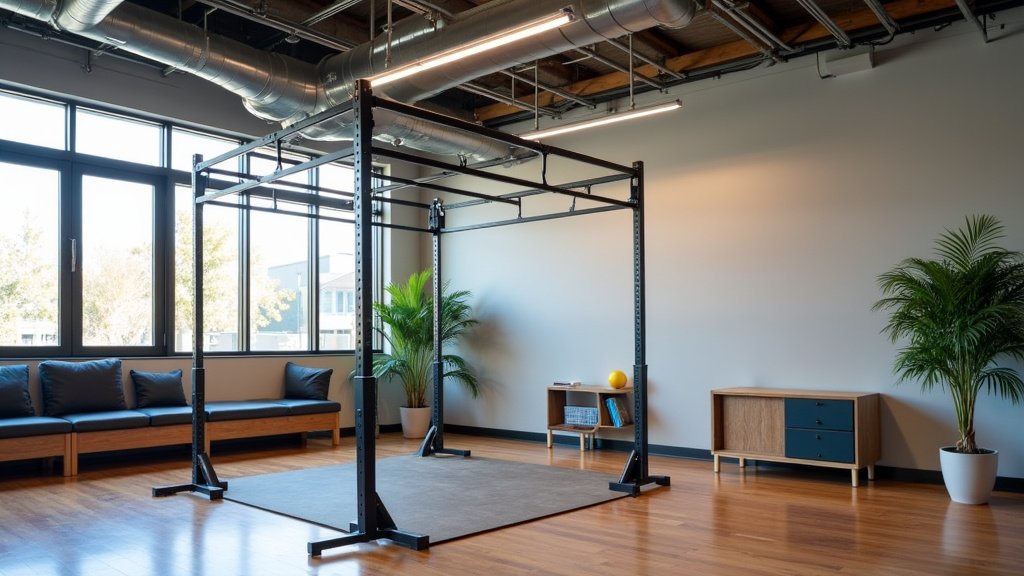
Look for things like exposed beams, ductwork, or light fixtures. These can reduce your effective ceiling height in certain areas. Measure the lowest point of any obstruction. This becomes your actual usable clearance. Always account for these when planning your space.
Quick Checklist for Your Training Space
Before you commit to a space or start setting up, run through this quick checklist:
- Measure the lowest ceiling height in your entire training area.
- Consider your own height and your typical range of motion.
- Factor in the height of any equipment you’ll be lifting overhead.
- Think about any dynamic or jumping movements you plan to do.
- Note any obstructions like beams or lights that reduce clearance.
- If possible, aim for more than the minimum to allow for future needs.
A Table Comparing Ceiling Height Scenarios
To help you visualize, let’s look at some common scenarios and what they mean for your training:
| Ceiling Height | Pros | Cons | Best For |
|---|---|---|---|
| 7 Feet | Might fit in some very low basements. | Highly restrictive for overhead movements. Not recommended for most functional training. | Basic mobility, stretching, very light, ground-based exercises only. |
| 8 Feet | Common in many homes. Sufficient for many basic exercises. | Can feel restrictive for taller individuals or advanced overhead lifts. Limited dynamic movement space. | General fitness, strength training (squats, deadlifts), some basic pressing. |
| 9 Feet | Good clearance for most users and exercises. More comfortable feel. | Might still be slightly limiting for very high Olympic lifts. | Most functional training, overhead lifts, moderate plyometrics, taller individuals. |
| 10+ Feet | Ample clearance for all functional training movements. Maximum freedom. | Less common in standard residential builds; may require special construction. | Advanced Olympic lifting, high-intensity plyometrics, competitive training, anyone wanting no limits. |
As you can see, the higher the ceiling, the more versatile your training space becomes. We found that investing in a space with adequate ceiling height pays off in the long run. It means you won’t outgrow your setup as quickly.
Conclusion
Your home gym ceiling height is a foundational element for a truly functional training space. We’ve seen that while 8 feet can get you started, it often leaves you wanting more, especially if you’re tall or enjoy overhead lifts. Aiming for 9 or 10 feet opens up a world of exercise possibilities and makes your training safer and more enjoyable. Before you finalize your setup, take a good look at your ceiling. Your future workouts will thank you for giving them the vertical freedom they deserve.
Frequently Asked Questions
What’s the absolute minimum ceiling height I should have for my home gym?
For most basic functional training exercises, a ceiling height of 8 feet is the minimum we recommend. This allows for many common movements like squats and deadlifts, and provides some overhead clearance for lighter presses. However, it can still feel limiting for taller individuals or more dynamic lifts.
Can I do Olympic lifts like snatches with an 8-foot ceiling?
It’s risky and generally not recommended. Olympic lifts, like the snatch and clean & jerk, involve the barbell traveling high overhead. Even for someone of average height, the barbell can easily exceed 8 feet during the lift. You’d have very little margin for error, increasing the chance of hitting your ceiling and causing injury or damage.
I’m over 6 feet tall. What ceiling height do I really need?
If you’re taller than average, especially over 6 feet, you’ll want to aim higher than the minimum. A 9-foot ceiling is a much better starting point, and 10 feet or more would be ideal. This extra height ensures you can perform overhead presses, jerks, and even some jumping movements comfortably and safely without worrying about your head.
Do ceiling obstructions like beams or lights matter?
Yes, absolutely. You need to measure the lowest point of any obstruction in your training area. Exposed beams, ductwork, or low-hanging light fixtures can effectively lower your usable ceiling height. Always account for these when determining if your space is adequate for your intended exercises.
Is a higher ceiling always better for a functional trainer?
For functional training, yes, a higher ceiling is almost always better. It directly impacts the variety and safety of the exercises you can perform. More vertical space means you can execute overhead lifts, dynamic movements, and jumps with full range of motion and without constraint, leading to more effective training.