Dumbbells vs Bodyweight Exercises: Which Should You Choose? (November 2026)
Choose dumbbells for adjustable external resistance and bodyweight exercises for training with little or no equipment. Your best fit depends on how you want to progress, the space you have and which movements you can do consistently.
On this page (8 sections)
- Dumbbells vs bodyweight exercises: which helps you progress?
- Which approach needs less space and equipment?
- Which is easier to fit into a weekly routine?
- What should beginners choose?
- How do you choose a dumbbell weight?
- Can bodyweight exercises replace dumbbells?
- How do you store and use dumbbells safely?
- Which strength training approach should you choose?
Choose dumbbells for adjustable external resistance and bodyweight exercises for training with little or no equipment. Your choice depends on how you want to progress, the movements you enjoy and the room you have to train.
Dumbbells make it straightforward to add load to a movement, but fixed weights only offer the loads you own. Bodyweight training removes that equipment need, though progression often means changing leverage, range of motion or exercise difficulty.
You can also combine both. A few weights can add resistance to some movements while bodyweight exercises fill out a routine without taking up more storage.
 Best for light home workouts
Amazon Basics Neoprene Dumbbell Hand Weights
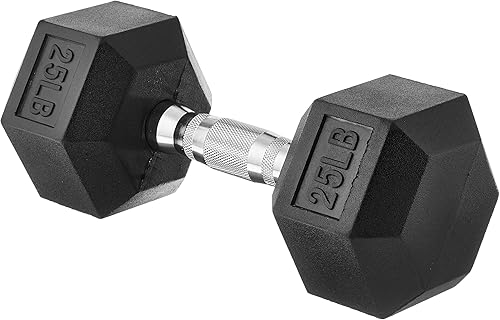 Best for a heavier single weight
Amazon Basics Rubber Hex Dumbbell Hand Weight
Dumbbells vs bodyweight exercises: which helps you progress?
Dumbbells offer a direct way to increase external resistance; bodyweight exercises progress through harder variations and changes in control. Both approaches can become more challenging over time.
With dumbbells, you can add weight to exercises such as rows, presses and squats. The size of each increase depends on which weights you have, and a fixed dumbbell can't become lighter or heavier.
With bodyweight movements, you can adjust the exercise itself. For example, you might change a push-up's incline or range of motion, then work toward a more demanding variation when the current one feels manageable.
Neither method guarantees steady progress. Record your exercises, repetitions and loads, and add difficulty gradually while keeping your movement controlled.
How does dumbbell progression work?
Dumbbells make load changes easy to track when you have more than one weight. If your current load feels manageable through your planned repetitions, you can use a heavier weight, add repetitions or choose a more challenging variation.
A fixed pair has clear limits. A 10 lb pair may suit some upper-body movements but feel too light for others, while a single 25 lb weight may be too heavy for a particular exercise or may not provide a matched pair.
Think about the exercises you plan to do and the loads you can handle with control. Our dumbbell set buying guide explains the main choices, including how fixed weights differ from sets that let you change the load.
How does bodyweight progression work?
Bodyweight progression often means changing the movement rather than adding a plate. You might adjust your hand or foot position, increase the range you can control or choose a variation that demands more strength.
This can work well with little equipment, but it may take practice to find a suitable next step. Some exercises are also hard to load precisely using bodyweight alone.
Avoid treating a higher repetition count as the only measure of progress. A controlled range of motion and consistent technique can be more useful than rushing through extra repetitions.
Which approach needs less space and equipment?
Bodyweight exercises need the least equipment, while dumbbells need a safe place to use and store the weights. Your room layout can make this decision for you.
A bodyweight routine can use floor space and a clear area to move. Some exercises may need a stable surface, such as a wall or sturdy bench, but you won't need to store weights between sessions.
Dumbbells need a spot where you can lift and set them down safely. If your setup will include a bench, use this dumbbell set and bench guide to plan the pairing.
Plan for the space required during exercises as well as a storage area that keeps weights out of walkways.
If you train in a small room, a compact pair may still fit your routine. See our guide to the best dumbbells for home gym to compare options that suit different home setups.
What should you measure before buying dumbbells?
Measure the space where you'll train and the place where the weights will stay when you finish. Make sure you can move without striking furniture, walls or other people.
Consider how the dumbbells will be stored. Hexagon shaped ends help keep these examples from rolling away, but you still need a stable spot that won't block a path or sit where someone could trip.
Match your purchase to your exercises and current ability. If you need more than one load, check whether the weights you choose give you practical steps between exercises.
Which is easier to fit into a weekly routine?
Bodyweight training is easier to start when you don't have equipment; dumbbells can make a planned home routine more consistent if you have a place to keep them. Convenience comes down to what helps you begin and repeat your workouts.
Bodyweight exercises travel easily from room to room and need little setup. You can still benefit from planning a short routine, so you aren't deciding what to do each time.
Dumbbells require you to retrieve and put away the weights, but they can make resistance choices clear. Having an appropriate load within reach may help you follow a routine without changing the exercise to make it harder.
The most practical method is the one you can fit into your day and perform with care. A simple schedule with a few repeatable movements can be easier to maintain than an elaborate plan you rarely use.
Can dumbbells and bodyweight exercises work in the same workout?
Yes, combining them lets you use external load where it helps and bodyweight where equipment adds little. For example, you could pair dumbbell rows with push-ups or bodyweight lunges.
A mixed plan can also give you more options if your available dumbbell weight doesn't suit every movement. Choose variations that match your ability, and leave enough time to rest between challenging sets.
Keep track of what you're doing. If you make every exercise harder at once, it's tougher to tell which changes are working and whether you're recovering well.
What should beginners choose?
Beginners can start with bodyweight movements, dumbbells or a mix, based on their space and comfort with the exercises. You don't have to buy equipment before learning basic movement patterns.
Try a few controlled movements with a comfortable range of motion. If an exercise feels unstable or causes pain, stop and choose an easier variation or seek qualified guidance.
When you're ready for weights, start with loads you can lift smoothly through the movement. These Amazon Basics neoprene dumbbells are a pair of 10 lb weights with a nonslip grip and hexagon ends, while the Amazon Basics rubber hex dumbbell is a single 25 lb weight with rubber encased heads.
Don't assume the heavier choice is the better one. The appropriate load depends on the exercise, your current ability and whether you can keep control throughout each repetition.
How do you choose a dumbbell weight?
Choose a load that lets you complete your planned repetitions with controlled form, then adjust gradually as your strength changes. The same weight can feel different across exercises.
A 10 lb dumbbell may be suitable for one movement and too heavy or too light for another. A 25 lb dumbbell creates a larger fixed load, and this model is sold as one weight rather than a pair.
If possible, plan your first few exercises before choosing weights. Consider whether you need matched weights for both hands or a single weight for movements that use one hand at a time.
Keep room to set a weight down safely. A good load choice also accounts for how easily you can pick it up, move with it and put it away.
Can bodyweight exercises replace dumbbells?
Bodyweight exercises can replace dumbbells for many strength movements, but they don't provide the same simple way to add external load. Whether they're enough depends on your training goals and ability to make movements more challenging.
Push-ups, squats and lunges can be adjusted in several ways, but not every muscle group or movement is equally easy to train with bodyweight alone. Dumbbells add options for loading movements such as rows and curls.
For arm training, compare incline curls and hammer curls.
If you want to avoid equipment, build a routine around movements you can progress and perform in your available space. If you reach a point where bodyweight variations don't match your goals, you can add weights or another form of resistance.
A functional trainer for bodyweight training can add another equipment option when you want cable resistance alongside bodyweight work. Our comparison of functional trainer vs bodyweight results covers how those approaches differ.
How do you store and use dumbbells safely?
Keep dumbbells in a stable storage spot and clear your workout area before lifting. These habits reduce obstacles around the space where you move.
Return weights to storage after use and keep them away from doorways, stairs and busy walkways. Hexagon ends can help prevent rolling, but they don't replace a suitable storage location.
Check that you have enough room to lift and lower each weight without hitting nearby objects. Use a load you can handle with control, and avoid dropping weights onto a surface that may be damaged.
For bodyweight training, check that any surface you use is stable and can support the movement. Give yourself clear floor space and stop if you can't maintain a steady position.
Which strength training approach should you choose?
Choose dumbbells if you want external resistance and can store the weights safely; choose bodyweight exercises if you want a low-equipment routine that progresses through movement changes. A mix works when you want both options.
If you're comparing dumbbells with other tools, see how they differ from dumbbells vs medicine ball, dumbbells vs machines and dumbbells vs sandbags. Each option changes how you load and organize your workouts.
Start with the approach that fits your room and current routine. Choose dumbbells for a clear load to lift, bodyweight for minimal equipment, or combine them when each serves a useful role.
Dumbbell training gives you a direct resistance choice, while bodyweight exercise keeps the setup simple. Pick the one you can use consistently and progress with control.
Frequently asked questions
Are dumbbells better than bodyweight exercises?
Neither is better for everyone. Dumbbells let you add external resistance in set increments, while bodyweight exercises need little or no equipment and can be done in many places.
Choose by your space, current strength and the movements you can perform with good control.
Can you build strength with bodyweight exercises?
Yes, bodyweight exercises can build strength when the movements challenge you and you progress them over time. You can change range of motion, leverage, tempo or repetitions, then move to a harder variation as your current one gets easier.
A stable setup and controlled form still matter.
How do you progress with dumbbells?
Progress with dumbbells by increasing resistance when you can complete your planned repetitions with steady form, or by adding repetitions before moving up in weight. Fixed dumbbells limit the available jumps, so choose a set of loads that suits your exercises and leaves room to progress.
Do beginners need dumbbells to work out at home?
No. Beginners can start with bodyweight movements and add dumbbells when external resistance fits their goals and space.
Learn the movement first, use a range you can control and increase difficulty gradually.
If you buy weights, consider where you'll store them and how you'll keep them from rolling.
Can you combine dumbbell and bodyweight training?
Yes. You can use bodyweight movements for exercises such as push-ups and lunges, then add dumbbells for rows, presses or loaded squats that suit your level.
A mixed routine can also make limited equipment more useful, as long as you can do each movement safely and recover between sessions.


