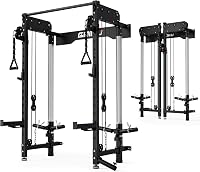
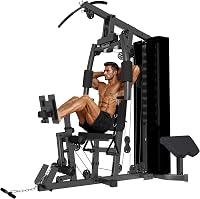
How to Choose Rack Depth on a Functional Trainer
Choose rack depth by measuring the space your lift needs inside the trainer, then add room for the attachment and your movement. A chart can help compare models, but check what each maker counts as depth before you compare numbers.
On this page (8 sections)
- What does rack depth mean on a functional trainer chart?
- How do you choose rack depth for your exercises?
- How can you compare rack depth in a chart?
- How do you measure your room and movement area?
- What if a deeper trainer will not fit your room?
- Which equipment can help with a compact setup?
- How do you read a rack-depth chart safely?
- How should you choose rack depth on a functional trainer?
Choose rack depth by measuring the space your lift needs inside the trainer, then adding room for the attachment and your movement. A rack-depth chart helps compare frames, but dimensions only make sense when you know how each maker measures them.
Start with the exercise you plan to do. A standing cable fly, a low cable row and a squat inside a combination trainer call for different positions and movement paths.
What does rack depth mean on a functional trainer chart?
Rack depth is the front-to-back dimension of the trainer's lifting area, but there is no guarantee that every chart measures the same points. Some diagrams show inside clearance between frame parts, while others give an outside dimension.
Look for a diagram that labels the front and rear measuring points. If the chart gives only one depth number, check the full product dimensions or ask the maker what that number includes.
If ceiling clearance also matters, see low-height functional trainer and rack options.
| Chart label | What it may describe | What to verify |
|---|---|---|
| Rack depth | Inside area or full frame depth | The start and end points |
| Inside depth | Clear space between front and rear frame parts | Whether posts, braces or hardware reduce it |
| Footprint depth | Outside front-to-back floor space | Whether handles or other parts project farther |
| Cable travel | How far the cable moves | Whether the cable path reaches your exercise position |
Treat the chart as a comparison aid, not a substitute for the drawing. If you compare an inside measurement from one trainer with an outside measurement from another, the larger number may still provide less room where you stand.
Our Functional Trainer Space Requirements: Size Guide explains how to measure the full room around a trainer as well as its footprint.
How do you choose rack depth for your exercises?
Choose depth around your stance, the cable path and the attachment, not around a chart's biggest number. Your body should move through the exercise without striking the frame or pulling the cable at an awkward angle.
Write down the exercises you expect to do most often. For each one, note whether you'll face the machine, stand between the uprights, sit or lie down, and whether the attachment extends in front of you.
Then mark the intended inside depth on the floor with tape. Use a broom handle or similar stand-in to trace the cable direction and check where your hands and feet need to travel.
How much rack depth do standing cable exercises need?
Standing cable exercises need enough space for your stance and the full movement arc. For a cable fly, for example, check the position where your arms open as well as the position where your hands meet.
Keep your feet inside the planned footprint while you rehearse the path. If you must step around an upright or move into another machine's space, the available clearance may not suit that exercise.
How should you check depth for seated or floor exercises?
Seated and floor exercises need room for your body and any bench or mat. Check the full length of the setup and leave a clear route to get in and out.
A seated row may pull you backward as you extend your legs. A floor-based cable movement may need you to lie beyond the front of the frame, so rack depth alone won't show the full operating area.
Do attachments change the depth you need?
Attachments can extend past the frame or change where your hands and body sit. Measure with the bar, rope, handles or bench you intend to use, and include the space needed to clip them on.
Check whether the cables can reach your planned position without rubbing on the frame. If the machine has adjustable pulleys, confirm the height range supports the movement you have in mind.
How can you compare rack depth in a chart?
Compare like measurements with like measurements. Put each model's inside clearance beside the same measurement from the other model, then keep outside footprint and cable travel in separate columns.
| Measure | Why it matters | How to compare |
|---|---|---|
| Inside rack depth | Space available within the frame | Use the same front and rear reference points |
| Outside depth | Floor area the frame takes up | Include any projecting feet or hardware |
| Width between uprights | Side-to-side movement space | Check the usable gap, not just frame width |
| Cable travel | Reach from pulley to user | Confirm the cable reaches each planned position |
| Room clearance | Space to enter and exercise | Add access and movement space around the frame |
A wider or deeper outside frame does not automatically mean more usable lifting room. Crossbars, weight stacks, pulley housings and braces can occupy space inside the frame.
If a maker's diagram is unclear, don't guess from a photo. Ask for the inside clearance and the outside footprint as separate measurements.
How do you measure your room and movement area?
Measure the machine's footprint and the area you need to use it. Leave enough space to enter, load attachments and complete each planned movement without contacting walls or nearby equipment.
- Mark the trainer's outside width and depth on the floor.
- Mark the inside rack depth based on the maker's drawing.
- Add the position of your bench, mat or other attachment.
- Rehearse your stance and movement path inside the taped outline.
- Check door swings, walkways, storage and nearby equipment.
- Confirm any placement and clearance directions from the manufacturer.
Use the same method for every model you're comparing. It makes it easier to see whether a frame that fits on paper leaves enough useful space in the room.
If space is tight, compare the frame's outside dimensions with the available wall and floor area before choosing. Our guide to the Best Functional Trainer For Small Spaces looks at trainer options for compact rooms.
What if a deeper trainer will not fit your room?
If a deeper trainer crowds your room, choose a model that fits your actual movements and leaves a usable route around it. Moving the machine closer to a wall can reduce access, even when its footprint technically fits.
Consider how often you use the trainer and whether other equipment needs to share the room. Our guide to best fold away gym equipment covers equipment that can be stored between workouts.
A functional trainer can suit a small room when its footprint and working space fit the exercises you plan to do. See Is a Functional Trainer Good for Small Spaces? for more room-planning considerations.
If you're deciding between a trainer and a rack, compare the exercises and usable area each setup provides. Our Functional Trainer vs Squat Rack: Which Should You Get? guide covers that choice.
Which equipment can help with a compact setup?
For a compact home gym, choose equipment around your available floor area and planned workouts. These options offer alternatives for cardio, bodyweight work and resistance training, though they don't replace a functional trainer's adjustable cable system.
For a trainer that may suit a lower-impact routine, see Top 7 Best Functional Trainer For Seniors. Consider the trainer's setup and the movements you intend to do before choosing.
How do you read a rack-depth chart safely?
Read the chart alongside the maker's setup and use instructions, and leave enough room to move without striking the frame or nearby objects. Stop a movement if you cannot keep a clear path through its full range.
A chart cannot tell you whether a particular stance feels controlled or whether you can safely enter and leave the frame. Rehearse the movement with no weight attached, then add resistance only when the space and cable path are clear.
If you share the room, keep walkways open and avoid placing loose attachments where someone could trip over them. Follow the machine's assembly, anchoring and use instructions.
How should you choose rack depth on a functional trainer?
Choose rack depth by matching verified inside clearance to your exercises, attachments and movement, then confirming the outside footprint fits the room. If chart measurements use different reference points, compare the drawings or ask the maker for matching dimensions.
Pick a compact frame when your planned movements fit its usable space and room access stays clear. Choose more depth when your exercises need a longer stance or movement path, and make sure the extra footprint still leaves room to use the trainer safely.
If the trainer is one part of a tight home gym, review Functional Trainer Space Requirements: Size Guide before finalizing the layout.
Frequently asked questions
What does rack depth mean on a functional trainer?
Rack depth usually refers to the front-to-back space inside the frame, but makers may measure it differently. Check whether the stated number runs between the uprights, from the front of the frame to a rear crossbar, or includes projecting parts.
Use the maker's diagram and your intended lift to confirm usable clearance.
How much depth do I need for a functional trainer?
There is no single depth that suits every exercise and body size. Mark the space your stance, cable path and attachment need, then compare that with the trainer's usable inside depth.
Allow room to move without hitting uprights or nearby equipment, and follow any clearance guidance from the maker.
Is greater rack depth always better?
Greater depth can give you more room to position yourself and move, but it also takes more floor space. Choose the smallest frame that safely fits your planned exercises and body position, with access around the machine.
Check outside dimensions as well as interior clearance before you set the trainer in a room.
Can I use a functional trainer chart to compare two models?
Yes, if both measurements describe the same part of the frame. Compare inside depth with inside depth, then check height, width, cable travel and outside footprint separately.
If one maker measures to a crossbar and another measures between uprights, the raw depth numbers may not represent equal usable space.
How do I measure rack depth before buying?
Use the maker's dimension drawing to identify the front and rear limits of the lifting area. Mark that span on the floor with tape, then rehearse your stance and cable path with the planned attachment.
Check that nearby walls, doors and equipment leave room to enter, exit and adjust the setup.