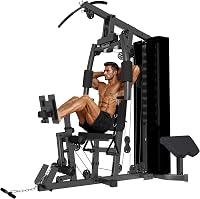
What Are Typical Cable Crossover Machine Dimensions?
Cable crossover machine dimensions vary by design, but many frames are about 8–12 ft wide and 3–5 ft deep. Check the exact frame, ceiling height, delivery route and room needed to move through each cable path.
On this page (9 sections)
- How wide is a cable crossover machine?
- How deep and tall are cable crossover frames?
- How much exercise clearance should you leave?
- What should you measure before buying?
- Can a cable crossover fit in a home gym?
- Is a functional trainer smaller than a cable crossover?
- How much space does a cable crossover need?
- What is the safest way to plan a cable crossover layout?
- What dimensions matter most when choosing a cable crossover?
Cable crossover machine dimensions vary by design, but many frames are about 8–12 ft wide and 3–5 ft deep. Check the exact frame, ceiling height, delivery route and room needed to move through each cable path.
A frame's footprint only describes the floor it covers. You also need open space in front and to each side for your stance, cable travel and safe movement.
If you are still comparing equipment types, start with What Is a Cable Crossover Machine? to understand how the layout affects exercise options.
How wide is a cable crossover machine?
A cable crossover machine is often wider than a single-station functional trainer because its two towers sit apart to create a crossing cable path. Some compact designs use a narrower frame, while commercial-style frames can take up a wide section of a room.
Treat 8–12 ft as a rough planning range, not a standard. Measure the exact model from its outermost frame points, including any feet or stabilizers that extend beyond the uprights.
If you have a fixed wall span, leave room for access around the uprights and avoid placing the frame where it blocks a door, window or storage area. The average commercial functional trainer dimensions guide can help you compare larger frame sizes.
How deep and tall are cable crossover frames?
Many crossover frames need about 3–5 ft of depth, with height commonly around 7–8 ft. Actual dimensions depend on the frame design, pulley housing, pull-up bar and any attached storage.
Ceiling height matters as much as the machine height. Measure from the floor to the lowest ceiling obstruction, such as a beam, light or duct, and compare it with the maker's assembled height.
A taller machine may also need clearance for assembly or repositioning. Check the delivery path and whether the frame can be assembled upright in the intended room.
How much exercise clearance should you leave?
Plan for the full movement area, not only the frame outline. Cable exercises can require steps away from the machine, a wider stance, and room to extend the arms without hitting nearby equipment or walls.
Mark the machine's footprint with tape, then add a working zone in front of each pulley. Try a few intended movements in that marked area, including crossovers, face pulls and cable rows, while keeping the path clear.
For a more detailed room plan, use our Functional Trainer Space Requirements: Size Guide. It covers the space needed around cable equipment and helps you account for access and exercise movement.
What should you measure before buying?
Measure the room, route and working area before choosing a crossover machine. A tape measure and floor outline can reveal fit problems before delivery.
- Measure the available wall width and floor depth.
- Measure ceiling height at the machine location and check for lights, fans or beams.
- Measure the narrowest doorway, hallway and turn along the delivery route.
- Add the clearance you need in front of the pulleys and around the sides.
- Check where you will store attachments and whether they add to the frame width.
- Confirm the model's assembled dimensions and any installation requirements.
A room can fit the frame and still feel cramped once you stand in front of it. If the depth is limited, compare the rack depth on a functional trainer chart and look at how compact trainers use the available floor area.
Can a cable crossover fit in a home gym?
A cable crossover can fit in a home gym if the room has enough width for the towers and open floor for movement. Smaller rooms may work better with a compact functional trainer or a single-stack design.
Before deciding, compare your usable dimensions with the machine's full footprint, not just the distance between its pulleys. The best compact functional trainers for compact home gyms offers alternatives when a wide crossover frame is difficult to place.
For a small room where a rowing machine would fit better, the Merach Q1S is 65 in long and 19.3 in wide, with a recommended use area of 1.6 x 5.7 ft.
The YOSUDA rower measures 59 x 19 x 25 in, and its maker describes it as covering 2.9 sq ft.
A portable strength option may also suit a room where a fixed crossover frame will not. The MQRW push-up board measures 29.92 x 8.85 x 1.18 in.
Is a functional trainer smaller than a cable crossover?
A functional trainer is often narrower than a traditional cable crossover, though dimensions vary across models. The right choice depends on whether you need two widely spaced towers or a more compact cable setup.
Compare the frame width, depth and cable positions against the movements you plan to do. Our guide to whether a functional trainer is better than a cable crossover machine explains the main layout trade-offs.
How much space does a cable crossover need?
Budget for the machine's footprint plus clear floor in front and beside the pulleys. A wide frame may use 8–12 ft of wall space, while the exercise area can extend beyond its depth as you step back or move laterally.
For a practical fit check, tape out the frame and add the movement area before buying. If the marked space overlaps a walkway or another station, choose a narrower setup or rearrange the room first.
What is the safest way to plan a cable crossover layout?
Keep the cable paths and walking routes free of obstacles. Position the machine so users can move without stepping into another station or striking a wall at full arm extension.
Use the manufacturer's installation and clearance instructions for the exact model. Secure the frame as directed and keep weights, benches and loose attachments out of the movement area.
What dimensions matter most when choosing a cable crossover?
Start with frame width, depth and height, then verify delivery access and exercise clearance. For a home setup, the width often determines whether the machine can fit, while the height can rule out a basement or low ceiling.
Choose a crossover when the room can accommodate its wide stance and working area. If floor width is tight, compare compact functional trainers and their rack depth before committing to a large frame.