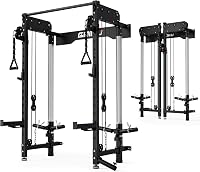
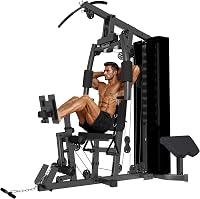
Average Commercial Functional Trainer Weight and Dimensions
Commercial functional trainers often weigh several hundred pounds and need a footprint around 4–6 ft wide and 3–5 ft deep. Exact size and weight vary by model, so check the manufacturer’s dimensions and plan for delivery, floor loading, and cable travel.
On this page (8 sections)
- What are the average commercial functional trainer weight and dimensions?
- How much clearance should you leave around the machine?
- How should you plan delivery and installation?
- How can you check floor loading?
- How do compact trainers change the space plan?
- What other equipment might fit a home gym?
- How do you choose an installation spot?
- What should you measure before buying?
Commercial functional trainers often weigh several hundred pounds and occupy roughly 4–6 ft wide by 3–5 ft deep, though the exact figures depend on the model. Check the manufacturer’s dimensions and weight before planning delivery, floor loading, or installation.
The footprint is only the starting point. You also need room to carry the machine inside, stand in front of it, and move its cables through the angles you plan to use.
What are the average commercial functional trainer weight and dimensions?
A commercial functional trainer commonly weighs several hundred pounds, with a frame about 4–6 ft wide and 3–5 ft deep. Treat those ranges as an initial planning estimate, not a substitute for the exact model’s specifications.
Designs vary: some have two weight stacks, while compact models may use a narrower frame or a wall mount. Compare the machine’s assembled dimensions with your room, and check whether those figures include the pulleys, handles, or other parts that extend beyond the frame.
Use this functional trainer rack depth guide when comparing frame depth.
Height also matters. Measure from the floor to the highest point, including any overhead attachment or adjustment you expect to use.
For rooms with limited clearance, compare low-height functional trainers and racks.
Our Functional Trainer Space Requirements: Size Guide covers room layout and workout clearance.
How much clearance should you leave around the machine?
Leave space for the user, cable travel, and access to adjustments, not just the frame. A machine that fits tightly between two walls may still block the movements you want to perform.
Mark the trainer’s footprint on the floor with painter’s tape. Then stand at the intended workout position and mimic your planned cable movements with the arms extended in different directions.
Allow room behind and beside the machine if exercises require you to step away from it. Check the path of each cable handle so it won’t hit a wall, shelf, or another piece of equipment.
Will the ceiling fit a tall trainer?
Measure from the floor to the lowest ceiling obstruction above the installation spot. Pipes, beams, light fixtures, and sloped ceilings can reduce usable height.
Compare that measurement with the trainer’s total height and any overhead clearance required to assemble or use it. This guide to measuring ceiling height for a functional trainer explains where to take measurements.
How should you plan delivery and installation?
Measure the entire route from the delivery point to the gym, including doorways, corners, stairs, and elevator doors. A trainer can fit its final space and still be too large or heavy to move there.
Record the narrowest width and the height of every opening. For turns, measure the available floor area as well as the opening, since a long or bulky box needs room to pivot.
Ask whether the machine ships assembled or in multiple packages, and confirm package dimensions and weight with the seller or carrier. Don’t assume a machine can be carried safely by the number of people available; arrange appropriate help or professional delivery for heavy equipment.
Plan the assembly area before the delivery date. Keep a clear path to the final position, and make sure the machine can be assembled without blocking the only route out of the room.
How can you check floor loading?
The machine’s total weight does not tell you by itself whether a floor can support it. Account for the trainer, users, and other equipment in the room, and get qualified advice if you’re unsure about the floor’s capacity.
A concentrated load under a heavy frame differs from spreading weight across a larger area. The floor type, its condition, and where the equipment sits all matter, especially in an upper-floor room.
Place the trainer on a stable, level surface and follow its installation instructions. A mat can protect the surface from scuffs, but it does not prove that a floor can carry the load.
How do compact trainers change the space plan?
Compact models can reduce the footprint, but you still need clear space for cables and exercise positions. If a commercial trainer still won't fit, consider this DIY lat pulldown guide as another strength-training option.
Check both the frame dimensions and the manufacturer’s guidance for use and installation.
Compare options in our guide to the best functional trainer for small spaces. If you’re deciding whether a trainer suits a tight room at all, see whether a functional trainer works in small spaces.
For a garage setup, the garage gym guide to functional trainer dimensions can help you account for the room’s layout. If you’re comparing a dual-pulley station instead, review typical cable crossover machine dimensions.
What other equipment might fit a home gym?
Small cardio or portable gear may suit a room where a commercial trainer takes too much space. For other strength gear ideas, see Body-Solid fitness equipment picks.
Check each item’s working footprint and storage needs separately.
The Merach Q1S Magnetic Rowing Machine Indoor measures 65 x 19.3 x 24.8 in and weighs 42 lb. Compare it with low-cost rowing machine picks if you're choosing compact cardio equipment.
MERACH gives a recommended use area of 1.6 x 5.7 ft and a storage area of 1.6 x 2.1 ft.
The YOSUDA Rowing Machine for Home measures 57.88 x 17.72 x 24.81 in and weighs 43 lb. YOSUDA says it covers 2.9 sq ft, so consider it if you want a smaller cardio item alongside strength equipment.
The MQRW Push Up Board measures 29.92 x 8.85 x 1.18 in. Its portable format may suit bodyweight workouts when a large machine isn’t practical.
How do you choose an installation spot?
Choose a spot with enough measured floor area, overhead clearance, and a workable delivery route. Confirm the floor is level and the location leaves room to reach adjustment points and move around the equipment.
Before delivery, write down the machine’s assembled dimensions, package dimensions, and total weight. Keep those figures with your doorway and stair measurements so you can spot a mismatch early.
For commercial equipment, contact the seller or installer about moving, assembly, and floor requirements. For a Centr 3, follow this Centr 3 disassembly guide before moving it.
If you cannot confirm a safe route or floor capacity, get qualified help before the machine arrives.
What should you measure before buying?
Measure the room’s width, depth, ceiling height, access route, and workout clearance. Then compare each measurement with the exact trainer model and its installation instructions.
A practical checklist is:
- Measure the open floor area where the frame will sit.
- Check the full height and overhead obstructions.
- Mark the cable movement and user standing area.
- Measure every doorway, turn, stair, and elevator.
- Confirm package dimensions and weight with the seller or carrier.
- Check floor capacity with a qualified professional if uncertain.
The average commercial functional trainer weight and dimensions are useful for early planning, but the model’s exact figures decide whether it will fit. Choose a compact option if the room or delivery path is tight, and proceed with a larger trainer only after confirming the floor and installation space.
Frequently asked questions
How much does a commercial functional trainer weigh?
Many commercial functional trainers weigh several hundred pounds, but there is no single average that fits every design. Compare the machine’s shipping weight and assembled weight, if both are available, and confirm the route from the delivery point to the room before ordering.
How much floor space does a functional trainer need?
A functional trainer may occupy about 4–6 ft of width and 3–5 ft of depth, with more room needed for cable movement and user access. Use the exact machine dimensions, then mark the footprint and test the planned exercise positions before installation.
Can a second-floor room support a functional trainer?
A machine’s weight alone cannot determine whether a floor can support it. Include the trainer, users, and nearby equipment in the load plan, and ask a qualified building professional to assess the floor when capacity is uncertain.
How do I measure a functional trainer for delivery?
Check the packaged dimensions and weight, then measure every doorway, hallway turn, stair, and elevator on the route. Compare those openings with the largest package dimension and ask the seller or carrier whether the machine arrives assembled or in separate boxes.