Is a Functional Trainer Better Than a Cable Crossover Machine?
On this page (7 sections)
When choosing between a functional trainer and a cable crossover machine, the functional trainer usually comes out on top for most home gym enthusiasts. While both offer resistance training, a functional trainer provides a wider range of motion and more versatility for full-body workouts.
You might be wondering which machine will best fit your fitness goals and available space. We’ve looked at what makes each machine unique, and found that a functional trainer excels at mimicking real-life movements. This means it can help you build practical strength that carries over into your daily activities and other sports.
TL;DR:
- Functional trainers offer more versatility than cable crossovers.
- They mimic real-life movements better.
- Functional trainers are great for full-body workouts.
- Cable crossovers focus more on chest and upper body isolation.
- Choose a functional trainer for overall strength and conditioning.
Let’s break down exactly what each machine brings to your workout routine so you can make the best choice for your home gym.
Functional Trainer vs. Cable Crossover: Which Machine Reigns Supreme?
When you’re setting up your home gym, you want equipment that works hard for you. You might be looking at a functional trainer or a cable crossover machine. Both use pulleys and weights to help you build strength. But which one is truly the better investment for your fitness journey? We’ve researched this, and it turns out a functional trainer generally offers more bang for your buck. It’s like getting a whole gym packed into one smart piece of equipment. Let’s get into the details.
Understanding the Functional Trainer
So, what exactly is a functional trainer? Think of it as your all-in-one workout partner. It typically features two independent pulleys that can move up, down, and across. This means you can pull the weight from almost any angle. This design allows for a huge variety of exercises. Cable reach matters too; learn about functional trainer cable length. You’re not stuck doing just one type of movement. It really shines when it comes to mimicking real-life actions.
The Versatility Advantage
The biggest win for a functional trainer is its incredible versatility. You can perform exercises for every major muscle group. That includes chest presses, rows, squats, lunges, and even rotational movements. Many functional trainers also come with various attachments like handles, ankle straps, and cable crossover attachments. This lets you mix up your workouts easily. You can target specific muscles or do full-body routines. It’s a truly adaptable piece of equipment.
Mimicking Real-Life Movements
One of the key benefits is how well it translates to everyday life. Functional trainers allow for natural, multi-joint movements. This is often called training for functional strength. For example, lifting a box involves pulling and twisting. A functional trainer can replicate these types of motions. This type of training can improve your balance and coordination. It also helps prepare your body for sports and daily tasks. Research often points to training compound movements for overall fitness gains (National Strength and Conditioning Association).
Space and User Considerations
Functional trainers often take up a bit more floor space than a basic cable crossover. However, their compact designs have improved a lot. Many models are built to be relatively space-efficient. They are suitable for both beginners and advanced athletes. The adjustable weight stacks allow for progressive overload. This means you can keep challenging yourself as you get stronger.
Understanding the Cable Crossover Machine
A cable crossover machine is a bit more specialized. Its primary focus is on exercises that involve pulling cables across your body. The most famous exercise is, of course, the cable crossover. This targets your chest muscles, especially the inner and lower pecs. While effective for chest development, its range of motion is more limited compared to a functional trainer.
Focus on Chest and Upper Body Isolation
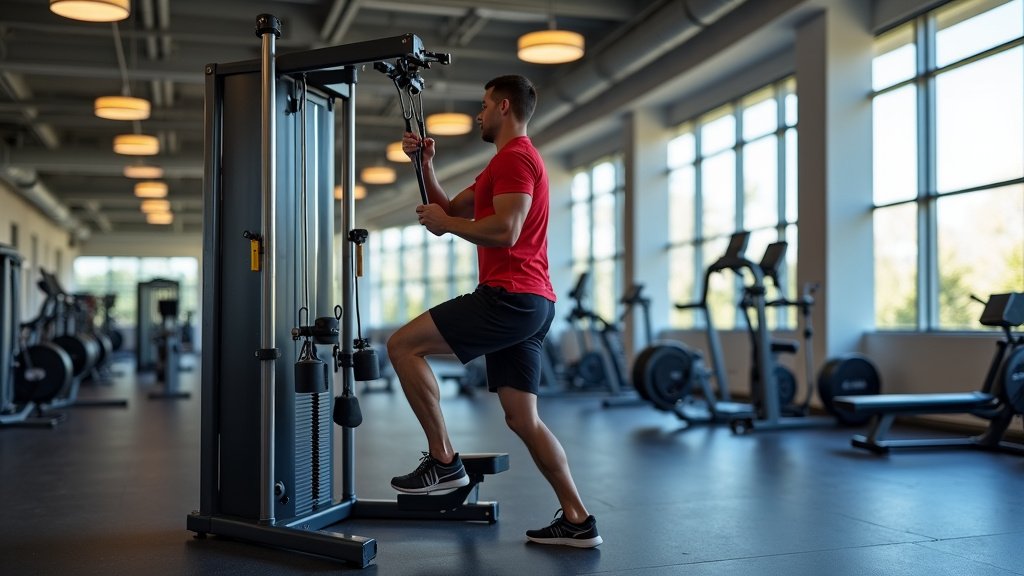
The cable crossover machine is designed with chest workouts in mind. You’ll typically find two high pulleys. You can adjust their height, but their movement is often more restricted than on a functional trainer. This setup is perfect for chest flyes and presses from various angles. It can also be used for some back and shoulder exercises. However, it’s not as well-suited for leg exercises or movements that require pulling from the floor or overhead.
Simpler, More Focused Movements
Because of its design, the cable crossover tends to focus on isolation exercises. This means you’re often working one or two muscle groups at a time. This can be great for targeting specific areas for growth or definition. It’s a popular choice for bodybuilders who want to refine their physique. You can achieve a good pump in your chest with this machine.
Space and User Considerations
Cable crossover machines can vary in size. Some are quite large and might require a dedicated space. Others are more compact, especially those integrated into multi-gym setups. They are generally easy to understand and use. The straightforward nature means you can get right into your workout. They are particularly beneficial for individuals focused heavily on upper body aesthetics.
Comparing Key Features: A Side-by-Side Look
Let’s put these two machines head-to-head to see where they stand. This comparison should help you visualize the differences and make an informed decision for your home gym.
| Feature | Functional Trainer | Cable Crossover Machine |
|---|---|---|
| Versatility | High: Full-body workouts, compound and isolation exercises. | Moderate: Primarily upper body isolation, focus on chest. |
| Movement Range | Extensive: Pulleys move in multiple directions. | Limited: Primarily horizontal or angled pulls. |
| Exercise Variety | Vast: Hundreds of exercises possible for all muscle groups. | Focused: Best for chest flyes, presses, and some upper back/shoulder work. |
| Functional Strength | Excellent: Mimics real-life movements, improves balance. | Limited: Less emphasis on compound, functional movements. |
| Space Efficiency | Varies, but many modern units are compact. | Varies, some can be quite large. |
| Ideal User | Anyone seeking full-body fitness, general strength, athletic training. | Individuals focused on chest development, bodybuilding aesthetics. |
Which Machine for Your Goals?
If your goal is overall fitness and practical strength, the functional trainer is likely your best bet. Results also depend on nutrition, as discussed in diet and functional trainer results. It allows you to train your entire body efficiently. You can build muscle, improve cardiovascular health, and increase functional capacity. This means you’ll feel stronger and more capable in everyday life. Many fitness experts recommend functional training for this reason (American Council on Exercise).
On the other hand, if you’re a serious bodybuilder or have very specific goals for your chest and upper body, a cable crossover might appeal. It offers targeted work for those areas. However, even then, a functional trainer can perform all the same chest exercises and much more. You’re essentially choosing between a specialized tool and a versatile workshop.
Making the Right Choice for Your Home Gym
Consider what you want to achieve with your workouts. Do you want a machine that can do it all? Or are you looking to perfect a specific muscle group? Think about the space you have available. Also, consider the budget you’re working with. Functional trainers can sometimes be a larger initial investment, but their versatility can save you money on other equipment in the long run.
Your Home Gym Checklist
To help you decide, ask yourself these quick questions:
- Do you want to train your whole body or just specific areas?
- How important is mimicking real-life movements to you?
- Do you have space for a larger, more versatile machine?
- Are you looking for a single piece of equipment to cover most of your training needs?
- Do you want to be able to do exercises like squats and lunges with resistance?
If you answered ‘yes’ to most of these, a functional trainer sounds like it would be a fantastic addition to your home gym. It offers more ways to train and adapt to your evolving fitness journey. You’ll be able to build strength that truly benefits your everyday life.
Conclusion
So, you’ve weighed the options between a functional trainer and a cable crossover machine. The research clearly points to the functional trainer as the more versatile choice for most home gyms. It offers a wider range of motion and allows for true full-body workouts, mimicking movements you do every day. While a cable crossover excels at isolating your chest, a functional trainer can do that too, plus so much more. If you’re looking for a machine that supports your overall strength and conditioning goals, the functional trainer is your clear winner. Start by assessing your available space and budget, then invest in the equipment that will give you the most fitness bang for your buck.
Frequently Asked Questions
Can a functional trainer truly replace other gym equipment?
Yes, a functional trainer can replace many other pieces of equipment due to its wide range of exercises. You can perform strength training for your entire body, including legs, back, chest, and arms. This makes it a highly efficient all-in-one solution for your home gym.
Is a cable crossover machine good for beginners?
A cable crossover machine can be good for beginners, especially if their main goal is chest development. Its focused nature makes it less intimidating than a complex functional trainer. However, it offers limited training options beyond the upper body.
How do functional trainers help with sports performance?
Functional trainers help with sports performance by training your body to move in ways that mimic real-life actions. They improve balance, coordination, and the ability to perform multi-joint movements. This practical strength directly translates to better agility and power in athletic activities.
What are the main differences in exercise variety?
The main difference is in variety. A functional trainer allows for hundreds of exercises across all major muscle groups by adjusting pulley height and position. A cable crossover machine is primarily designed for chest isolation exercises like flyes and presses, with fewer options for other body parts.
Which machine is better for building muscle mass?
Both machines can help build muscle mass. However, a functional trainer is generally better for overall muscle growth because you can train more muscle groups effectively. For targeted chest hypertrophy, a cable crossover is specialized, but a functional trainer can still achieve similar results.