Can You Combine a Functional Trainer with Free Weights?
On this page (6 sections)
Yes, you can absolutely combine a functional trainer with free weights for a highly effective workout. This approach offers a fantastic way to add variety and challenge to your fitness routine. You can build strength and improve stability with both tools.
Many fitness experts agree that combining these two training methods offers unique benefits. Free weights are great for raw strength, while functional trainers excel at controlled movements and constant tension. This blend creates a very balanced workout plan.
- Yes, you can combine a functional trainer with free weights.
- This offers varied and challenging workouts.
- Functional trainers provide constant tension and controlled movements.
- Free weights are perfect for building raw strength.
- Using both leads to a balanced and effective fitness routine.
Are you ready to supercharge your workouts? Let’s explore how you can best combine a functional trainer with free weights to reach your fitness goals.
Blending Functional Trainers and Free Weights
You can absolutely blend these two powerful training methods. This approach creates a workout routine that’s both effective and incredibly versatile. It allows you to target muscles in new ways and keep your body guessing.
By combining a functional trainer with free weights, you’re not just adding exercises; you’re creating a more complete and dynamic fitness experience. Think of it as having the best of both worlds right in your home gym or at your local fitness center.
Understanding the Strengths of Each Tool
Before we dive into combining them, let’s quickly review what each tool brings to your workout. Knowing their unique benefits helps you use them more effectively. You want to maximize your gains and avoid common pitfalls.
The Power of Free Weights
Free weights are fantastic for building raw strength and muscle mass. They include dumbbells, barbells, and kettlebells. When you lift a free weight, your body has to work harder to stabilize the movement. This engages more muscles than a machine would.
With free weights, you’re often working through a full range of motion. This is great for exercises like squats, deadlifts, and overhead presses. They teach your body to move in a more natural, athletic way, which is vital for everyday functional strength (American Council on Exercise).
The Versatility of Functional Trainers
Functional trainers, also known as cable machines, use cables and pulleys to provide resistance. What makes them special is the To help you choose the right equipment, we’ve reviewed the best functional trainer for cable workouts.constant tension they apply throughout the entire movement. This differs from free weights, where gravity’s pull changes with your position.
These machines are amazing for targeting specific muscle groups and performing exercises in various planes of motion. You can do pushes, pulls, rotations, and even plyometric-style moves. Functional trainers are also excellent for improving stability and core strength because your body has to control the cables.
Why Combine Them? The Benefits Are Clear
So, why go through the effort of using both? The answer is simple: you gain advantages that neither can offer alone. It’s about building a well-rounded, resilient body that performs well in all aspects of life.
Many fitness professionals recommend a hybrid approach. We found that this method helps prevent plateaus, reduces the risk of injury, and generally makes workouts more interesting. You’ll find yourself looking forward to your training sessions even more.
Enhanced Muscle Activation and Growth
When you combine functional trainers with free weights, you get more bang for your buck. Free weights challenge your muscles to lift heavy loads, promoting hypertrophy (muscle growth). They recruit primary movers and synergist muscles efficiently.
Functional trainers, with their constant tension, keep those muscles working even during the “easier” parts of a lift. This can lead to a deeper muscle stimulus and better overall development. Imagine a bicep curl: with a dumbbell, the tension changes. With a cable, it’s constant and intense from start to finish.
Improved Stability and Core Strength
This is where the functional trainer really shines. Because the cables pull from different directions, your core and stabilizing muscles have to work extra hard to keep your body balanced. This translates directly to You can find specific functional trainer core exercises to further enhance your stability and strength.better performance with free weights.
When your core is stronger, you can perform free weight exercises like squats and deadlifts with better form and reduced injury risk. It’s like building a strong foundation for a house; everything else becomes more solid (National Strength and Conditioning Association).
Greater Exercise Variety and Injury Prevention
Sticking to the same routine can get boring, right? Combining these tools opens up a whole new world of exercises. This variety keeps your workouts fresh and exciting, making it easier to stay consistent with your fitness goals.
Moreover, the ability to perform movements at different angles and with constant tension can help identify and strengthen muscular imbalances. This careful approach can play a significant role in preventing common training injuries. You’re building a more robust and adaptable body.
How to Practically Integrate Both Tools
Now that you know why it’s a great idea, let’s talk about how to actually do it. You don’t need to overcomplicate things. Start small and gradually build up your routine. The goal is to make it sustainable and effective for you.
Structuring Your Workouts
There are several ways to structure your workouts. You can dedicate specific days to each, or you can blend them within the same session. Experiment to see what feels best for your body and your schedule.
Option 1: Split by Day
One common approach is to have “free weight days” and “functional trainer days.” For instance, you might do a heavy leg day with squats and deadlifts using barbells. Then, on another day, focus on cable lunges, glute kickbacks, and rotational movements on the functional trainer. This allows for focused intensity on each type of training.
Option 2: Blending Within the Same Session
This is often the most popular and efficient method. You can start with free weights for your main compound movements to build strength. Then, move to the functional trainer for accessory work, stability exercises, or to hit muscles from different angles. For example, do barbell bench press, then finish with cable flyes for a great chest workout. We found this method helps with muscle fatigue and variety.
Workout Examples and Strategies
Let’s look at some practical ways to combine these tools. Remember, these are just starting points. Feel free to adjust them to fit your own fitness level and preferences.
- Warm-up: Use the functional trainer for light, dynamic stretches and joint mobility work. Think cable arm circles or torso twists.
- Main Lift (Free Weight): Perform a compound exercise like a barbell squat or dumbbell row. Focus on heavy, controlled movements.
- Accessory Work (Functional Trainer): Follow up with exercises that complement your main lift, like cable pull-throughs after deadlifts, or cable presses after dumbbell presses.
- Supersets: Combine a free weight exercise with a functional trainer exercise back-to-back with minimal rest. For example, dumbbell shoulder press followed immediately by cable lateral raises. This creates an intense and time-efficient workout.
- Core Finisher: End your session with core exercises on the functional trainer, such as Pallof presses or cable crunches, to truly challenge your stability.
A Quick Checklist for Success
To make sure you’re getting the most out of your combined workouts, keep these simple points in mind. They act as good reminders for staying safe and making progress.
- Start Light: Always begin with lighter weights or resistance to master your form.
- Prioritize Form: Good technique prevents injury and ensures muscles are targeted correctly.
- Listen to Your Body: Rest when you need to, and don’t push through pain.
- Progress Gradually: Slowly increase weight, reps, or resistance over time.
- Vary Your Routine: Keep your muscles guessing by changing exercises regularly.
- Stay Hydrated: Drink plenty of water throughout your workout and day.
Comparing Functional Trainers and Free Weights
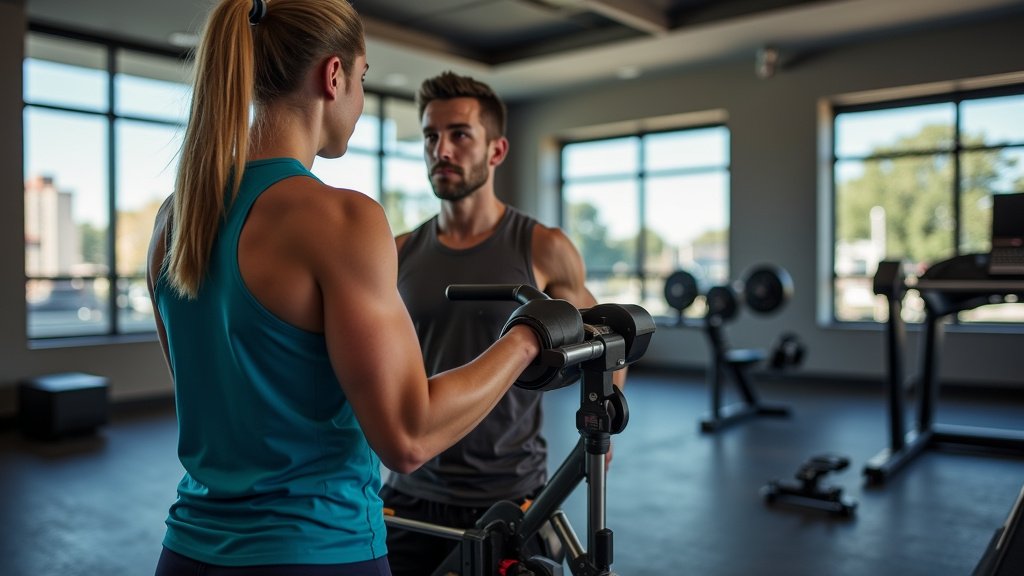
Sometimes seeing things side-by-side helps. This table offers a quick comparison of key features when you’re thinking about how to integrate both into your routine. Remember, they are not competitors but rather powerful partners in your fitness journey.
| Feature | Free Weights | Functional Trainer |
|---|---|---|
| Primary Benefit | Raw strength, muscle mass, power | Constant tension, stability, controlled movement |
| Stabilization Required | High (body stabilizes the load) | Moderate to High (body stabilizes against cable pull) |
| Range of Motion | Often full, natural movement paths | Highly customizable, multi-directional |
| Best For | Compound lifts, heavy lifting, hypertrophy | Accessory work, rehabilitation, core training, athletic moves |
| Learning Curve | Moderate to High (requires good form) | Low to Moderate (easier to learn, but still needs attention to form) |
| Injury Risk (if form is poor) | Higher | Lower (due to controlled nature, but still possible) |
As you can see, each tool has its own superpowers. By combining them, you’re essentially getting the best of both worlds. This approach helps you build a strong, balanced, and functional physique. It’s about being smart with your training, not just working hard.
Conclusion
You now understand how powerful combining a functional trainer with free weights can be. This approach offers a dynamic and complete workout solution. You get the raw strength of free weights alongside the constant tension and stability benefits of a functional trainer. This mix helps you build a more resilient and functional body.
Don’t stick to just one tool. Start blending these methods into your routine today. Your muscles will thank you for the challenge and variety!
Frequently Asked Questions
Can I use both free weights and a functional trainer in the same workout session?
Yes, absolutely! Combining them in the same session is a highly effective strategy. Many people start with heavy free weight movements, then use the functional trainer for accessory exercises or to add constant tension to their muscles.
Will combining these tools help me build muscle faster?
This combined approach can lead to enhanced muscle activation and growth. Free weights challenge your muscles with heavy loads, while the functional trainer provides constant tension throughout the entire range of motion. This dual stimulus can optimize your muscle-building efforts.
Is it safe to use a functional trainer if I’m new to weightlifting?
Yes, functional trainers are often very beginner-friendly. Their guided movements can make it easier to learn proper form with less risk compared to free weights. However, always start with light resistance and focus on controlled movements.
How can I make sure I’m using proper form with both free weights and a functional trainer?
Always prioritize form over heavy weight. Watch instructional videos, consider working with a certified trainer, and record yourself to check your technique. Starting light and gradually increasing resistance helps you master movements safely.
Do I need a lot of space to combine a functional trainer and free weights at home?
Not necessarily. Many compact functional trainers exist, and free weights like adjustable dumbbells or resistance bands take up minimal space. Plan your workout area efficiently and choose equipment that fits your available room.