Can You Convert a Cable Machine from 1:1 to 2:1?
Some cable machines can be changed from 1:1 to 2:1, but only if the manufacturer supports the change. A different cable route can alter resistance and usable travel, and an unapproved pulley change may create safety or equipment problems.
On this page (5 sections)
Some cable machines can be changed from 1:1 to 2:1, but only when the manufacturer supports the conversion for that model. A pulley change can alter resistance at the handle and the amount of usable cable travel, so check the manual or ask the manufacturer before changing the cable path.
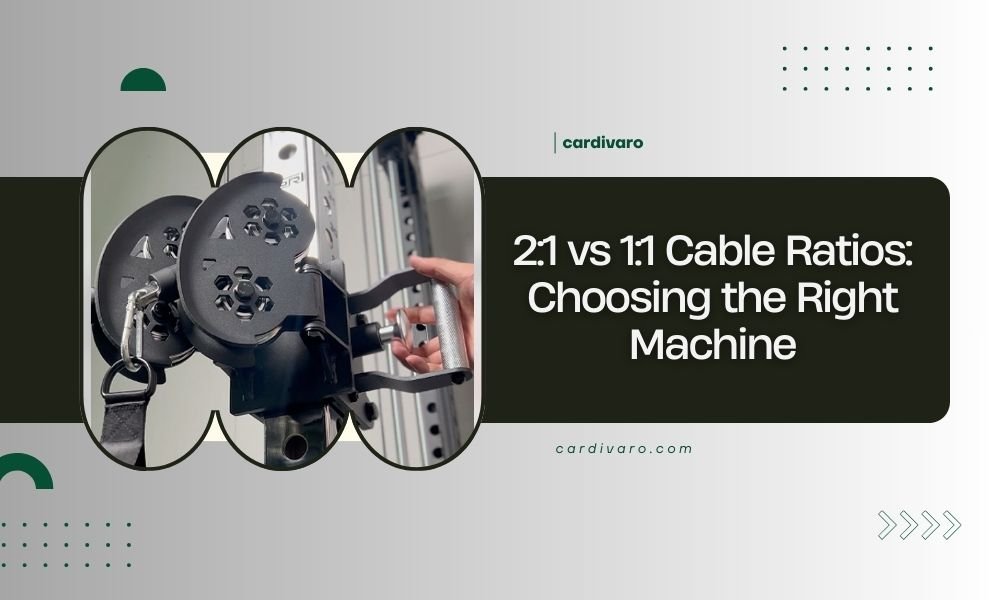
A pulley ratio describes the relationship between the weight stack's movement and the handle's movement. Our guide to what a pulley ratio on a cable machine means explains the basic mechanics.
Can you turn a 1:1 cable machine into a 2:1 setup?
Sometimes, but there is no universal conversion. The frame, pulley mounts, cable length, and routing determine whether a machine can support another configuration.
Some machines have a manufacturer-approved setup or accessory for changing the ratio. Others are designed around a fixed cable path, and adding or moving a pulley may put the cable out of line or change loads on the machine.
Start with the manual for your exact model. For model-specific guidance, see REP Fitness pulley height.
If it does not describe a conversion, contact the manufacturer with the model name and number before buying parts or unthreading the cable.
A functional trainer's pulleys, cables, and anchor points work together. See how a functional trainer works for an overview of those parts and their roles.
What should you check before changing the ratio?
Confirm that the manufacturer approves the conversion and identifies the exact parts and steps. For a model-specific adjustment example, see adjusting a Cybex PP-HL cable machine.
A pulley that fits physically may still be unsuitable for the cable diameter, mount, or machine load.
Check whether the manual specifies:
- A supported ratio change for your model
- The correct pulley, cable, and mounting points
- How to route and secure the cable
- Any change to the machine's maximum load or warranty
If these details are missing, ask the manufacturer rather than guessing. Don't drill new holes, use improvised brackets, or route a cable around a frame part that is not identified as a pulley mount.
How does a 1:1 to 2:1 change affect resistance and travel?
A 2:1 setup generally reduces the force at the handle to about half the stack's resistance and gives about twice the cable travel. Friction and machine design affect the actual feel and movement.
With a 1:1 setup, the handle and stack move roughly the same distance. With a 2:1 setup, the handle travels farther while the stack moves a shorter distance.
That tradeoff can suit exercises that need more cable length or smaller resistance steps at the handle. It can also mean you need to select more weight on the stack to reach a similar handle force, if the machine allows it.
Will the machine have more range of motion?
It may offer more handle travel, but the available range depends on the machine's cable length and stops. The handle cannot travel farther than the cable path, frame, or stack limit allows.
Check the full movement with no load only if the manufacturer says that is part of the conversion procedure. Keep your hands clear of pinch points, and stop if the stack binds or the cable rubs against the frame.
For exercise planning after you understand the setup, see what a cable machine is good for. The exercises you plan to do can help you decide whether extra travel is useful.
What can go wrong with an unapproved pulley change?
An unapproved change can make the cable track poorly or place stress on parts that weren't designed for that route. It can also cause the stack to move unpredictably or limit the handle's travel.
Watch for cable slack, rubbing, fraying, pulley wobble, unusual noise, or a stack that catches. Stop using the machine if you notice any of these signs.
Don't try to fix a routing problem by tightening a cable beyond the manual's directions. A cable that is too tight or misaligned can wear faster and may fail under load.
Should you convert a Life Fitness cable machine?
Check the exact Life Fitness model and its manual before assuming it supports a ratio change. Models can differ, even within one brand.
Our guide asks whether a Life Fitness cable machine has a 2:1 ratio, which can help you identify the setup before considering any modification. If the machine's approved configuration doesn't match your needs, compare models designed around different ratios in 2:1 vs 1:1 cable ratios.
Which alternatives make sense if conversion isn't supported?
Use the machine as designed or choose equipment that already fits your training needs. Older adults with arthritis can also review adapted cable machine exercises.
A conversion is not necessary if another setup can cover the exercises you want.
A home gym station may make sense if you want several fixed stations in one unit. The Marcy Multifunction Home Gym Workout Station has a 150 lb selectorized weight stack, dual-action press arms, and a removable curl pad.
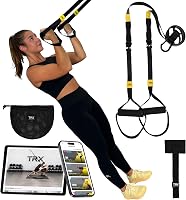
If you want portable bodyweight training instead of a cable setup, the TRX GO includes a suspension trainer, indoor and outdoor anchors, and a mesh carry bag.
For squat-focused home training, the Sunny Health & Fitness Smart Row-N-Ride has 3 built-in resistance bands and multiple squat-angle positions.
These options serve different training needs, so compare the movements and space each requires. A suspension trainer or squat-assist machine does not convert a cable machine or provide the same cable path.
How do you choose between a conversion and a different machine?
Choose a conversion only when the manufacturer documents it for your exact model and the new ratio solves a real training need. Otherwise, keep the original setup or choose a machine built for the resistance and travel you want.
If you mainly want a longer pull, confirm how much usable travel the approved setup provides. If you want a different resistance feel, compare both ratios and the available stack before deciding.
For a cable crossover, the pulley arrangement and cable travel affect how the handles move across your body. Learn about what a cable crossover machine is before deciding whether that style fits your exercises.
In short, don't add or reposition pulleys based on ratio alone. Verify the model's approved conversion, check the resulting travel and resistance, and pick a different machine if the manufacturer does not support the change.
Frequently asked questions
Can you convert any cable machine from 1:1 to 2:1?
No. A conversion depends on the machine's frame, pulleys, cable path, and the manufacturer's approved parts and instructions.
Check the manual or ask the manufacturer about your exact model before changing anything.
If the machine has no approved conversion, use it as designed or choose a machine built for the ratio you want.
Does a 2:1 ratio make the weight stack feel lighter?
Usually, a 2:1 pulley setup gives you about half the stack's resistance at the handle while allowing about twice as much cable travel, before friction and other design details. The exact feel depends on the machine.
Don't assume the weight-stack label equals the force at the handle.
Does changing the pulley ratio affect cable travel?
Yes. A 2:1 setup generally gives more cable movement for each unit of stack movement than a 1:1 setup.
That can help with exercises needing a longer pull, but it may change the available range and how soon the stack reaches its stop.
Confirm travel for your model.
Is it safe to add a pulley to get a 2:1 ratio?
Adding a pulley without manufacturer approval can change cable alignment, load on attachment points, and how the machine moves. Use only the specified parts and instructions for your exact model.
Stop if a cable rubs, slips, frays, or moves unevenly, and contact the manufacturer before using it again.