What Is a Weight Stack Made Of?
On this page (7 sections)
- What Makes Up the Weight Stack on Your Exercise Machine?
- The Primary Materials: Iron and Steel
- The Design of the Plates: Uniformity is Key
- The Role of the Guide Rod
- Weight Increments: How Much Does Each Plate Weigh? The weight of individual plates can vary significantly between machines. However, there are common standards in the fitness industry. Standard Weight Increments For most gym machines, individual weight plates typically range from 2.5 pounds to 10 pounds (or roughly 1 kg to 5 kg). This allows for gradual increases in resistance. A common setup might have plates weighing: 5 pounds (or 2.5 kg) 10 pounds (or 5 kg) 15 pounds (or 7.5 kg) The top plate, often called the “idiot plate” or “dead plate,” is usually lighter. It’s there to ensure the selector pin can engage properly and to provide a smooth surface to start from. It might weigh only 5 pounds (or 2.5 kg) even if other plates are much heavier. We found that total stack weights can range from 100 pounds to over 300 pounds (or 45 kg to over 135 kg) for a single machine. Why These Increments? These specific weight increments are not arbitrary. They are based on exercise science and user progression. Beginners need smaller jumps to build strength safely. More advanced users might prefer machines with smaller increments for finer control over their training. It’s all about allowing you to find that sweet spot in your workout. Common Weight Stack Plate Materials and Properties Material Pros Cons Typical Use Cast Iron Dense, durable, cost-effective, good casting properties Can rust if not coated, less precise than steel Many traditional machines, home gym equipment Steel Strong, durable, can be machined to high precision, less prone to breaking Can be more expensive than cast iron High-end commercial machines, parts requiring extreme strength Construction Checklist for Your Understanding
- Conclusion
- Frequently Asked Questions
A weight stack is primarily made of cast iron or steel plates. These plates are carefully machined to be uniform in size and weight. They are stacked vertically on a guide rod, allowing you to select different resistance levels for your exercises.
The purpose of a weight stack is to provide adjustable resistance on exercise machines. By choosing a specific plate, you determine how much weight you are lifting. This makes weight stacks a common feature in gyms worldwide for strength training.
- Weight stacks are usually made of cast iron or steel.
- They consist of uniform plates stacked on a guide rod.
- Each plate adds a specific amount of weight.
- This design allows for adjustable resistance on gym machines.
We’ve researched how these essential gym components are constructed and what makes them work so effectively. Let’s take a closer look at the materials and design of a weight stack.
Here’s the main body content:What Makes Up the Weight Stack on Your Exercise Machine?
The weight stack is the heart of most modern resistance training machines. It’s how you dial in your workout intensity. But what exactly are these heavy blocks made of? We’ve looked into the construction and materials that make them so effective.
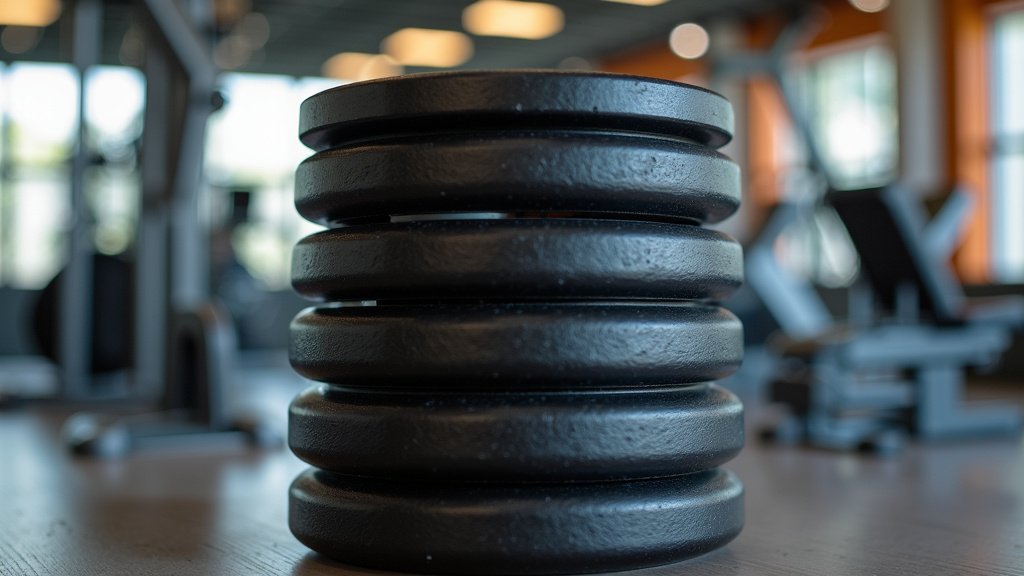
Essentially, a weight stack is a carefully engineered collection of metal plates. These plates are designed to slide smoothly over a central rod. You select a weight by inserting a pin through a hole in the top plate. This pin essentially lifts all the plates above it. That’s the resistance you feel when you pull or push.
The Primary Materials: Iron and Steel
When you look at a weight stack, you’re usually seeing cast iron or steel. These metals are chosen for their density, durability, and cost-effectiveness.
Cast Iron: The Classic Choice
Many older and some current machines use cast iron for their weight plates. Cast iron is an alloy of iron with a high carbon content. This gives it excellent casting properties. It means manufacturers can easily pour molten iron into molds to create the specific shapes needed.
Why cast iron? It’s dense, meaning it packs a lot of weight into a relatively small volume. This is great for creating heavy plates that don’t make the entire stack too bulky. Plus, cast iron is incredibly durable. It can withstand the constant impact and friction of gym use for years. We found that its natural friction can also help the plates settle nicely when not in use.
Steel: A Stronger Contender
Steel is another popular material. Steel is an alloy of iron and carbon, but typically with a lower carbon content than cast iron. This often makes steel stronger and more resistant to bending or breaking under extreme stress.
For weight stacks, steel is often chosen for its superior strength. It can be machined to very precise tolerances. This ensures that the plates fit together snugly and move smoothly. While steel can be more expensive to produce than cast iron, its longevity and strength can make it a worthwhile investment for machine manufacturers. Many modern, high-end machines opt for steel components.
Plate Finishes and Coatings
You might notice that weight stack plates aren’t always just bare metal. They often have a protective coating. This coating serves a few purposes:
- Corrosion Resistance: It prevents the metal from rusting, especially in humid gym environments.
- Smooth Operation: A good coating helps the plates glide effortlessly on the guide rod.
- Aesthetics: It gives the machine a clean and professional look.
Common coatings include powder coating and chrome plating. Powder coating is a durable, baked-on finish. Chrome plating offers a shiny, reflective surface that’s also very hard-wearing. We found that the type of finish can sometimes affect the price of the machine.
The Design of the Plates: Uniformity is Key
What really makes a weight stack work is the uniformity of its plates. Each plate is designed to be identical in size and shape, differing only in the thickness or density that determines its weight. This precision is vital.
Machining for Precision
Manufacturing weight stack plates isn’t as simple as just pouring metal. They are typically precision-machined. This process ensures that each plate has exact dimensions and a flat surface. This is crucial for:
- Stacking: Plates must sit flush on top of each other.
- Guide Rod Fit: The central hole must be perfectly sized for the guide rod.
- Weight Accuracy: Slight variations could lead to inconsistent resistance.
We found that the machining process is where the real cost and quality often lie. High-quality machines use advanced machining techniques to ensure near-perfect uniformity. This leads to a smoother, quieter, and more reliable workout experience.
The Hole in the Middle: More Than Just a Hole
That central hole isn’t just for the guide rod. It’s also where the selector pin inserts. The pin typically has a slightly tapered end. This allows it to slide in and out easily, even under load. The hole itself is usually shaped to accommodate the pin securely, preventing it from shifting during exercise.
Many plates have a lip or flange around the top edge. This lip helps guide the selector pin into the correct hole and prevents it from snagging. It’s a small detail, but it contributes to the ease of use of the machine. Think of it like a funnel for your pin!
The Role of the Guide Rod
While not technically part of the “stack” itself, the guide rod is essential for its function. This is the vertical rod that runs through the center of all the weight plates.
Guide rods are typically made of hardened steel. They need to be incredibly strong and smooth. They bear the weight of the entire stack and guide the plates as they move up and down. A worn or bent guide rod can make a weight stack feel rough, noisy, and unsafe. For a loud bang, see common causes of weight stack noise. Many are chrome-plated for extra durability and a slick surface. You might also find they have a spring at the bottom to absorb shock.
Weight Increments: How Much Does Each Plate Weigh?
The weight of individual plates can vary significantly between machines. However, there are common standards in the fitness industry.
Standard Weight Increments
For most gym machines, individual weight plates typically range from 2.5 pounds to 10 pounds (or roughly 1 kg to 5 kg). This allows for gradual increases in resistance.
A common setup might have plates weighing:
- 5 pounds (or 2.5 kg)
- 10 pounds (or 5 kg)
- 15 pounds (or 7.5 kg)
The top plate, often called the “idiot plate” or “dead plate,” is usually lighter. It’s there to ensure the selector pin can engage properly and to provide a smooth surface to start from. It might weigh only 5 pounds (or 2.5 kg) even if other plates are much heavier. We found that total stack weights can range from 100 pounds to over 300 pounds (or 45 kg to over 135 kg) for a single machine.
Why These Increments?
These specific weight increments are not arbitrary. They are based on exercise science and user progression. Beginners need smaller jumps to build strength safely. More advanced users might prefer machines with smaller increments for finer control over their training. It’s all about allowing you to find that sweet spot in your workout.
| Material | Pros | Cons | Typical Use |
|---|---|---|---|
| Cast Iron | Dense, durable, cost-effective, good casting properties | Can rust if not coated, less precise than steel | Many traditional machines, home gym equipment |
| Steel | Strong, durable, can be machined to high precision, less prone to breaking | Can be more expensive than cast iron | High-end commercial machines, parts requiring extreme strength |
Construction Checklist for Your Understanding
Here’s a quick rundown of what goes into a typical weight stack:
- Core Material: Usually cast iron or steel.
- Plate Shape: Uniform rectangles or squares with a central hole.
- Machining: Precision-cut for exact dimensions.
- Guide Rod: A smooth, strong central rod.
- Selector Pin: Tapered pin for engaging plates.
- Protective Coating: Often powder-coated or chrome-plated for durability and appearance.
Understanding these components helps you appreciate the engineering behind your workout. It’s not just a pile of metal; it’s a system designed for performance and reliability.
Conclusion
You’ve learned that weight stacks are primarily constructed from dense, durable metals like cast iron and steel. These materials are chosen for their weight and longevity. Each plate is precisely machined for uniform size and smooth operation on the guide rod. The selector pin and the careful design of each component work together to provide the adjustable resistance you use in your workouts. Next time you adjust your machine, you’ll know exactly what makes that resistance possible.
Frequently Asked Questions
Are weight stacks always made of metal?
Yes, weight stacks are almost exclusively made of dense metals such as cast iron or steel. These materials provide the necessary weight and durability for strength training equipment. Non-metallic materials wouldn’t offer the required density or resilience for a functional weight stack.
Why are weight stack plates made to be so uniform?
Uniformity is key for a weight stack to function correctly. Precisely machined plates ensure they stack evenly and slide smoothly over the guide rod. This precision guarantees accurate and consistent resistance during your exercises, making your workouts effective and safe.
What is the purpose of the coating on weight stack plates?
Coatings on weight stack plates serve multiple purposes. They provide corrosion resistance to prevent rust, especially in humid gym environments. Coatings also contribute to smooth operation by allowing plates to glide effortlessly. Plus, they enhance the machine’s overall aesthetic appeal.
How much does a single plate in a weight stack typically weigh?
Individual plates in a weight stack commonly range from 2.5 pounds to 10 pounds, or about 1 kg to 5 kg. This allows for gradual increases in resistance as you get stronger. The top plate, often called the “dead plate,” is usually lighter to ensure proper pin engagement.
Can a damaged guide rod affect my workout?
Absolutely. The guide rod is critical for the smooth movement of the weight stack. If a guide rod is bent or worn, it can cause the stack to feel rough, noisy, or even unsafe. A well-maintained guide rod ensures a reliable and pleasant workout experience.