What Is the Best Functional Trainer for Beginners?
On this page (6 sections)
The best functional trainer for beginners is often one with simple adjustments and a space-saving design. We found great options that make your fitness journey easier. Look for models that are easy to understand and use right away.
You want something that offers versatility without confusion. Many beginners benefit from a functional trainer that fits well into their home. It should also provide a smooth, consistent resistance for every movement.
TL;DR:
- Functional trainers offer full-body workouts.
- Look for user-friendly features.
- Space and budget are key considerations.
- Start with simpler, less complex models.
- Safety and stability are very important.
Are you ready to explore the world of functional trainers? Let’s walk through everything you need to know to pick the perfect one for your home gym.
Selecting Your First Functional Trainer
You’re looking for an exercise machine that offers great versatility. A functional trainer fits that description perfectly. For beginners, the best models simplify the workout process. They help you build strength effectively without feeling overwhelmed.
Understanding Functional Trainers
What exactly is a functional trainer? It’s a cable machine with adjustable pulleys. These cables connect to weight stacks. You can perform hundreds of exercises. This makes it a full-body workout solution for your home gym.
Why They’re Great for Beginners
Functional trainers are fantastic for new exercisers. They allow for natural, flowing movements. Unlike barbells, there’s less risk of dropping weights. The constant tension also engages your muscles throughout the entire range of motion (American Council on Exercise).
You can adjust the resistance easily. This means you can start light and progressively get stronger. Many functional trainers also come with exercise charts or apps. These guides show you exactly what to do.
Key Features to Look For
When you’re just starting, certain features become more important. You want ease of use above all else. This ensures you’ll actually use the machine consistently.
Ease of Adjustment
Imagine fiddling with complicated pins and levers. That’s no fun. We found that beginners benefit from machines with quick, simple adjustments. Look for pulleys that slide up and down smoothly. They should lock into place with minimal effort. Easy adjustments mean less frustration and more actual exercise time.
Weight Stack Options
Don’t assume more weight is always better. As a beginner, you need appropriate resistance. Most functional trainers offer weight stacks ranging from 150 to 200 pounds per side. Some even have upgrade options. But start with what’s comfortable. You can always add more weight as you get stronger.
Consider the increment size. Some machines increase by 10 pounds at a time. Others offer smaller 5-pound or even 2.5-pound increments. Smaller increments are ideal for beginners. They allow for more precise strength progression.
Footprint and Space Considerations
Functional trainers can take up a lot of room. Before you buy, measure your space carefully. Will it fit in your garage, basement, or spare room? Some models are designed to be more compact. Others can even fold or push against a wall when not in use.
Think about the height of your ceiling too. Some machines are quite tall. You’ll need extra room to extend your arms fully during overhead exercises. We want you to be comfortable, not cramped.
Finding the Right Fit for Your Budget
Functional trainers vary widely in price. You can find options from a few hundred dollars to several thousand. As a beginner, you don’t necessarily need the most expensive model. You need a reliable one that meets your needs.
Entry-Level Options
Many brands offer trainers aimed at home users. These are often more affordable. They might have slightly lighter weight stacks or fewer accessories. But they still provide excellent workouts. You’re looking for value and functionality, not just a brand name.
We found that models in the $800-$1,500 range are a great starting point. They often offer a good balance of features and price. Look for solid construction and a decent warranty.
What to Expect from Budget Models
Budget-friendly doesn’t mean low quality. It usually means simpler features. The frame might be a bit lighter. The pulley system might not be as silky smooth as commercial-grade machines. But for a beginner, these differences are often negligible. You’ll still get a great workout and achieve your fitness goals.
Mid-Range and Premium Options
As you move up in price, you’ll see more robust construction. You’ll find smoother cable pulleys and more accessory attachments. These machines often have heavier weight stacks too. They are built for more intense, frequent use. For a beginner, these might be overkill. But if your budget allows, they offer a really polished experience.
Premium models also tend to have better warranties. This gives you peace of mind. But remember, the goal is to start. Don’t let a higher price tag deter you from exercising.
Safety and Stability are Non-Negotiable
Your safety is paramount. A functional trainer should feel sturdy and stable. It should not wobble, even during vigorous movements. This is especially important for beginners learning new exercises.
Construction Quality
Look for machines made with heavy-gauge steel. This indicates a strong, durable frame. The base should be wide and stable. Avoid anything that feels flimsy or light. We want you to feel confident and secure while working out. A solid frame prevents accidents.
Check the cables and pulleys. Are they made of high-quality materials? Smooth-gliding cables reduce wear and tear. They also give you a better feel during exercise. Frayed cables or sticky pulleys are red flags.
Anchoring and Non-Slip Features
Does the machine need to be anchored to the floor or wall? Some models recommend this for extra stability. If so, make sure you can do it. Otherwise, look for a freestanding unit with a heavy, stable base. Rubber feet or non-slip pads are also good features. They prevent the machine from shifting during use.
Beginner’s Checklist for Functional Trainers
Use this quick checklist to help guide your decision:
- Simple Adjustments: Are the pulleys easy to move and lock?
- Appropriate Weight Stack: Does it offer manageable increments for your strength level?
- Space Fit: Will it comfortably fit in your designated area?
- Sturdy Construction: Does it feel solid and stable, not wobbly?
- Clear Instructions/Guidance: Are there exercise charts or guides available?
Understanding the Versatility of Functional Trainers
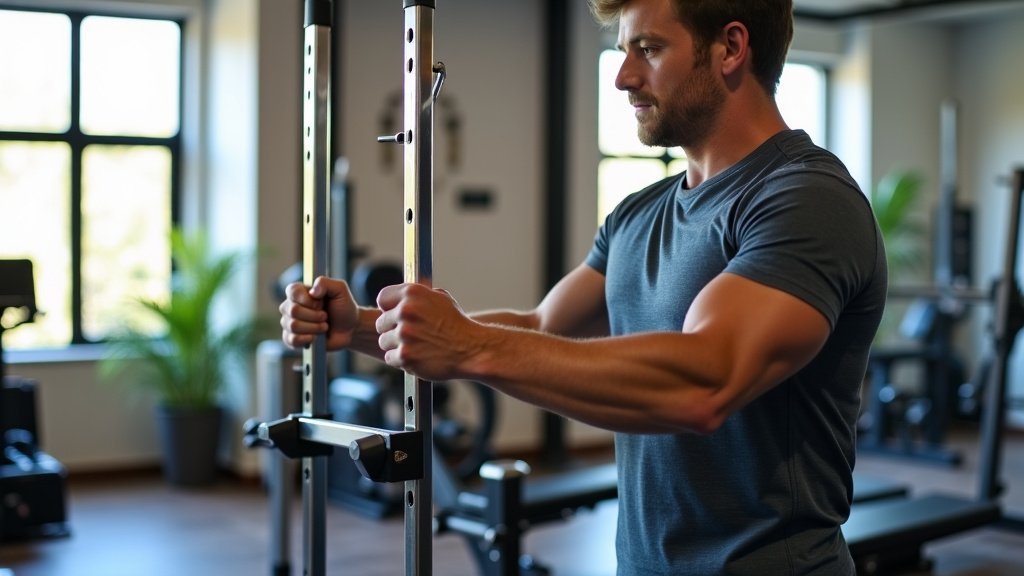
One of the biggest advantages is the sheer number of exercises you can do. A functional trainer is like a gym in a box. You can target every major muscle group. This variety keeps your workouts interesting. It also helps prevent plateaus in your progress.
Examples of Exercises
You can perform pushes, pulls, squats, and rotations. For chest, think cable presses and flyes. For back, try cable rows and pulldowns. You can do lunges, bicep curls, tricep extensions, and core rotations. The possibilities are almost endless.
Here’s a simple comparison of how functional trainers help your body:
| Exercise Type | How Functional Trainer Helps | Beginner Benefit |
|---|---|---|
| Strength Training | Consistent resistance through motion range. | Builds muscle evenly and safely. |
| Core Stability | Engages core with various rotational movements. | Improves balance and prevents injury. |
| Full-Body Workouts | Targets all major muscle groups with one machine. | Maximizes efficiency, saves time. |
| Rehabilitation | Low-impact, controlled movements. | Gentle way to regain strength (consult a pro). |
This wide range of motion helps improve your functional fitness. That means exercises mimic real-life movements. This prepares your body for everyday activities (National Strength and Conditioning Association).
Conclusion
Choosing your first functional trainer doesn’t have to be overwhelming. You’re looking for a machine that offers ease of use, fits your space, and aligns with your budget. We found that simple adjustments and stable construction are key for beginners. Don’t chase the most expensive model. Focus on one that feels sturdy and allows for progressive workouts.
Once you’ve identified your ideal trainer, prioritize getting it set up safely. Then, commit to a consistent workout routine. Your fitness journey starts with that first step.
Frequently Asked Questions
How much space do I really need for a functional trainer?
You’ll need at least a 7×7 foot area, but more is better. This accounts for the machine’s footprint plus space for you to move freely. Remember to check ceiling height for overhead exercises too.
Can a functional trainer replace free weights for a beginner?
For many beginners, yes, a functional trainer can be a great starting point. It offers consistent tension and a reduced injury risk compared to free weights. You can build significant strength and muscle with functional movements.
Should I get a functional trainer with one or two weight stacks?
Most functional trainers have two independent weight stacks. This allows for unilateral (one-sided) exercises and a wider range of movements. A single stack limits your exercise options and can unbalance the machine.
What kind of accessories should I look for with a beginner functional trainer?
Basic accessories like D-handles, ankle straps, and a straight bar are usually sufficient. These allow for a wide variety of exercises. You can always purchase more specialized attachments later as you progress.
How do I set up a workout routine on a functional trainer as a beginner?
Start with full-body workouts 2-3 times per week. Focus on compound movements like cable squats, rows, and presses. Many machines come with exercise guides or online resources to help you create a balanced routine. Start light and focus on proper form.