How to Do High to Low Machine Rows
A high to low row machine uses a cable or lever that pulls from above your hands toward your waist. Set the seat and handle so you can pull down and back without rocking your torso, then return slowly.
On this page (10 sections)
- How do you set up a high to low row machine?
- How do you do the high to low row?
- Which muscles does a high to low row work?
- What is different about an angled row machine?
- How can you keep the movement comfortable?
- What mistakes should you avoid?
- Can a rowing machine replace a high to low row?
- How many repetitions should you do?
- How do you finish a set safely?
- Which machine should you choose for high to low rows?
A high to low row machine uses resistance that starts above your hands and travels toward your lower ribs or waist. Set up so the handle moves down and back while your torso stays steady, then return it under control.
The name can describe a cable row from a high pulley or an angled machine designed for a similar pull. The key is the direction of resistance: pull from a higher starting point toward your body, rather than rowing straight forward from a low cable.
How do you set up a high to low row machine?
Adjust the seat and cable so you can reach the handle with a slight bend in your elbows and no shoulder strain. Set the machine's anchor or pulley above shoulder level if it's adjustable, then choose a light load for your first set.
Sit or stand in the position the machine is designed for. Secure your feet, brace your midsection, and let your arms reach forward without rounding your lower back.
If the machine has a chest pad or thigh restraint, adjust it so it supports you without pinning or pressing painfully. Check that the handle, cable, and moving parts have a clear path before adding weight.
A cable station offers flexible pulley positions and handle choices. If you are comparing options, our guide to the best cable row machine explains what to consider for different home gym layouts.
How should you choose the starting load?
Start with a load you can move smoothly for every planned repetition. The first few reps should let you check your position, range, and control before increasing resistance.
A load is too heavy if you need to jerk the handle, lean far back, shrug, or shorten the return to finish a repetition. Reduce the weight and keep the movement controlled.
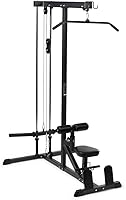
For a plate-loaded tower, add plates evenly and secure them as the equipment instructions require. The Titan Fitness Plate-Loaded LAT Tower includes a low row handle and fits Olympic weight plates.
How do you do the high to low row?
Pull the handle down and back toward your lower ribs while keeping your chest lifted and torso steady. Let your elbows travel close to your sides, then extend your arms slowly to return to the start.
- Sit or stand tall and grip the handle with both hands.
- Brace your abdomen and allow your arms to reach forward.
- Draw your shoulder blades back as you pull your elbows toward your sides.
- Bring the handle toward your lower ribs or waist without leaning back.
- Pause briefly, then extend your arms under control.
Keep your wrists straight and your shoulders away from your ears. Use a comfortable range that does not force your shoulders forward at the end of the return.
The torso should not swing to create momentum. If you find yourself rocking, reduce the load or stop the set and reset your position.
Which muscles does a high to low row work?
A high to low row mainly trains your back and arms, with your trunk helping you hold a steady position. The exact effort depends on the machine's path, your grip, and how you move your elbows.
Pulling the elbows close to your sides often emphasizes the lats and upper back. The biceps and forearms help bend your elbows and hold the handle.
Think of the cue as moving your elbows, not yanking with your hands. That can help you keep the shoulders relaxed and the movement deliberate.
What is different about an angled row machine?
An angled row machine guides resistance along a set path, while a cable station may let you change pulley height and handle position. Follow the machine's intended seat and body position, since a fixed path may feel different from a free cable.
Some plate-loaded low row machines angle the pull and use a seat or support to keep you in position. Compare the features in our guide to the best plate loaded low row machine.
A rowing machine uses repeated strokes with a seat that moves along rails. That makes it different from a strength machine where you stay seated and pull a weighted handle for controlled repetitions.
For more on the movement differences, read seated row machine vs cable row. If you use a functional trainer, our guide to a seated row on a Rogue functional trainer covers a low cable setup.
How can you keep the movement comfortable?
Use a range that lets your shoulders stay comfortable and your back stay neutral. Stop if you feel sharp pain, numbness, or a pulling sensation that worsens as you continue.
Keep your feet planted and avoid twisting to finish a rep. A lighter load and slower return are useful adjustments when your form starts to slip.
If your machine has adjustable pads, set them to hold you in place without limiting breathing. Take a short rest if grip fatigue or discomfort makes it hard to control the handle.
What mistakes should you avoid?
Avoid using momentum, shrugging your shoulders, and letting the handle snap forward. Those habits make it harder to keep the resistance controlled throughout the repetition.
Don't lean far back to pull a heavier load. Keep your ribs stacked over your hips and your spine steady.
Don't force the handle to your abdomen if your shoulder or elbow position becomes uncomfortable. Shorten the range slightly or reduce the load, then reassess your setup.
A high pulley can also be used for a different cable movement. For chest training, see how to do a high to low cable fly; for the opposite cable direction, review how to do a low to high cable fly.
Can a rowing machine replace a high to low row?
A rowing machine can provide a seated pulling motion, but it serves a different training purpose. It uses repeated strokes for rowing exercise, while a high to low row is usually performed for controlled resistance repetitions.
The Merach Q1S uses magnetic resistance and a dual slide rail. It measures workout details such as distance, time, speed, and stroke count through its app.
Choose a rowing machine if you want a moving-seat exercise with repeated strokes. Choose a cable or angled row machine if your goal is to perform discrete pulls against a handle while holding a seated or standing position.
How many repetitions should you do?
Choose a repetition range that lets you keep the same steady form from start to finish. For general strength practice, many people use 8–12 controlled repetitions, but your training plan and ability should guide the amount.
Rest long enough to regain control and grip before the next set. If form changes across repetitions, lower the load or end the set.
How do you finish a set safely?
Return the handle slowly, then set it down or release it only when the machine is at rest. Follow the equipment's instructions for unloading plates or adjusting the cable.
Don't let a loaded cable pull your arms forward suddenly. On a plate-loaded machine, remove plates carefully and keep the area around the machine clear.
Which machine should you choose for high to low rows?
Choose a cable station if you want to adjust pulley height and handle position. Choose an angled or plate-loaded low row machine if its fixed setup matches your space and preferred pulling position.
The Titan Fitness Plate-Loaded LAT Tower combines a lat pulldown and low row station, with an included low row handle. Use a magnetic rowing machine such as the Merach Q1S or YOSUDA for seated rowing workouts that involve a moving seat and repeated strokes.
For a high to low row machine, prioritize a comfortable start position, a manageable load, and a controlled return. The right setup is the one that lets you pull toward your waist without rocking, shrugging, or forcing your shoulders.