How to Do Seated Rows on a Rogue Functional Trainer
To do a seated row on a Rogue functional trainer, set a low pulley, attach a row handle, sit facing the machine, and pull toward your lower ribs while keeping your torso steady. Check the cable path and anchor before you begin.
On this page (8 sections)
- How do you set up a seated row on a Rogue functional trainer?
- Where should you sit, and what can support your feet?
- Which handle works for a seated cable row?
- How should you perform each repetition?
- What mistakes should you avoid?
- Can a rowing machine replace the cable setup?
- Should you choose a low cable or a different pulley height?
- How can you make the setup safer?
To do a seated row on a Rogue functional trainer, set one pulley near floor level, attach a suitable row handle, and sit facing the machine with a stable foot position. Pull the handle toward your lower ribs while keeping your back long and your torso controlled.
A functional trainer may not have a built-in seat or footplate for this movement. Choose a seating arrangement that keeps you steady and lets the cable travel freely, then start with light resistance.
How do you set up a seated row on a Rogue functional trainer?
Set the pulley at its lowest usable position and check that the cable runs straight toward you without rubbing the frame. Use a seat or bench that stays planted as you reach forward and pull.
- Move the pulley carriage to a low position, following the trainer's instructions.
- Clip on a compatible row handle and check that its connector is closed.
- Place a stable bench or seat in front of the cable, with room to extend your arms.
- Sit facing the pulley and position your feet on a firm surface.
- Adjust the seat distance so you can reach the handle without rounding your back.
- Test the setup with a light pull before adding resistance.
Keep the cable clear of your legs and the bench. If the path catches, rubs, or pulls the seat forward, stop and adjust the arrangement.
Where should you sit, and what can support your feet?
Sit far enough from the pulley to reach forward with a slight bend in your knees, while keeping your hips on the seat. Your feet should rest on a stable surface that won't slide or tip.
Some functional trainers have a low cable but no dedicated row station. A separate bench can provide a seat, but it doesn't automatically provide safe foot support; don't brace against the trainer unless its manual allows that use.
A dedicated low-row unit can be simpler if you want a built-in seat or foot support. The best plate loaded low row machine guide covers options designed around that setup.
Which handle works for a seated cable row?
Choose a handle that lets you hold the cable comfortably and keep your wrists aligned. A close-grip handle is a common choice for pulling with both hands, while a straight bar allows a wider hand position.
Check that the attachment fits the trainer's cable connector and is secured before each set. Our guide to the best seated row handle for functional trainer explains handle shapes and what to consider when matching one to your setup.
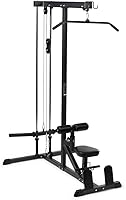
This Titan Fitness unit combines a lat pulldown and low-row station. It has a 400 lb weight capacity and is designed to fit Olympic weight plates.
Use its own setup instructions, including the maker's recommendation to bolt the tower to the floor before upright cable rows. Don't assume a separate functional trainer has the same attachments or support features.
How should you perform each repetition?
Pull the handle toward your lower ribs while keeping your shoulders down and your torso steady. Let your arms extend under control at the start without rounding your lower back to reach farther.
Start by sitting tall with your chest relaxed and your knees slightly bent. Brace gently, then draw your elbows back close to your sides as the handle comes toward your body.
Pause briefly when your hands reach your torso, then return the handle slowly. Keep the movement smooth rather than letting the weight stack or cable snap you forward.
Your shoulders and arms will help move the handle, while your back works through the pull. Stop the set if you feel sharp pain, lose your balance, or can't keep the cable moving in a controlled path.
For more detail on body position and the pull, see seated row technique on a functional trainer.
What mistakes should you avoid?
Avoid rocking your torso, shrugging your shoulders, or pulling the handle too high. These changes can make the movement harder to control and shift it away from a steady horizontal pull.
Don't use a load that forces you to jerk the cable or lean far backward. Reduce resistance until you can start and finish each repetition without moving the seat or losing your foot position.
Check that the handle connection is secure and the cable is not twisted before you start. Keep other people clear of the cable path and weight stack during your set.
Can a rowing machine replace the cable setup?
A rowing machine gives you a different exercise, so it isn't a direct replacement for a seated cable row. It can be an option when you want a seated pulling motion as part of a cardio workout.
The Merach Q1S uses magnetic resistance and a dual slide rail. It has a 350 lb maximum weight recommendation and an app that can display workout data.
The YOSUDA rower also uses magnetic resistance and offers 16 resistance levels. Its stated user height range is 4 ft 5 in to 5 ft 11 in.
These machines use a rowing stroke, which includes leg drive and a moving seat. For a fixed cable pull, compare the movement and setup in seated row machine vs cable row.
Should you choose a low cable or a different pulley height?
A low pulley suits a horizontal row when the cable travels toward your torso from near floor level. Higher pulley positions create a different pulling angle and change the movement.
If you want to pull diagonally from above toward your hips, see how to do high to low machine rows. Keep the angle suited to your target movement instead of adjusting your body to compensate for a poorly placed cable.
If you're comparing equipment for a fixed cable-row station, the best cable row machine guide can help you weigh that option against using a functional trainer.
How can you make the setup safer?
Use a stable seat, a clear cable path, and resistance you can control. Follow the trainer's manual for pulley adjustment, attachment compatibility, and any approved anchoring points.
Check the cable and handle before training, and keep your hands clear of moving pulleys. Don't improvise a foot brace against a tower or use a seat that slides when you pull.
For a comfortable seated row on a Rogue functional trainer, pick a low pulley, secure a compatible handle, and arrange a stable seat and foot position. If the bench setup feels unstable or limits your reach, use a dedicated low-row station or another exercise with proper support.
Frequently asked questions
Can you do seated rows on a Rogue functional trainer?
Yes, if the trainer has a low pulley and a suitable seated position. Attach a compatible handle, sit facing the pulley, and pull toward your torso with control.
Follow your trainer's manual for cable setup, attachments, and any limits on how you may anchor or position yourself.
What handle should I use for seated cable rows?
A close-grip row handle works for a compact hand position, while a longer bar allows a wider grip if the cable and your range of motion permit it. Make sure the attachment is compatible with the cable end and secured before you pull.
How far should I lean back during a seated row?
Keep your torso mostly upright and steady, with only a small natural movement if your form stays controlled. Avoid rocking backward to move the load.
If you have to swing or shrug to finish a repetition, reduce the resistance.
How do I keep my feet stable during a seated cable row?
Place your feet on a stable surface with knees slightly bent, and keep them from sliding as you pull. A dedicated low-row station may include foot support; a functional trainer setup may not.
Don't push against an unstable machine base or improvised support.