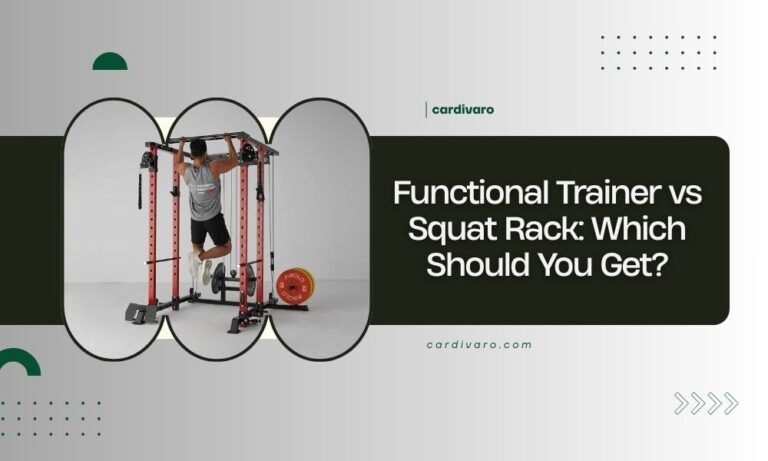
Most functional trainers can safely hold between 150 to 200 pounds per stack. This means a dual-stack machine could handle up to 400 pounds total. Always check your specific model’s weight capacity for precise details.
You might think about the maximum weight when planning your workouts. It’s important for both safety and effective training. Understanding these limits helps you push yourself without worry. We often wonder if our equipment can keep up with our strength gains.
- Most functional trainers support 150-200 lbs per weight stack.
- Dual-stack machines can handle double that amount.
- Always confirm the weight limit for your specific model.
- This ensures safety and effective strength progression.
Let’s dive into the specifics of functional trainer weight capacities. We’ll help you understand what this means for your home gym.
Understanding Functional Trainer Weight Capacities
Most functional trainers handle 150 to 200 pounds per weight stack. A dual-stack machine can manage double that. This capacity is key for safe and effective workouts.
You might wonder, why are these limits important? They keep you safe. They also ensure your equipment can support your strength goals. Let’s break down what these numbers really mean for your training.
What Exactly is a Weight Stack?
A functional trainer typically uses weight stacks. These are plates that slide on guide rods. You select your desired weight with a pin. It’s a simple, efficient system.
Most home gym models have two separate stacks. This allows for independent movement. This design is what makes functional training so versatile. You can perform many exercises with this setup.
The weight plates are usually made of cast iron or steel. They are designed to be durable. They also slide smoothly, which is important for exercise flow.
Factors Influencing Weight Capacity
Many things affect how much weight a functional trainer can hold. It’s not just about the plates themselves. The entire system plays a role.
- Cable Strength: The cables bear the load. Stronger cables mean higher capacity.
- Pulley System: Quality pulleys reduce friction. They also distribute weight effectively.
- Frame Construction: A sturdy frame supports everything. It prevents wobbling or failure.
- Manufacturer Standards: Each brand sets its own limits. They test their products thoroughly.
Cable and Pulley Systems Explained
The cables are usually made of aircraft-grade steel. They are coated for protection. Regular inspection of your cables is smart. Look for fraying or kinks.
Pulleys guide the cables. They can be made of nylon or aluminum. High-quality pulleys last longer. They also provide a smoother feel during exercises. A smooth pull matters for good form.
Single Stack vs. Dual Stack Machines
Functional trainers come in different configurations. The most common are single or dual stack designs. Your choice depends on your needs and space.
Single Stack Functional Trainers
A single stack machine has one central weight stack. You usually connect both handles to this stack. This design is often more compact. It’s a good choice for smaller spaces.
The maximum weight for a single stack is typically 150 to 200 pounds. This might be enough for many people. It’s great for beginners and intermediate users. However, you can’t perform certain exercises that require independent arm movement.
Dual Stack Functional Trainers
Dual stack machines have two independent weight stacks. Each stack has its own cable and pulley system. This allows for a wider range of exercises.
These machines can handle up to 400 pounds total. That’s 200 pounds per stack. This capacity suits more advanced lifters. It also allows for bilateral movements with heavy resistance. Many people find this setup more versatile.
We found that dual stack machines are very popular. They offer more flexibility. This is important for a complete strength routine (American College of Sports Medicine).
Understanding the Weight Ratio
Functional trainers often use a weight ratio system. This means the weight you lift feels different from the weight shown on the stack. Most machines have a 2:1 ratio.
With a 2:1 ratio, if you select 100 pounds on the stack, you are actually lifting 50 pounds. This is due to the way the cables and pulleys are arranged. It’s not a flaw; it’s by design.
Why do they do this? It makes the movement smoother. It also allows for a larger range of motion. It effectively doubles the cable travel. So, a 200-pound stack feels like 100 pounds. This is useful for many exercises.
Always remember the ratio when planning your lifts. If you’re used to free weights, a 100-pound stack might feel lighter than expected. This is completely normal.
How to Check Your Specific Model’s Capacity
Finding your machine’s weight limit is crucial. Don’t guess. Always check the manufacturer’s manual. This document is your best friend.
If you don’t have the manual, search online. Most manufacturers have digital copies available. Look for the model number. It’s usually on a sticker somewhere on the frame.
If all else fails, contact customer support. They can tell you the exact specifications. Safety comes first, so take this step seriously.
Can You Add More Weight to Your Functional Trainer?
You might hit a plateau. You might want to lift more than the stack allows. Is it safe to add extra weight?
Generally, we advise against adding external weight plates. This can put undue stress on the cables and pulleys. It can also compromise the machine’s stability.
Some functional trainers offer weight stack upgrades. These are specific kits from the manufacturer. They are designed to integrate safely. If you consider an upgrade, only use approved parts.
Otherwise, focus on different training methods. You can try slower reps. You can also increase the number of repetitions. Or, consider advanced exercises that naturally feel heavier.
Safety First: Best Practices for Weight Usage
Using your functional trainer safely is paramount. Here are some tips to keep in mind:
- Inspect Cables Regularly: Check for wear, fraying, or kinks before each use.
- Smooth Movements: Avoid jerky motions. Use controlled, deliberate movements.
- Proper Form: Always prioritize good form over heavy weight. Poor form leads to injury.
- Don’t Exceed Limits: Stick to the manufacturer’s stated weight capacity.
- Secure the Pin: Make sure the weight selection pin is fully inserted.
Remember, your functional trainer is an investment. Treating it well ensures its longevity. It also keeps you safe during your workouts. Many fitness experts stress the importance of equipment maintenance (National Strength and Conditioning Association).
When is a Functional Trainer Enough Weight?
You might wonder if the maximum weight will ever be “enough” for you. For many, it is more than sufficient. Functional trainers are excellent for strength, endurance, and rehabilitation.
The variable resistance makes them unique. You can work muscles from different angles. This is harder to do with traditional free weights. The constant tension builds strength differently.
Think about exercises like cable rows or chest presses. Even at 100 pounds per stack (which is 50 pounds actual resistance), these can be challenging. Especially if you focus on muscle contraction.
If you’re an elite powerlifter, you might eventually outgrow the heaviest settings for certain movements. But for the vast majority of gym-goers, the existing capacities provide a lifetime of challenging workouts. Don’t underestimate the power of progressive overload within these limits.
Consider this checklist to see if your current functional trainer setup is right for you:
- Are you consistently hitting the maximum weight for most exercises?
- Do you feel like your muscles are no longer challenged?
- Are you able to maintain perfect form even at the highest resistance?
- Do you have specific strength goals that require heavier lifting than available?
- Have you explored advanced techniques like dropsets or supersets with current weights?
- Is your machine designed for a weight upgrade, and are you willing to invest?
If you answered yes to several of these, it might be time to think about a heavier-duty machine. Or perhaps explore alternative strength training methods like barbells or dumbbells for specific lifts.

Conclusion
You’ve now got a solid understanding of how much weight your functional trainer can handle. Remember, most machines safely support 150-200 pounds per stack, with dual-stack models offering up to 400 pounds total. This knowledge helps you train effectively and, most importantly, safely.
Always prioritize checking your specific model’s manual for its exact weight capacity. By doing so, you ensure your equipment keeps pace with your strength journey without compromising safety. Now, go confidently push your limits!
Frequently Asked Questions
Can I use my functional trainer for bodybuilding?
Absolutely! Functional trainers are excellent for bodybuilding. The consistent tension and wide range of motion help build muscle. You can target various muscle groups effectively with controlled movements.
Does the weight feel different on a functional trainer compared to dumbbells?
Yes, it often does. Due to the 2:1 weight ratio on most functional trainers, the listed weight on the stack will feel lighter than the same weight in dumbbells. For example, 100 lbs on the stack often translates to 50 lbs of actual resistance.
How often should I inspect my functional trainer’s cables?
It’s smart to do a quick visual check of your cables before every workout. Look for any signs of fraying, kinks, or wear. A more thorough inspection, perhaps monthly, can help catch issues early and prevent problems.
What if I can easily lift the maximum weight on my functional trainer?
If you’re consistently maxing out, consider adjusting your training. Try slower reps, more repetitions, or advanced techniques like drop sets. You could also explore machine-specific upgrades if offered by the manufacturer, or supplement with free weights for certain exercises.
Is it better to have a single or dual-stack functional trainer?
For most users, a dual-stack functional trainer offers more versatility. It allows for independent arm movements and a wider range of exercises. A single-stack is usually more compact and can be sufficient if space is limited or your training needs are simpler.