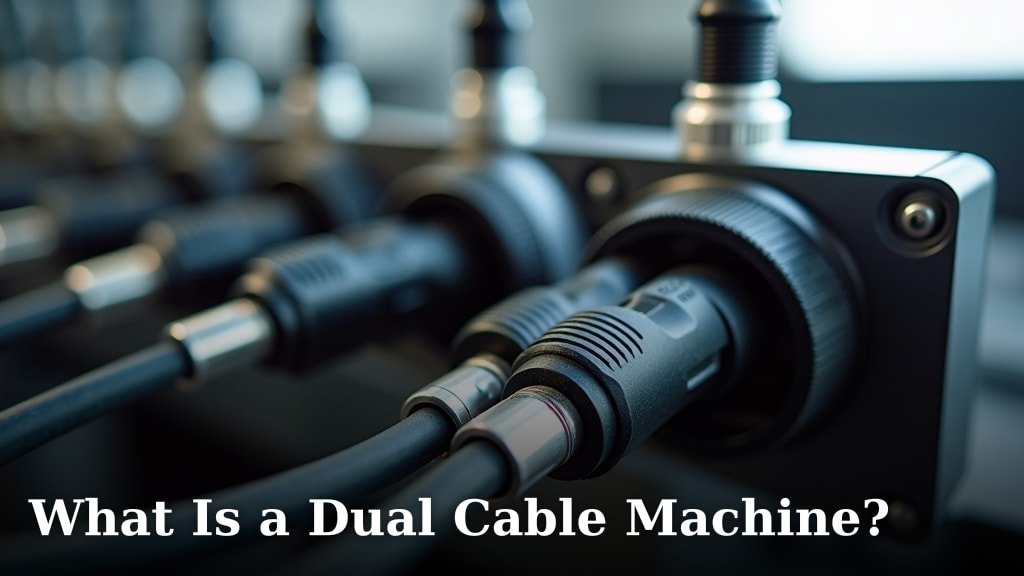
A dual cable machine is a versatile piece of gym equipment that uses a system of cables and pulleys. It allows you to perform a wide range of exercises to target different muscle groups. This machine helps you get a full-body workout with just one station.
You can adjust the height and angle of the pulleys, giving you many options for your workout routine. This flexibility makes it a favorite for both beginners and advanced lifters. It’s perfect for isolating muscles and improving your overall strength.
- What a dual cable machine is and how it works.
- The many benefits of using this type of equipment.
- Common exercises you can do on a cable machine.
- Tips for safe and effective workouts.
Ready to learn more about how a dual cable machine can transform your fitness journey? Let’s explore all the ins and outs of this fantastic piece of equipment.
Understanding the Dual Cable Machine
So, what exactly is this fitness marvel we call a dual cable machine? Think of it as a powerhouse for your muscles, offering a workout that’s both challenging and forgiving. It’s designed with two adjustable columns, each housing a pulley system, along with weight stacks. These dual cables are what make it so unique, allowing you to train both sides of your body at the same time, or work different muscle groups independently.
You might see it called a cable crossover machine, a functional trainer, or even a dual adjustable pulley system. Whatever the name, the core function remains the same: it provides constant tension on your muscles throughout the entire range of motion. This is a big difference compared to free weights, where gravity’s pull changes as you move.
How Does a Cable Machine Work?
At its heart, a dual cable machine operates on a simple but effective principle: pulleys and cables. Each side has a weight stack connected to a cable that runs through a series of pulleys. When you pull the handle, you lift the weight stack, creating resistance. Because the cables move smoothly, you get a consistent amount of tension from start to finish.
The beauty of this system is its adjustability. You can raise or lower the pulleys to nearly any position. This means you can perform exercises from above your head, at chest level, or even down near your ankles. This wide range of motion allows you to hit muscles from different angles, leading to more comprehensive development.
The Role of Pulleys and Cables
The pulleys act as guides for the cables, ensuring smooth movement and directing the force. The cables themselves are typically made of strong yet flexible steel, designed to withstand heavy use. Together, they create a system that lets you move with freedom while still providing the necessary resistance for muscle growth and strength. It’s like having a personal trainer constantly applying pressure, but without the cost!
Why Choose a Dual Cable Machine?
You might be wondering, with all the gym equipment available, why should you focus on a dual cable machine? Well, we found that its benefits are numerous, catering to a wide array of fitness goals. From building muscle to improving stability, it’s a versatile tool that can truly enhance your workout routine. It’s like having a multi-tool for your fitness journey.
Key Advantages for Your Workout
One of the top reasons people love these machines is the ability to perform functional movements. These are exercises that mimic everyday activities, helping you move better in your daily life. Think about reaching, twisting, or lifting – the cable machine allows you to train these patterns in a controlled way.
Another major plus is the reduced risk of injury. Unlike free weights, where you might struggle to control the movement, cables guide you. This makes it a great option for beginners learning new movements, or for those recovering from an injury (Mayo Clinic). The constant tension also protects your joints by not putting all the stress on a single point.
- Constant Muscle Tension: Keeps your muscles working throughout the movement.
- Versatility: Hundreds of exercises for every muscle group.
- Improved Stability and Balance: Engages core throughout many movements.
- Safer Than Free Weights: Less risk of dropping weights or losing control.
- Adjustable Resistance: Easy to change weight for different exercises.
- Functional Training: Helps with everyday movements and sports performance.
Comparing Cables to Free Weights
It’s natural to compare cable machines to free weights like dumbbells and barbells. Both have their place. Free weights are excellent for raw strength and power, recruiting more stabilizer muscles. However, they rely heavily on gravity, meaning the resistance often changes depending on your body position.
Cables, on the other hand, provide consistent resistance. This is fantastic for targeting specific muscles and maintaining tension throughout the entire lift. Think about a bicep curl: with a dumbbell, the tension lessens at the top; with a cable, it stays strong. Both methods are effective, but cables offer a unique stimulus to your muscles.
| Feature | Dual Cable Machine | Free Weights (Dumbbells/Barbells) |
|---|---|---|
| Resistance Type | Consistent tension throughout movement | Gravity-dependent, variable tension |
| Stability | Guided movement, less risk of injury | Requires more personal control and balance |
| Versatility | High, many angle adjustments | Good, but limited by range of motion |
| Functional Training | Excellent for mimicking real-life movements | Good for compound lifts, less for specific angles |
| Muscle Activation | Can isolate muscles effectively | Recruits more stabilizer muscles |
Top Exercises on Your Dual Cable Machine
Ready to put this machine to good use? The possibilities are almost endless, covering every major muscle group in your body. We’ve broken down some popular and effective exercises so you can see the true potential of a dual cable machine. You’ll be amazed at how many moves you can do!
Upper Body Workouts
For your upper body, cables are fantastic. You can hit your chest, back, shoulders, and arms with precision. For example, a cable crossover is perfect for focusing on your chest muscles, giving you that great squeeze (American Council on Exercise). For your back, try a kneeling lat pulldown or a seated row.
Chest and Shoulders
Cable Chest Press: Set pulleys at chest height. Stand in the middle, grab handles, and press forward like a push-up.
Cable Crossover: Set pulleys high. Stand in the middle, grab handles, and bring them together in front of your chest.
Cable Lateral Raise: Set pulleys low. Grab one handle with the opposite hand and raise it out to the side for your shoulders.
Arms and Back
Cable Bicep Curl: Set pulleys low. Grab handles with palms up and curl towards your shoulders.
Cable Tricep Pushdown: Set pulleys high. Grab a rope attachment and push down, extending your arms.
Cable Row: Set pulleys at chest height (or use a bench). Pull towards your torso, squeezing your shoulder blades.
Lower Body and Core Engagement
Don’t forget your lower body and core! Cable machines are excellent for stability and targeting those hard-to-reach glute muscles. A cable pull-through is a great way to work your glutes and hamstrings without loading your spine heavily. For your core, standing cable crunches or rotations really hit those obliques.
Legs and Glutes
Cable Squats: Set pulleys low. Hold handles and squat, keeping your chest up.
Cable Kickbacks: Attach an ankle strap. Set pulley low and kick your leg backward to work your glutes.
Cable Pull-Through: Set pulley low. Stand with your back to the machine, bend at the hips, and pull the rope through your legs as you stand up.
Core and Stability
Standing Cable Crunch: Set pulley high. Grab a rope attachment and crunch down, engaging your abs.
Cable Wood Chop: Set pulley high. With both hands, pull the handle diagonally across your body to the opposite hip.
Cable Pallof Press: Set pulley at chest height. Hold the handle with both hands and press straight out, resisting rotation.
Getting Started Safely and Effectively
You’ve got the intel on what a dual cable machine is and what it can do. Now, let’s talk about how to use it safely and get the most out of your workouts. Like any piece of equipment, proper form and technique are crucial to preventing injury and seeing results. We want you to work out smart, not just hard.
Essential Safety Tips
Before you even grab a handle, take a moment to understand the machine. Always check that the weights are properly pinned and that the cables are free of kinks or fraying. It sounds basic, but these small checks can prevent big problems. Always start with a lighter weight than you think you need, especially when trying a new exercise.
- Always warm up before your workout.
- Begin with lighter weights to master form.
- Keep your movements controlled and smooth.
- Breathe properly: exhale during exertion, inhale during recovery.
- Make sure the weight pin is fully inserted.
- Adjust pulley heights carefully and securely.
Maximizing Your Workout Success
To really see progress, consistency is key. Try to incorporate cable exercises into your routine at least two to three times a week. Focus on making a mind-muscle connection – really concentrate on feeling the muscle work during each repetition. This helps recruit more muscle fibers and leads to better results over time.
Don’t be afraid to experiment with different attachments too. Most cable machines have various handles, ropes, and bars that can be swapped out. Each attachment can slightly change the way an exercise feels and the muscles it targets. This keeps your workouts fresh and challenging, preventing plateaus in your progress.
Remember, your fitness journey is personal. Listen to your body, celebrate small victories, and enjoy the process of becoming stronger and healthier. A dual cable machine is a fantastic partner in that journey! We hope you’re now feeling confident and ready to tackle your next workout.
Conclusion
You’ve seen how the dual cable machine stands out for its versatility and effectiveness. We’ve shown you it offers constant tension, a safer workout environment, and endless exercise possibilities. This equipment can help you build strength, improve stability, and perform functional movements vital for everyday life.
Whether you’re a beginner or an experienced lifter, the dual cable machine can be a cornerstone of your fitness journey. Take what you’ve learned today to your next gym session. Experiment with different exercises and feel the incredible benefits for yourself!
Frequently Asked Questions
Is a dual cable machine good for beginners?
Absolutely! Its guided movements and adjustable resistance make it very beginner-friendly. You can start with light weights and focus on learning proper form without the stability challenges of free weights. It’s a great way to safely build a foundation of strength.
What’s the difference between a dual cable machine and a single cable machine?
A dual cable machine has two independent cable stacks, allowing you to work both sides of your body simultaneously or perform opposing movements. A single cable machine typically has just one adjustable cable, limiting the types of exercises you can do at one time.
Can you build muscle effectively with just a cable machine?
Yes, you can build significant muscle with consistent use of a dual cable machine. The constant tension it provides is excellent for muscle growth and endurance. By varying exercises and resistance, you can continually challenge your muscles and promote hypertrophy.
How often should I use a dual cable machine in my workout routine?
You can incorporate cable exercises into your routine 2-4 times a week, depending on your overall program and recovery. It’s important to allow your muscles enough time to rest and rebuild between sessions. Listen to your body and adjust as needed.
Are there any attachments I should look for when using a cable machine?
Many attachments enhance your workout. Common ones include D-handles, rope attachments (for triceps pushdowns or face pulls), ankle straps (for leg exercises), and straight or curved bars. Each changes the grip and muscle activation, adding variety to your routine.