How to Choose Cable Machine Alternatives for Seniors
Good cable machine alternatives for seniors include a selectorized home gym, suspension trainer, squat-assist trainer or resistance bands. Choose equipment you can reach, set up and control comfortably.
On this page (7 sections)
- What should seniors compare in cable machine alternatives?
- Which types of equipment can replace a cable machine?
- How do these alternatives compare for access and adjustment?
- Which products suit different senior buyers?
- How should you set up and use an alternative?
- What common mistakes make an alternative harder to use?
- Which cable machine alternative should you choose?
Good cable machine alternatives for seniors include a selectorized home gym, suspension trainer, squat-assist trainer or resistance bands. Choose based on the positions you can enter comfortably, how you want to adjust effort and how much space you have.
A cable machine is only one way to add resistance to a routine. A cable machine with a pull-up bar is another fixed option to compare.
For adjustable cable work, see Mikolo cable crossover machines.
The right substitute depends on whether you value seated stations, portability, squat practice or simple storage.
If you have joint concerns, read our guide to cable machine exercises for seniors with arthritis before choosing exercises.
What should seniors compare in cable machine alternatives?
Compare stability, access and resistance changes before counting how many exercises a machine can do. The right option is one you can set up and use without awkward reaching or rushed transitions.
| Check | What to consider | Why it matters |
|---|---|---|
| Starting position | Can you sit, stand or hold the position comfortably? | A difficult entry or exit can make regular use less practical. |
| Resistance adjustment | Is the change clear and manageable? | You need to find an effort that lets you move with control. |
| Stability | Does the base feel settled, or is the anchor secure? | Movement should not make the equipment shift or the body position feel uncertain. |
| Reach | Can you reach the handles, straps and controls? | Hard-to-reach adjustments can interrupt a session or strain your balance. |
| Space | Does the equipment fit, including room to use it? | A tight corner can limit access even when the machine itself fits. |
| Range of exercise | Does it support the movements you plan to do? | Extra stations matter only when they serve your routine. |
Think through a full session before buying: approach the equipment, make the adjustment, exercise, return to rest and leave the setup. This simple walk-through can reveal access issues that a feature list won't.
For a core-focused plan, see our guide to a cable machine for core training for seniors. You can also read about how a functional trainer may affect your joints if you are comparing resistance options.
Which types of equipment can replace a cable machine?
A selectorized home gym, suspension trainer, squat-assist trainer and resistance bands each offer a different way to work against resistance. For a seated pulling option, compare plate-loaded low row machines and check the setup and access requirements.
Choose by the movements you want and the setup you can manage.
Selectorized home gym for seated stations
A selectorized home gym changes resistance with a pin in a weight stack, avoiding the need to load and unload separate plates. For a fixed setup with upper- and lower-body stations, compare lat pulldown machines with leg extensions.
For a leg press, compare cable machines with a leg press.
It may suit someone who wants several exercise stations in one fixed home setup and prefers a defined seat or padded position for some movements. Compare Major Fitness cable machines if you want another fixed cable setup.
This style takes dedicated floor space and can be heavy to position. Check the dimensions, assembly requirements, entry points and reach to each station before settling on a location.
Skip it if your room cannot accommodate the unit with enough space to move around it or if getting on and off its seat is uncomfortable.
Suspension trainer for portable bodyweight exercise
A suspension trainer uses straps connected to an anchor, with body angle changing how challenging an exercise feels. It may suit someone who values storage and portability and can check the anchor and hold a steady position.
It is not automatically the easiest choice for a senior. The user must attach or inspect the anchor and handle the straps.
They must also maintain control while leaning or shifting body weight. Skip it if the anchor is uncertain or if strap-based movements feel unstable.
Squat-assist trainer for a narrower movement focus
A squat-assist trainer supports squat-style movements and may have resistance and position settings. It can suit someone whose main goal is practicing a controlled squat pattern with a dedicated piece of equipment.
This option does not replace a cable system's wider variety of pulling and pressing movements. Check whether the seat and handlebar adjustments create a comfortable starting position, and whether the unit is easy to fold or move if storage matters.
Skip it if you want one machine for broad upper- and lower-body exercise choices.
Resistance bands for simple storage
Resistance bands take little storage space and can support basic pulling and pressing movements. They may suit someone who wants a simple setup and can hold the band or use a secure exercise anchor.
The resistance changes as the band stretches, so one movement may feel easier at one point and harder at another. Check bands for damage before use.
Avoid improvised anchors. Skip this option if you cannot secure the setup or find the changing tension difficult to control.
How do these alternatives compare for access and adjustment?
A selectorized home gym uses a pin, while a suspension trainer changes challenge through body angle and bands change tension as they stretch. Consider the setup as carefully as the movement.
| Equipment | How effort changes | Access question | Main trade-off |
|---|---|---|---|
| Selectorized home gym | Select a weight-stack setting with a pin | Can you reach the seat and stations? | Needs a fixed area and more space |
| Suspension trainer | Change body angle or strap position | Can you safely attach and check an anchor? | Balance and body control matter |
| Squat-assist trainer | Use its available resistance and position settings | Can you enter and leave the squat position comfortably? | Focuses on a narrower movement pattern |
| Resistance bands | Change the band or how far it stretches | Can you hold or anchor the band securely? | Tension varies through each movement |
A single number such as maximum resistance does not tell you whether an option will feel manageable. A lower effort setting you can reach and control may be more useful than a heavier setting you rarely use.
If you're considering a cable setup instead, our guide to what a cable machine is good for explains common uses, and what a cable crossover machine is covers another type of station.
Which products suit different senior buyers?
These three products represent a fixed selectorized home gym, a portable strap system and a foldable squat-assist trainer. Match each one's setup and movement options to your space and routine.
Marcy Multifunction Home Gym Workout Station
The Marcy suits someone who wants several exercise stations in one fixed setup and prefers a selectorized stack for changing resistance. Its press arms support chest press and vertical butterfly movements, and the curl pad is removable and adjustable.
The machine weighs 280.5 lb and measures 68 in wide by 78 in high. Plan where it will stay before assembly.
Check whether you can reach and use the specific stations you want. Skip it if you need equipment that's easy to carry, fold away or move between rooms.
Best for fixed home gym stations
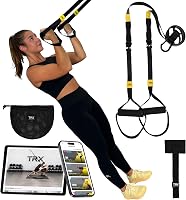
TRX GO Suspension Trainer
The TRX GO suits someone who needs portable equipment and can use a suitable anchor with steady body control. It includes indoor and outdoor anchors, foam handles and a mesh carry bag.
Because effort depends on body angle, you can adjust the challenge by changing position. You must also control your lean and return to a stable stance.
Skip it if you cannot confidently check the anchor or if leaning movements feel unsteady.
Best for portable strap training
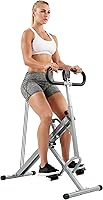
Sunny Health & Fitness Smart Row-N-Ride Glute
The Sunny Health & Fitness Smart Row-N-Ride suits someone focused on squat-style movement who wants adjustable positions and resistance. Its seat and handlebar adjust, and the machine folds for storage.
The product data gives a 220 lb maximum user weight. Check that the seat and handlebar can be adjusted to a comfortable starting position.
Consider whether you can fold and move the trainer when needed. Skip it if you want a broad range of cable-style upper-body movements.
Best for squat practice at home
How should you set up and use an alternative?
Set up equipment on a clear, stable area and follow its instructions before beginning. Start with an easy setting or body position, then check that you can control the movement and return to rest.
Before your first session, confirm the frame is assembled as directed and that any strap anchor is secure. Make sure the route to the equipment is clear and that you can reach adjustment points without twisting or stretching beyond comfort.
For a selectorized gym, learn how the pin engages before moving the stack. For a suspension trainer, inspect the straps and anchor and begin close to an upright position.
For bands, keep the band away from sharp edges and replace it if you see cracks or damage.
Move slowly enough to stay in control. Keep the range comfortable and breathe steadily.
Avoid using momentum to finish a repetition. If you need help with setup, ask someone who can follow the equipment instructions with you.
If you are planning a broader routine, see how to plan a push/pull functional trainer workout for seniors. The same planning principles apply when you substitute other resistance tools: choose movements you can set up and repeat with control.
What common mistakes make an alternative harder to use?
The most common mistake is choosing equipment for its feature count instead of its setup and access. A simpler option that fits your room and routine is often the more practical choice.
- Buying before measuring: Include space to sit, stand, reach and move around the equipment, not just its frame dimensions.
- Ignoring entry and exit: Check how you'll get into position and leave it when your muscles are tired.
- Starting too hard: Begin with a light setting, easy body angle or gentle band tension. Increase effort only when the movement stays controlled.
- Using an uncertain anchor: Do not rely on a door, rail or other point unless it is intended and secured for exercise.
- Rushing adjustments: Stop the movement before changing a pin, strap or band position. Confirm the setting before restarting.
- Treating every option as interchangeable: A squat-assist trainer does not offer the same movement range as multiple cable stations, and bands do not provide constant tension.
- Keeping damaged equipment in rotation: Inspect bands and straps, and follow the equipment instructions for care. Do not use a cable or strap that shows damage.
A short practice session with basic movements can help you spot awkward adjustments before you build a longer routine. Change one thing at a time, such as the resistance or body angle, so you can tell how it affects control.
Which cable machine alternative should you choose?
Choose a selectorized home gym if you want several fixed stations and have room for a large machine. Choose the TRX GO if portability matters and you can manage a secure anchor and stable body position.
Choose the Sunny Row-N-Ride if squat-focused exercise and foldable storage fit your needs. Choose resistance bands if you want compact equipment and can manage changing tension and a safe hold or anchor.
For cable machine alternatives for seniors, let access, stability and setup decide the purchase. If you are still weighing a cable setup, compare the movements in what a cable machine is good for and review the cable machine exercises for seniors with arthritis guide before settling on a routine.
Frequently asked questions
What is a good alternative to a cable machine for seniors?
A good alternative is equipment you can enter, set up and use with control. A selectorized home gym, suspension trainer, squat-assist trainer or resistance bands can each suit different goals and spaces.
Check the starting position, resistance adjustment and how you will get in and out before choosing.
Are resistance bands easier to use than cable machines?
Resistance bands are compact and can be simple to store, but they need a safe way to hold or anchor them. Their tension changes as the band stretches, so the effort can feel different through one movement.
Choose bands only if you can manage the setup and control that changing tension.
Is suspension training suitable for older adults?
Suspension training lets you change the challenge by adjusting your body angle, but it depends on a secure anchor and your ability to control your position. Start with an easy angle and keep a stable support nearby if needed.
Ask a qualified professional if you're unsure whether it suits your abilities.
What should seniors check before buying home exercise equipment?
Check entry and exit, resistance changes, stability, footprint and anchor needs before choosing home exercise equipment. Make sure the handles and controls are easy to reach and that the equipment supports your planned movements.
Stop if a movement feels painful or unsteady, and seek guidance.