Choosing between a functional trainer and a Smith machine depends on your fitness goals. Functional trainers are generally better if you want more freedom of movement and work your stability muscles. But a Smith machine offers unmatched safety and support for heavy lifting.
You’ll find that a functional trainer uses adjustable cable pulleys for full-body, natural movements. On the other hand, a Smith machine guides your lifts along a fixed vertical path. This makes the Smith machine great for pushing your limits safely.
- Functional trainers offer more movement freedom.
- Smith machines provide excellent safety for heavy lifts.
- Functional trainers build stability muscles.
- Smith machines are good for isolation exercises.
Ready to figure out which one is right for your gym? Let’s break down the differences and see what each machine brings to your workouts.
Functional Trainer vs. Smith Machine: Which Is Right for Your Workouts?
Choosing between these two popular gym machines often comes down to your fitness goals. We’ll help you decide by looking closely at what each offers.
Understanding the Functional Trainer
Imagine a machine that lets you move in almost any direction. That’s essentially a functional trainer. It uses adjustable cable pulleys to create resistance.
What is a Functional Trainer?
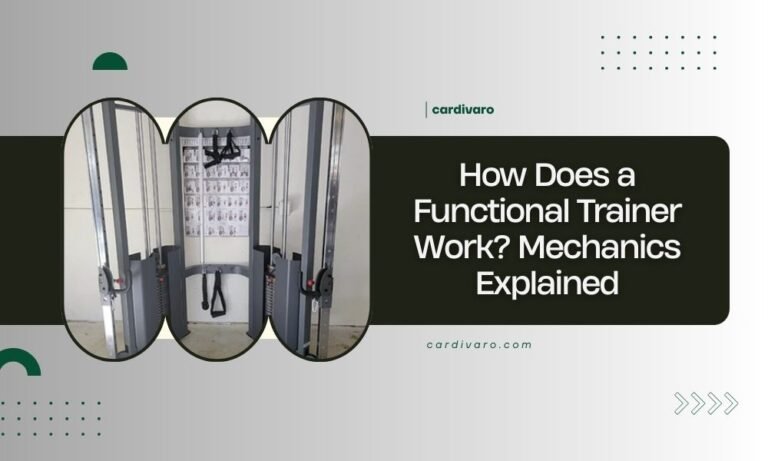
A functional trainer, sometimes called a cable crossover machine, features two independent weight stacks. These stacks are connected to cables and pulleys. You can adjust the height of these pulleys.
This adjustability means you can perform exercises from various angles. You’re not locked into a fixed path. This allows for a wide range of movements, mimicking how your body moves in everyday life.
Key Benefits of Functional Trainers
Functional trainers are champions of versatility. You can perform hundreds of exercises for every muscle group. This includes pushes, pulls, rotations, and even sport-specific movements.
- Increased Range of Motion: You move freely, just like without weights.
- Better Core Engagement: Your core muscles work harder to stabilize your body.
- Improved Balance and Stability: The unstable nature of cables forces these muscles to engage.
- Reduced Risk of Injury: Cables provide consistent tension throughout the movement, which can be gentler on joints.
- Functional Strength Development: You build strength that translates to real-world activities.
For example, lifting a heavy box off the floor uses many of the same muscles you’d train with a cable deadlift. You’re building strength for life, not just for lifting numbers.
Exploring the Smith Machine
The Smith machine is very different from a functional trainer. It offers a guided, predictable path for your lifts.
What is a Smith Machine?
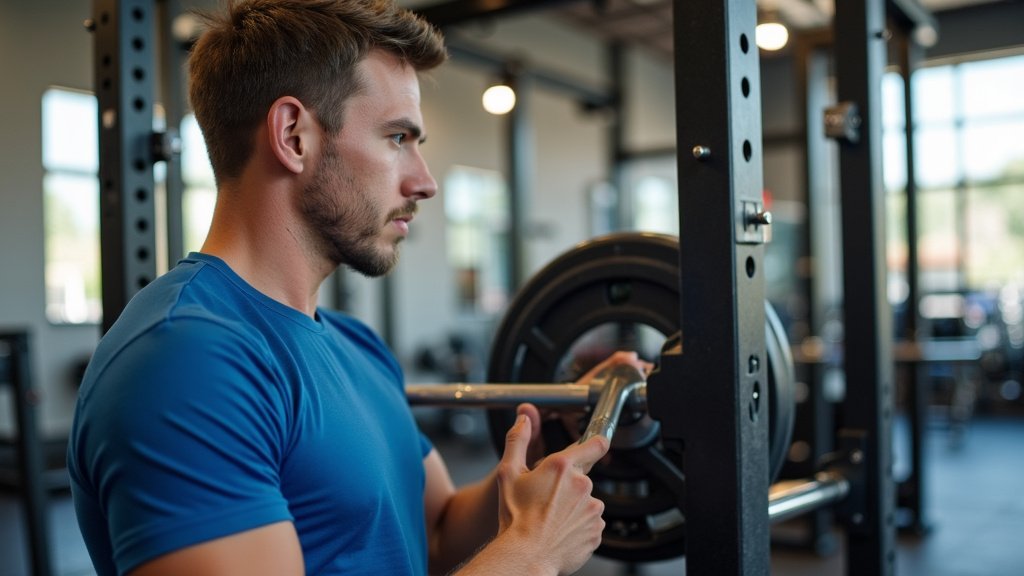
A Smith machine consists of a barbell that is fixed within steel rails. This means the barbell can only move straight up and down. It also has safety catches you can engage at any point during your lift.
This fixed path is its defining feature. It removes the need for much of the stabilization you’d use with a free barbell. The safety catches are a huge plus, especially when you’re lifting heavy alone.
Key Benefits of Smith Machines
The primary benefit of a Smith machine is safety. You can push your limits without fear of getting trapped under the bar. Many find this machine helpful for specific types of training.
- Enhanced Safety: Built-in safety hooks allow you to bail out of a lift.
- Focus on Isolation: With less stabilization needed, you can concentrate on specific muscle groups.
- Overload Muscles Safely: You can lift heavier than you might with free weights, pushing muscles to fatigue.
- Good for Beginners: The fixed path helps new lifters learn movement patterns without worrying about balance.
- Spotter Not Always Needed: For many exercises, you don’t need a training partner.
Think about a bench press. On a Smith machine, you can safely load more weight because the machine handles the stability. This lets you really tax your chest muscles.
Comparing Movement and Muscle Activation
The biggest difference between these two machines lies in how they allow your body to move and which muscles they activate. This is where your goals truly come into play.
Free Movement vs. Fixed Path
Functional trainers promote natural, multi-planar movement. This means you can move the cables in an arc, rotate your torso, or push straight out. Your body dictates the path of motion.
The Smith machine, however, restricts movement to a linear, vertical path. You push straight up and straight down. There’s no side-to-side or rotational movement allowed.
This difference has a big impact on muscle activation. When you move freely, your smaller stabilizing muscles kick in. With a fixed path, these muscles aren’t challenged as much (American Council on Exercise).
Stability and Core Strength
The constant tension and free range of motion on a functional trainer mean your core is always working. Whether you’re doing cable rows or chest presses, your abs and lower back engage to keep you upright.
On a Smith machine, the machine provides much of the stability. This means less work for your core and stabilizing muscles. While great for isolating prime movers, it means you might miss out on building crucial supporting strength.
Workout Versatility and Exercise Options
Both machines offer a variety of exercises, but the types of movements possible are quite different. This impacts how you can structure your workouts.
Functional Trainer Exercise Examples
With a functional trainer, you can perform exercises like:
- Cable Chest Press (standing or seated)
- Cable Rows (seated or standing)
- Cable Flyes (various angles)
- Cable Curls and Triceps Extensions
- Cable Wood Chops (great for obliques)
- Cable Squats and Lunges
- Rotational movements for sports
The ability to adjust the pulley height makes it incredibly versatile. You can simulate movements from sports like golf or tennis, building strength in those specific patterns.
Smith Machine Exercise Examples
The Smith machine excels at compound lifts where stability is less of a factor, or when you want to really push heavy weight:
- Smith Machine Squats
- Smith Machine Bench Press
- Smith Machine Overhead Press
- Smith Machine Rows (bent-over)
- Smith Machine Lunges
- Calf Raises
These exercises allow you to focus purely on the target muscle. If you want to isolate your quads during a squat, the Smith machine can help you do that by taking stability out of the equation.
Safety and Injury Prevention
When it comes to safety, both machines have their merits, but in different ways.
Safety Features of Each Machine
The Smith machine is famous for its built-in safety catches. You can set them at any height. If you fail a rep, you just twist the bar, and it locks into place. This is a huge advantage for solo lifters.
Functional trainers offer a different kind of safety. The continuous tension from the cables means there’s less “sticking point” where you might fail. The movements are often more natural, reducing stress on joints.
When to Choose for Injury Prevention
If you’re recovering from an injury and need a highly controlled movement, the Smith machine might be helpful. Its fixed path removes variables, letting you focus on the injured muscle safely.
However, many experts argue that building functional strength with a cable machine can actually prevent future injuries. By strengthening stabilizing muscles, you make your body more resilient (National Strength and Conditioning Association).
Cost and Space Considerations
If you’re buying for a home gym, both cost and the space they take up are important factors.
A basic Smith machine can be more affordable upfront than a high-quality functional trainer. However, a functional trainer often offers more exercises in a single footprint.
Smith machines tend to be quite large and bulky. Functional trainers can also take up significant floor space, but some compact models exist.
Which Machine is Best for Your Goals?
To help you decide, consider what you want to achieve most from your workouts. Are you aiming for muscle isolation or overall functional strength?
Here’s a quick guide to help you decide:
| Feature | Functional Trainer | Smith Machine |
|---|---|---|
| Movement Type | Free, multi-directional | Fixed, vertical |
| Muscle Activation | Full body, core, stabilizers | Primary movers, isolation |
| Safety For Heavy Lifts | Good, less risk of getting “stuck” | Excellent, safety catches |
| Functional Strength | High | Lower |
| Beginner Friendliness | Can be complex to learn movements | Very easy to learn basic movements |
| Space Efficiency | Moderate to large | Large |
Consider this checklist to find your match:
- You want to build strength for everyday activities or sports.
- You value freedom of movement and challenging your stability.
- You enjoy a wide variety of exercises for different muscle groups.
- You want to improve your balance and coordination.
- You prefer movements that are gentle on your joints.
Choose the functional trainer if the above sounds like you. This machine will help you build a well-rounded physique and highly adaptable strength.
Consider this checklist to find your match:
- You want to lift heavy with maximum safety, especially when alone.
- You aim to isolate specific muscle groups for growth.
- You are new to lifting and want to learn basic movements with guidance.
- You want to push to muscle failure without needing a spotter.
- You prefer simple, linear movements without worrying about balance.
Choose the Smith machine if these points resonate with your goals. It’s a fantastic tool for focused muscle building and safety in heavy lifting.
Conclusion
Deciding between a functional trainer and a Smith machine truly comes down to your personal fitness journey